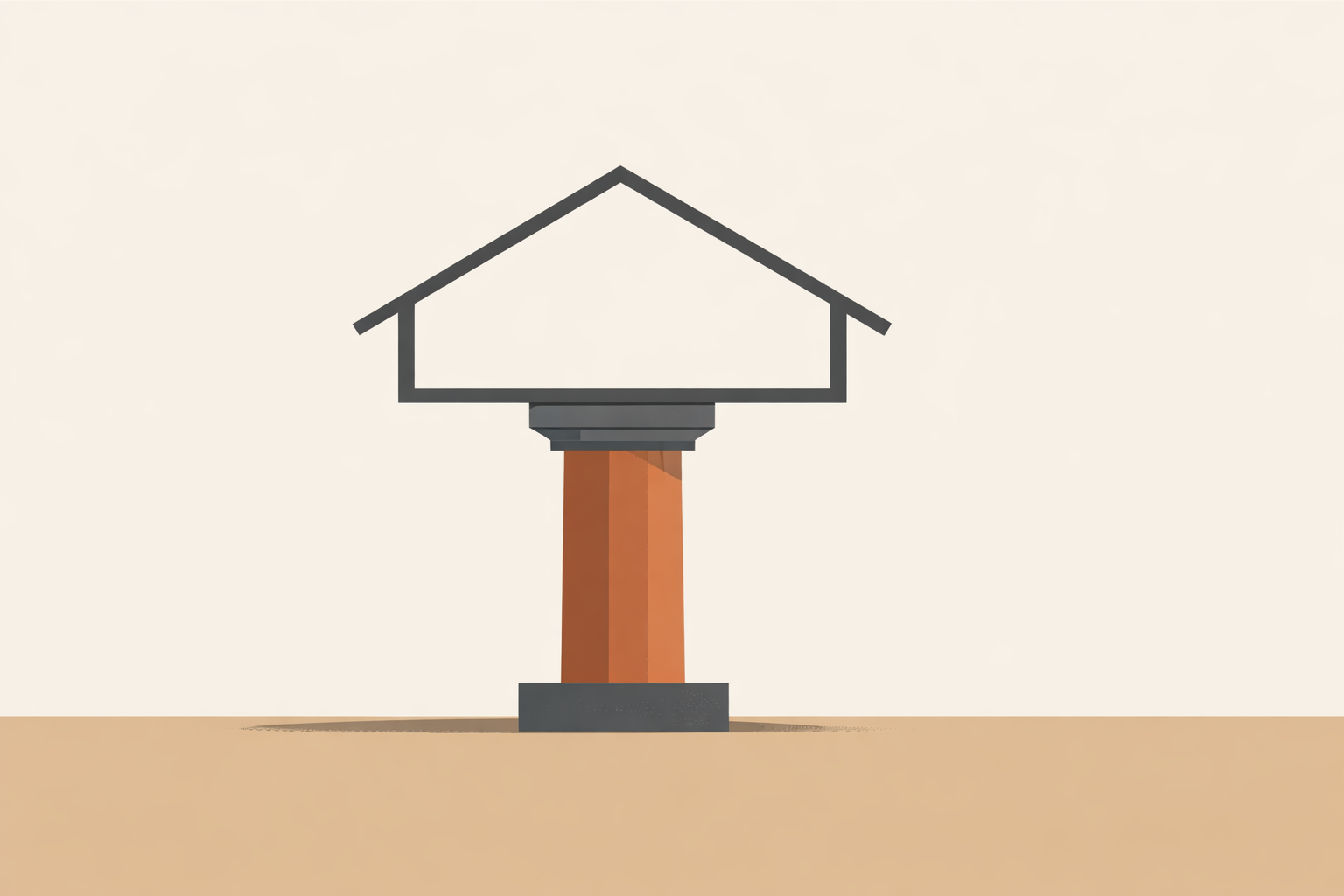
Foundation and structure determine whether anything lasts. Homes, families, institutions, and communities do not survive on intention alone. They endure because something beneath them carries weight, absorbs pressure, and holds its shape over time. When structure weakens, collapse follows quietly, then suddenly.
Modern culture talks endlessly about outcomes while treating the underlying systems like background noise. That is backward. Results are downstream. Infrastructure is upstream. The question is never whether life will apply pressure. The question is whether the design can hold the load.
What Foundation Actually Does
A foundation is not aesthetic. It is not motivational. It is functional. It distributes weight so a structure does not sink, tilt, or shear under stress. In human terms, foundation is routine, role clarity, accountability, cash flow discipline, emotional regulation, and shared standards. It is everything that keeps the roof from becoming the problem.
The best foundations are boring on purpose. They are meant to be dependable, not impressive. When a foundation is solid, people are free to build, create, and expand because the basics are handled. When the foundation is weak, every “new idea” becomes another strain on an already-fractured base.
Structure Is Not Control
Structure is often confused with restriction. In reality, foundation and structure create freedom by removing chaos. Load-bearing systems exist so that energy can be spent building upward instead of constantly repairing what is cracking below. The absence of structure does not produce creativity. It produces fragility.
Every durable system shares the same truth. Stability is invisible when it works. It only becomes noticeable when it fails. This is why strong foundations are rarely celebrated and weak ones are endlessly debated after collapse. Structure does not announce itself. It performs.
Reliability Is a Moral Choice
In real life, “stability” is not a vibe. It is behavior repeated until it becomes a system. People trust what shows up. Families function when commitments are honored. Organizations endure when standards are enforced. Communities strengthen when responsibility is shared. The moral dimension is simple: if others are standing on what you build, you do not get to be casual about the engineering.
Foundation and structure are not only about survival. They are about inheritance. They determine whether the next generation receives a platform or a pile of repairs. If permanence is the goal, discipline is the cost.