
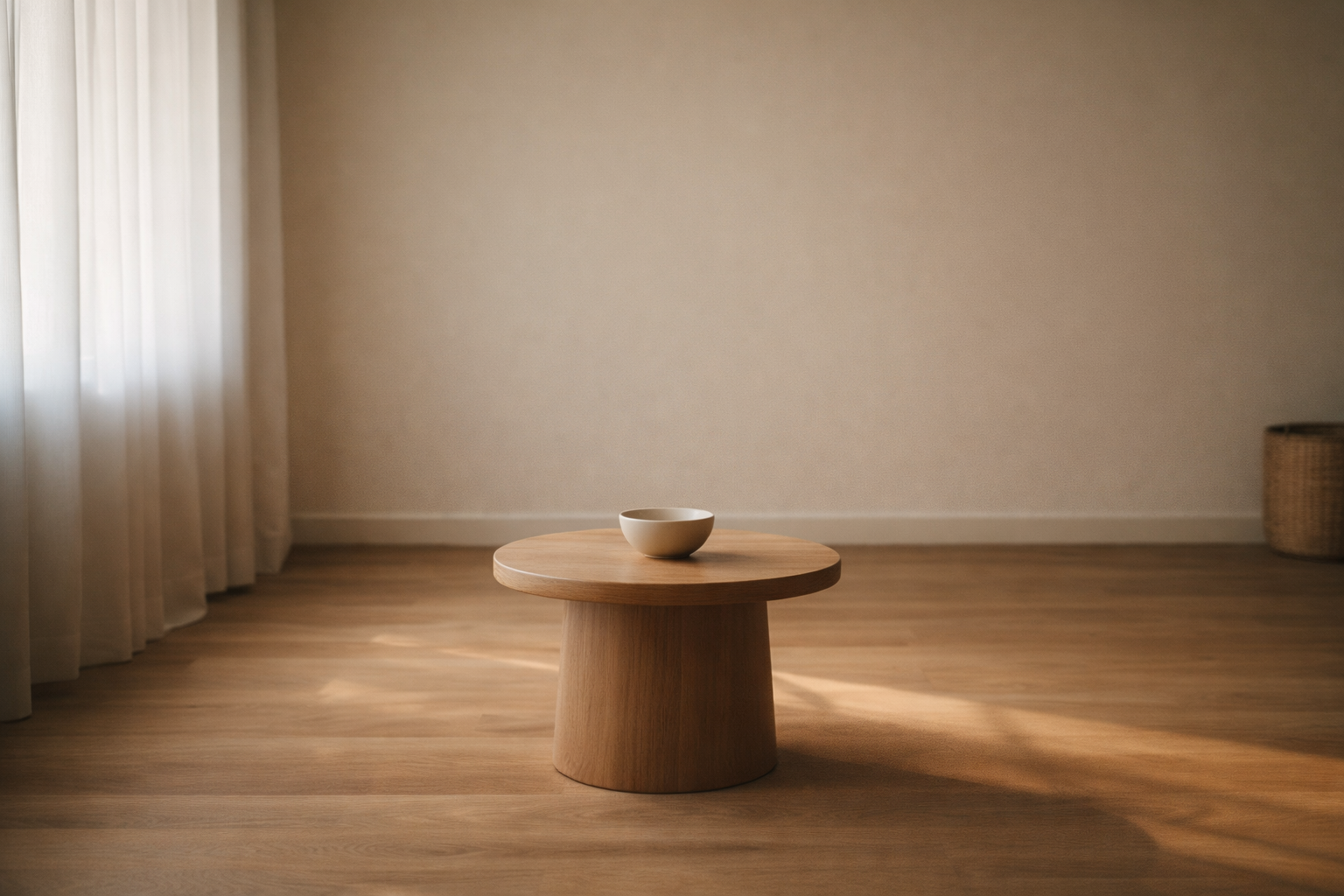
The room that holds at home is rarely the most impressive space.
Where Weight Lands
Every house has a room that absorbs more than its share. Conversations end there. Fatigue settles there. Decisions linger longer than planned.
This room does not announce itself. It simply stays available.
What Holding Looks Like
The room that holds is not defined by size or purpose. It might be a bedroom corner, a kitchen table, or a chair near a window that quietly receives the end of the day.
Its role is not function. Its role is containment.
When Space Becomes Shelter
Some rooms allow emotion to spread. Others keep it from spilling everywhere at once.
The room that holds creates boundaries without walls. It gives the nervous system a place to land before moving on.
How the House Helps
You do not need to redesign this room. You only need to avoid overloading it.
Leave one surface clear. Let one chair remain dependable. Resist the urge to turn this space into storage for everything unresolved.
Quiet Reliability
Homes function best when not every room is asked to do everything.
A holding room offers reliability. It reminds the body that not all weight must be carried at once.
Letting It Be Enough
The room that holds does not solve the problem. It supports you while the problem waits.
That is enough.
Stillness, practiced deliberately, becomes a form of structure that protects peace. Stillness Is Strategy.
