
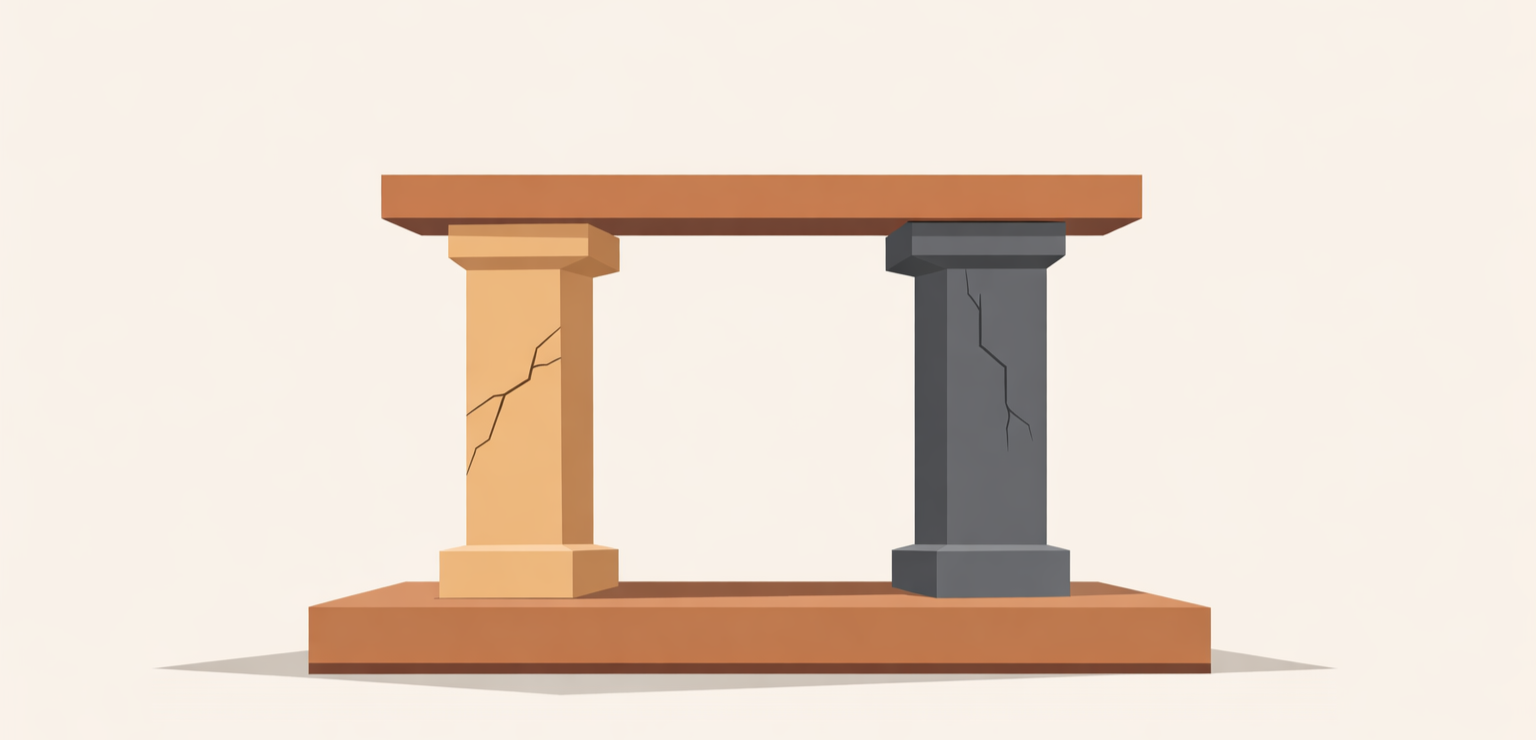
Marriage expectations under stress rarely surface until pressure arrives.
In good seasons, money is steady. Roles feel natural. Effort feels light. What people call love often survives because it has not yet been tested.
Winter changes that.
Winter brings layoffs, illness, fatigue, children, aging parents, debt, disappointment, and long stretches where nothing feels romantic. When relationships collapse in these seasons, many people point to character. Someone changed. Someone lied. Someone revealed who they really were.
That explanation feels satisfying. However, it usually misses the real cause.
Most relationships do not fail because someone was secretly deceptive. Instead, they fail because the contract was never written.
The Courtship Illusion
Courtship involves performance. It always has.
Men often perform competence, confidence, and provision. Women often perform warmth, agreeability, and care. This dynamic is not manipulation. It is selection.
The problem begins when couples treat courtship behavior as permanent policy.
Marriage is not an extension of dating. It is a new operating system. When partners fail to renegotiate roles, expectations, authority, and responsibility, they default to assumptions. Assumptions do not survive pressure.
Marriage Expectations Under Stress Reveal Structure
Stress does not create new people. Instead, it exposes weak frameworks.
When income drops, who leads financially? When exhaustion sets in, who absorbs the overflow? When conflict repeats, who has authority to decide and responsibility to repair?
If those answers were never explicitly agreed upon, winter forces improvisation. Improvisation then feels like betrayal when expectations were never spoken.
This is why people say, “They changed.” In reality, the environment changed. The structure could not carry the load.
Why Blame Feels Easier Than Design
Blaming character avoids responsibility.
If failure is moral, nothing needs fixing. No roles require clarity. No leadership gaps need attention. No financial rules demand definition. No expectations require documentation.
Yet durable relationships do not survive on intention alone. They survive on design.
The Real Question Winter Asks
Not: Who are you really?
But rather: What did we actually agree to?
Strong marriages survive hard seasons because they are governed, not guessed. Leadership is defined. Submission is structured. Money has rules. Conflict follows a process.
Marriage expectations under stress do not destroy healthy relationships. They reveal whether preparation ever existed.
Winter does not test love. It tests readiness.
Readiness is a decision made long before the temperature drops.
This post anchors a three-part framework on stability under pressure. Continue here to complete the system:
-
Submission Is a System, Not a Mood
How authority and responsibility must be structured before alignment is possible. -
The Myth of the One-Pot Marriage
Why marriage finances under stress demand governance, not symbolism.
For additional research on how financial strain and role ambiguity affect relationship stability, review findings summarized by the American Psychological Association.
