Exit ramps in relationships matter long before anyone decides to leave. The existence of an exit changes how people calculate risk, tolerate friction, make sacrifices, and decide whether something difficult is still worth repairing.
That does not make exits bad.
People need agency.
No healthy relationship should depend on trapping someone inside it.
But there is a harder question underneath the language of freedom:
What happens to commitment when every difficult season is evaluated beside an increasingly accessible alternative?
The answer is not that people should have fewer choices. The answer is that we need to understand what choice does to behavior.
The existence of an exit does not determine whether people leave. It changes the weight of the decisions made while they stay.
Exit Ramps in Relationships Change the Decision Environment
Every structure creates incentives.
Relationships are no exception.
Expectations matter. Shared resources matter. Obligations matter. So do the alternatives people believe remain available if the relationship stops working.
When departure feels psychologically close, some decisions can feel less permanent.
Investment may feel more reversible. Sacrifice may become harder to justify. Conflict can be evaluated not only through the question, How do we repair this?, but also through another:
Is staying worth the cost of repairing it?
That does not require weak character.
People respond to the options they believe exist.
Optionality changes behavior because optionality changes what people believe they stand to lose.
Safety and Optionality Are Not the Same Thing
This distinction matters.
Safety means a person retains dignity, agency, resources, boundaries, and a path out of circumstances that become abusive, coercive, dangerous, or fundamentally destructive.
Optionality is different.
Optionality is the preservation of alternatives so that commitment never becomes too difficult to reverse.
Those ideas are often treated as interchangeable.
They are not.
A person can maintain agency without organizing the relationship around expected departure.
Likewise, two people can build deep interdependence without surrendering their individual ability to function.
The goal should never be captivity. But neither should the goal be a relationship so lightly constructed that nothing meaningful has to be risked.
Why Exit Ramps in Relationships Can Feel Like Protection
Exit ramps feel rational because uncertainty is real.
People change. Circumstances change. Relationships fail.
Anyone who has watched a painful divorce, financial collapse, betrayal, or prolonged unhealthy partnership can understand why people want protection.
So people preserve independence.
Separate money.
Separate plans.
Separate contingencies.
Separate futures that can be activated if the shared one stops working.
Some of that can be prudent.
The problem begins when protection quietly becomes the organizing principle of the relationship.
Then the question changes from How do we build this well? to How much can I invest without making myself too vulnerable if this fails?
Optionality Changes How Much People Are Willing to Invest
Human beings respond to reversibility.
When a decision is easy to undo, we often approach it differently from a decision that carries lasting weight.
We preserve flexibility.
We hedge.
We avoid putting too much capital, identity, time, or vulnerability into one outcome.
That instinct makes sense in markets.
It becomes more complicated in relationships.
A durable partnership requires investment before certainty exists.
Trust requires vulnerability before guarantees exist.
Shared financial planning requires decisions whose benefits may take years to appear.
Raising children, caring for family, supporting career transitions, relocating, or absorbing temporary imbalance all require someone to act without knowing exactly how the future will repay the investment.
Commitment asks people to build under uncertainty. That is part of what gives commitment value.
Exit Ramps Can Turn Into Permanent Hedging
There is a financial idea that applies here: hedging.
A hedge reduces exposure if a primary position moves against you.
Used intelligently, it manages risk.
Used excessively, it can also reduce the upside of the position you were supposedly committed to holding.
Relationships can develop the same problem.
Someone keeps emotional distance so heartbreak will hurt less.
Another keeps finances completely detached because dependence feels dangerous.
Someone avoids long-term plans because circumstances might change.
Another maintains a private mental inventory of alternatives.
Each choice can look reasonable by itself.
Together, they can create a relationship in which both people are technically present but neither has fully arrived.
Commitment Is Not the Elimination of Choice
This is where the argument can go wrong.
Commitment should not mean making departure impossible.
A locked door is not loyalty.
Financial dependence is not devotion.
Social isolation is not stability.
Fear is not a relationship strategy.
Real commitment is stronger because it preserves agency.
Two capable people can know they would survive independently and still decide that the shared structure deserves continued investment.
Commitment means more when the door is not locked and both people keep choosing to maintain the house.
That choice carries weight precisely because another choice exists.
Voluntary Interdependence Is Stronger Than Dependence
Independence is useful.
Dependence can become dangerous.
Mature relationships do not have to live at either extreme.
They can operate through interdependence.
Interdependence means two people retain personhood while deliberately creating systems that work better together.
Each person brings capacity into the relationship.
Then they build something neither possesses alone.
That might include shared financial strategy, household rhythm, caregiving, emotional support, parenting, community, property, business interests, traditions, or long-term goals.
The point is not that separation becomes impossible.
The point is that connection becomes valuable.
This is also the deeper logic behind Appreciating Interdependence.
Two people do not have to disappear into each other to build something neither would possess alone.
Commitment Weakens When One Person Carries Most of the Downside
Commitment becomes unstable when one person carries nearly all the risk.
If one partner sacrifices career mobility while the other accumulates earning power, risk may become uneven.
If one person carries most of the unpaid household labor while the other builds professional leverage, risk may become uneven.
If one partner repeatedly relocates, compromises, absorbs family responsibilities, or postpones personal goals while the other retains maximum flexibility, risk may become uneven.
That matters because people become less willing to invest when they believe they will carry the loss alone.
Healthy commitment therefore requires more than asking whether both people are loyal.
It requires asking whether the structure distributes risk fairly.
That mechanism is explored further in Conditional Stability and Marriage Risk.
People do not invest in a vacuum. They respond to the consequences attached to success and failure.
Four Forces Shape Commitment When Exit Remains Available
Exit options do not operate alone. Their effect depends on the larger structure surrounding them.
Investment
The more meaningful the shared life becomes, the more there is to protect, maintain, and repair.
Repair Capacity
A relationship with credible ways to resolve conflict gives people an alternative to escalation, withdrawal, or departure.
Obligation
Commitment gains weight when people understand what they owe each other and which responsibilities remain during difficult seasons.
Agency
Staying carries more meaning when both people retain the ability to stand independently and continue choosing the relationship.
Repair Has to Remain More Functional Than Escape
Conflict creates pressure.
Under pressure, people search for relief.
If the only possible relief is repair, people may work harder to fix things.
But that does not guarantee healthy repair.
Sometimes it merely prolongs dysfunction.
The opposite problem appears when departure becomes the easiest way to stop discomfort.
Then difficult but repairable problems may never receive enough time or discipline to be resolved.
Repair Needs Structure Before Crisis
People need ways to disagree without destroying trust.
They need language for recurring problems.
They need boundaries around contempt, humiliation, withdrawal, and escalation.
They also need to know which problems require adjustment and which problems cross a genuine threshold.
That is why Repair Discipline: Why Fixing Is Harder Than Leaving belongs inside this conversation.
Repair cannot depend entirely on how committed two people happen to feel during the worst moment of the argument.
Durable Commitment Needs Defined Thresholds
Not every problem belongs in the same category.
Ordinary friction is not the same as abuse.
Disappointment is not the same as betrayal.
A difficult season is not automatically evidence that the relationship has failed.
At the same time, commitment should not require pretending that serious violations are ordinary difficulty.
What belongs inside the work of repair, and what genuinely changes whether this relationship should continue?
Without that distinction, ordinary conflict can be treated like existential threat while serious harm can be mislabeled as something commitment requires people to tolerate.
Commitment Gains Weight When People Build Something Together
Shared investment gives the relationship consequence.
Money can be part of that investment.
But money is not the whole structure.
Time matters.
Emotional history matters.
Family matters.
Shared responsibilities matter.
Reputation and community can matter.
So can the future two people have planned together.
Investment Should Create Meaning, Not Leverage
Shared investment should not be used to trap someone.
The point is not to make leaving impossibly expensive.
The point is to build enough substance that maintaining the relationship remains worth serious effort.
The same distinction appears in The One-Pot Marriage.
Financial integration can deepen interdependence. It cannot manufacture trust.
Pressure Reveals the Commitment People Thought They Had
Most relationships look stable when conditions cooperate.
Money is manageable.
Health is stable.
Work is moving.
Family demands remain predictable.
Then conditions change.
Pressure forces hidden assumptions into the open.
One person may have understood commitment as endurance through hardship.
The other may have understood commitment as conditional on continued satisfaction.
Neither definition becomes fully visible until the relationship enters a difficult season.
This is why Marriage Expectations Under Stress matters.
Hard seasons often expose the contract people believed they had rather than suddenly creating an entirely new relationship.
The Exit Ramp and Commitment Audit
The goal is not to remove agency. It is to determine whether the relationship has enough structure for repair, obligation, investment, and voluntary commitment to remain credible.
-
What problems belong inside repair?
Ordinary friction should not be treated like proof that the entire relationship has failed. -
What genuinely crosses the threshold?
Commitment should not make serious harm, coercion, betrayal, or danger invisible. -
Is repair credible?
Both people need evidence that difficult conversations can produce changed behavior. -
What have we actually built together?
Shared investment should create meaning and responsibility, not captivity. -
Does either person preserve independence mainly because the relationship feels unstable?
Risk management can reveal uncertainty that has never been named directly. -
Do we know what commitment means under pressure?
Definitions should exist before the difficult season arrives. -
If both people remain free enough to leave, is the structure still worth choosing?
That is one of the clearest tests of durable commitment.
Build a Relationship Worth Repairing, Not One That Is Impossible to Leave
Exit ramps do not automatically destroy commitment.
Neither does the existence of an exit prove that commitment is weak.
Options change incentives.
Incentives change behavior.
That is why durable commitment needs more than favorable conditions.
It needs clear expectations.
It needs repair capacity.
It needs meaningful investment.
It needs defined thresholds.
It also needs enough agency that staying continues to mean something.
The strongest commitment is neither captivity nor effortless optionality. It is a structure worth repairing, joined by people who remain free enough for staying to mean something.
Further Groundwork
Why repair needs structure before emotion, pride, and exhaustion make departure feel easier.
Risk Conditional Stability and Marriage RiskHow uncertainty changes what people protect, combine, sacrifice, and preserve inside long-term commitment.
Pressure Marriage Expectations Under StressHard seasons reveal the contract each person believed the relationship was operating under.
Interdependence Appreciating InterdependenceWhy two capable people can build shared capacity without requiring either person to disappear.
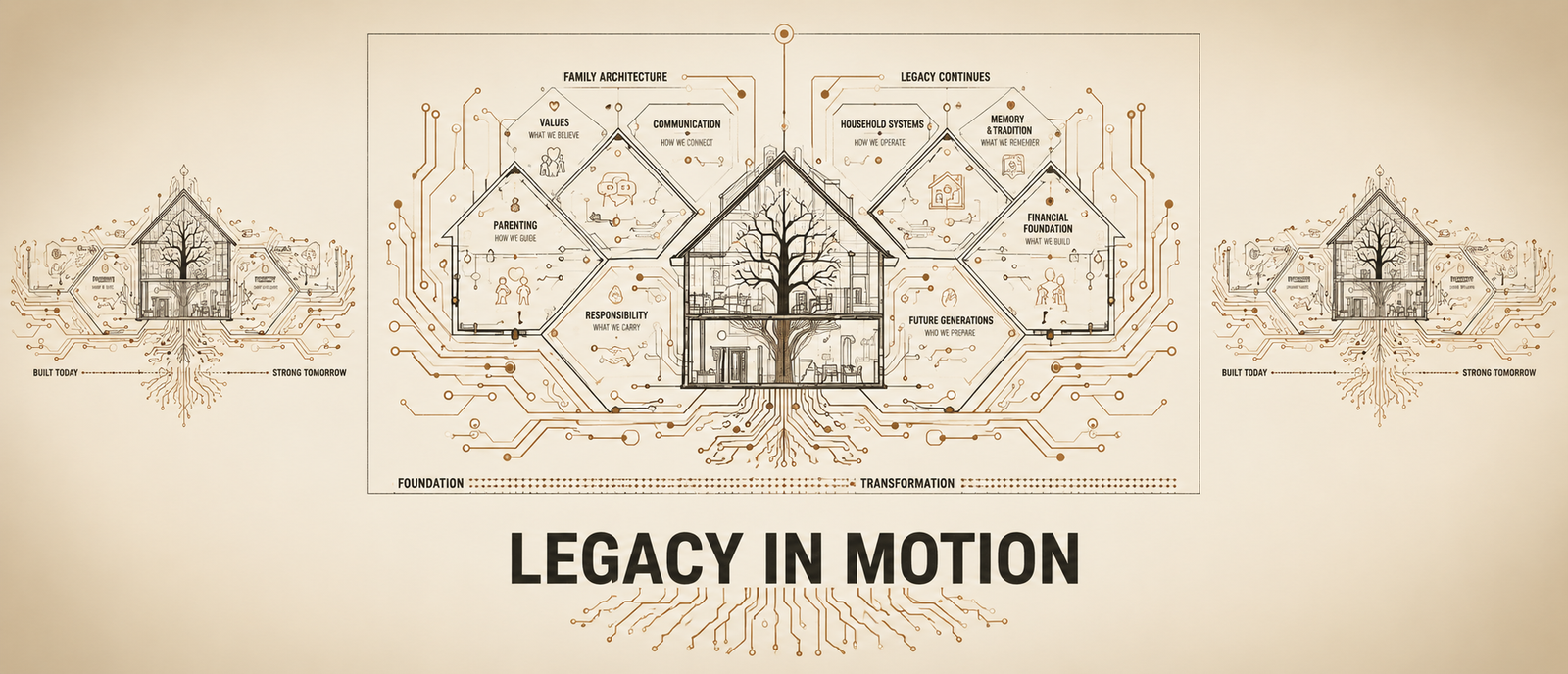
Series Hub Legacy In MotionExplore family architecture, commitment, communication, responsibility, repair, money, parenting, and generational continuity.