

Haiti first Black nation is more than a search phrase. It points to one of the most consequential political breakthroughs of the Atlantic world. In 1804, Haiti became the first free Black independent republic in the Western Hemisphere after formerly enslaved people defeated French colonial rule.
The revolution destroyed slavery in Saint-Domingue and displaced one of Europe’s most profitable colonial systems. At the same time, it demonstrated that racial slavery and imperial control were not permanent political facts.
Yet independence created a second challenge. Haiti had won sovereignty, but the new state still needed recognition, revenue, diplomacy, institutions, security, and enough capacity to make political freedom durable.
That difference is the center of the story.
Freedom could be won through revolution. However, stability required a different kind of work after the battlefield victory ended.
Haiti’s early history therefore shows the distance between creating sovereign authority and building a state capable of carrying that authority over time.
Haiti First Black Nation: Why 1804 Changed the Political Order
Haiti’s independence challenged assumptions that had organized the Atlantic world for centuries.
European empires had built enormous wealth through colonial extraction and racial slavery. At the same time, political thinkers celebrated liberty, natural rights, and self-government.
Haiti exposed the contradiction. Formerly enslaved people did not merely demand that the language of freedom include them. They defeated colonial forces and established a state outside the plantation order.
Why Haiti First Black Nation Still Matters
The significance of Haiti was not limited to national independence.
Instead, the new republic widened the imaginable boundaries of political sovereignty. Black people who had been treated as property under colonial law had created a state on their own terms.
Consequently, Haiti became both a source of possibility and a source of fear across societies still organized around slavery and racial hierarchy.
The Revolution Behind Haiti First Black Nation
The Haitian Revolution began in 1791 inside the French colony of Saint-Domingue.
Enslaved people formed most of the population and supplied the labor behind the plantation economy. Therefore, the struggle over slavery was inseparable from the economic system that made the colony valuable.
Over the following years, the conflict involved enslaved rebels, free people of color, French authorities, foreign armies, and shifting political alliances.
From Emancipation to Sovereignty
The revolution did not move in a straight line toward independence.
Slavery was abolished during the revolutionary period, while Toussaint Louverture became the leading political and military figure in Saint-Domingue. Later, Napoleon Bonaparte sent a major expedition to restore stronger French control.
Louverture was captured and deported to France. Nevertheless, resistance continued under leaders including Jean-Jacques Dessalines.
French forces were eventually defeated. As a result, Haiti declared independence on January 1, 1804.
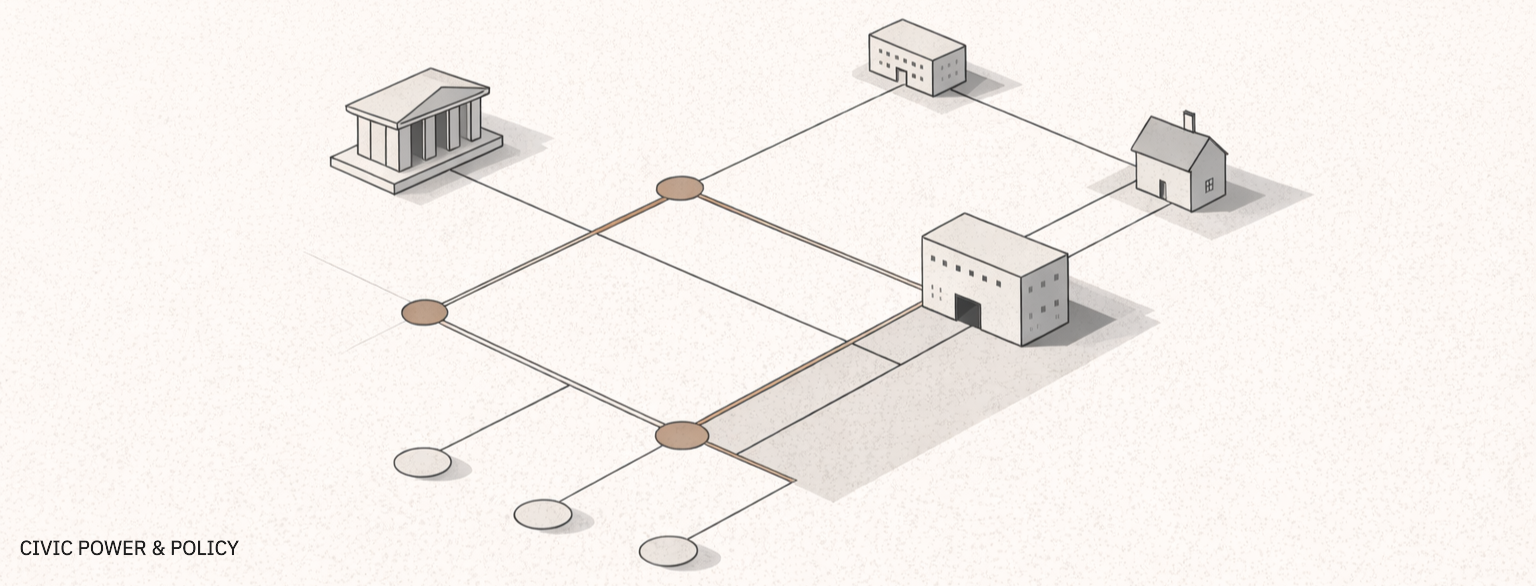
Breakthrough
Independence
Colonial rule is defeated and sovereign authority is declared.
Constraint
Recognition
Foreign states determine whether normal diplomatic relations follow.
Load
Fiscal Pressure
Debt, trade, defense, and administration compete for limited resources.
Requirement
Capacity
Institutions must turn sovereign authority into durable public function.
Recognition After Haiti Became the First Black Nation
Independence and diplomatic recognition are not the same thing.
Haiti declared sovereignty in 1804. However, several major foreign powers did not immediately treat the republic as a normal diplomatic partner.
That gap mattered because recognition influences trade, treaties, credit, security relationships, and international legitimacy.
Political Freedom Did Not Remove External Pressure
The defeat of French rule gave Haiti authority over itself. Still, the new republic existed inside a world of empires, slaveholding governments, commercial interests, and geopolitical rivalry.
The United States, for example, did not formally recognize Haiti until 1862. Earlier American policy had also reflected concern about the political implications of the Haitian Revolution.
Therefore, sovereign independence existed long before Haiti received the diplomatic treatment available to established states.
The 1825 Indemnity Constrained Haiti First Black Nation
France formally recognized Haitian independence in 1825. Yet recognition came with a severe financial condition.
Haiti agreed to an indemnity of 150 million francs intended to compensate former French colonists for property lost through revolution and independence.
Although the amount was later reduced, the burden remained significant. In addition, Haiti used borrowing connected to the payment arrangement.
Consequently, national resources faced pressure that might otherwise have supported administration, infrastructure, economic development, or other public investment.
Why the Timing of the Indemnity Matters
The indemnity was not imposed when Haiti declared independence in 1804.
Instead, France imposed the financial condition more than two decades later as part of its recognition of Haitian sovereignty.
This distinction separates two stages of the story: first came revolutionary independence; afterward came the fiscal cost attached to French recognition.
State Capacity After Haiti Became the First Black Nation
Political independence created authority. Capacity determined how much the state could reliably accomplish.
Haiti needed to finance government, secure territory, regulate trade, administer public affairs, resolve political conflict, and sustain economic production.
At the same time, the new state inherited a society damaged by years of warfare and transformed by the destruction of the colonial plantation order.
External Pressure Was Not the Only Constraint
Foreign hostility and fiscal pressure matter, but they do not explain every later Haitian outcome.
Domestic political conflict, institutional weakness, leadership struggles, regional divisions, economic choices, and repeated disruptions also shaped development.
Therefore, a serious systems analysis has to examine how internal and external pressures interacted rather than assigning one universal cause.
Capacity Determines What Sovereignty Can Carry
The Groundwork Condition of Capacity gives this problem a useful frame.
Capacity is what a system can reliably carry without unacceptable degradation. For a state, that includes fiscal resources, administrative competence, infrastructure, public institutions, security, and policy execution.
Thus, independence can create authority while limited capacity still narrows what that authority can accomplish.
Haiti First Black Nation Also Faced a Continuity Problem
Revolutions are built to break an existing order. States, by contrast, have to repeat essential functions every day.
Once revolutionary warfare ended, Haiti needed institutions that could keep operating through leadership changes, fiscal pressure, domestic conflict, and changing international conditions.
That requirement was fundamentally different from winning a battlefield victory.
What Has to Continue After Independence
Revenue collection must continue. Public administration must remain functional. Courts, trade systems, infrastructure, records, diplomacy, and security also have to survive political transition.
In other words, exceptional revolutionary effort must eventually become ordinary institutional function.
The Groundwork Condition of Continuity describes that challenge: preserving essential function, standards, knowledge, and purpose when leaders or carriers change.
Why Haiti First Black Nation Was a Precedent
Haiti’s importance reaches beyond its national boundaries.
The revolution demonstrated that racial slavery and European colonial rule were not permanent political facts. Formerly enslaved people had defeated imperial forces and established a sovereign state.
As a result, Haiti changed what different audiences across the Atlantic world believed was politically possible.
One Revolution Produced Opposite Reactions
Enslaved and free Black communities could view Haiti as evidence that colonial racial orders were vulnerable.
Slaveholding societies, meanwhile, could interpret the same event as a threat to their own systems. Consequently, the revolution carried sharply different meanings depending on who was watching.
That tension helps explain Haiti’s place in the wider history of abolition, Atlantic politics, and anti-colonial struggle.
Haiti Is History, Not a Motivational Formula
Haiti should not be reduced to a universal blueprint for every modern movement.
Its revolution emerged from a specific colonial economy, racial order, war, international environment, and institutional setting.
The more durable lesson is narrower and stronger: winning political authority and building durable institutions are different tasks.
Haiti First Black Nation Reshaped the Future of Hispaniola
Haitian independence also transformed the political future of the island it shares with the Dominican Republic.
The eastern side followed a different political sequence that eventually produced Dominican independence in 1844.
Although the histories intersect, they should not be treated as parallel versions of the same event.
Two Sovereign States Eventually Emerged
Haiti’s independence came from revolution against French colonial slavery. Dominican independence emerged later through another sequence involving Spanish colonial rule, political transition, Haitian rule in the east, and a separate Dominican independence movement.
Today, these different national histories occupy one shared geography.
That is why The Governance Problem of Hispaniola examines two sovereign systems managing shared consequences rather than forcing both histories into one narrative.
Continue Into Dominican Independence
The companion analysis, Dominican Independence in 1844: Sovereignty After Separation , examines the state-building challenge that developed on the eastern side of Hispaniola.
Read together, the two pieces show different paths toward sovereignty and a common challenge afterward: institutions still have to make political authority durable.
The Groundwork
Haiti First Black Nation Proved Freedom Could Be Won
Haiti’s independence in 1804 was one of the most consequential political breakthroughs of the Atlantic revolutionary era.
However, sovereignty did not remove every constraint. Diplomatic isolation narrowed options, while the 1825 French indemnity added fiscal pressure. Domestic conflict and institutional weakness created additional strain.
Therefore, the deeper lesson is not that freedom inevitably fails without perfect infrastructure.
Political freedom and durable governing capacity are separate achievements.
Haiti won sovereignty. Protecting, financing, administering, and carrying that sovereignty forward became the harder institutional work.
Continue Building
Continue through the historical and governance systems that connect Haitian sovereignty to the wider architecture of Hispaniola.
→ Island Framework: The Governance Problem of Hispaniola
→ Dominican History: Dominican Independence in 1844
→ Migration Framework: The Migration Systems Framework
→ Migration Entry Point: What Causes Migration?
Receipts
→ Smithsonian National Museum of American History | A Revolutionary World
→ Smithsonian NMAAHC | Toussaint Louverture and the Haitian Revolution
Groundwork Architecture
The Structure Under This Article
This article examines the distance between possessing sovereign authority and having enough institutional capacity to finance, administer, defend, and carry that authority forward.
Core Principle
A breakthrough becomes durable when the structures around it can survive pressure, maintenance, and change.
Primary Condition
Capacity determines what a state can reliably finance, administer, defend, and execute.
Supporting Conditions
Continuity carries essential function across change. Alignment coordinates institutions, resources, authority, incentives, and action.
Meet the Builder

Langston Reed
Builder · Civic Power & Policy
Langston Reed helps readers understand how institutions, governance, public policy, and civic systems shape everyday outcomes. His work looks beneath visible events to examine the structures that made them possible, the incentives moving through them, and the institutional patterns that remain after public attention shifts.
“Headlines describe movement. Systems explain movement.”
Reader Promise: Move past the visible event and understand the system underneath it.