
Cracks appear long before collapse. The warning signs are quiet, but they are never absent.
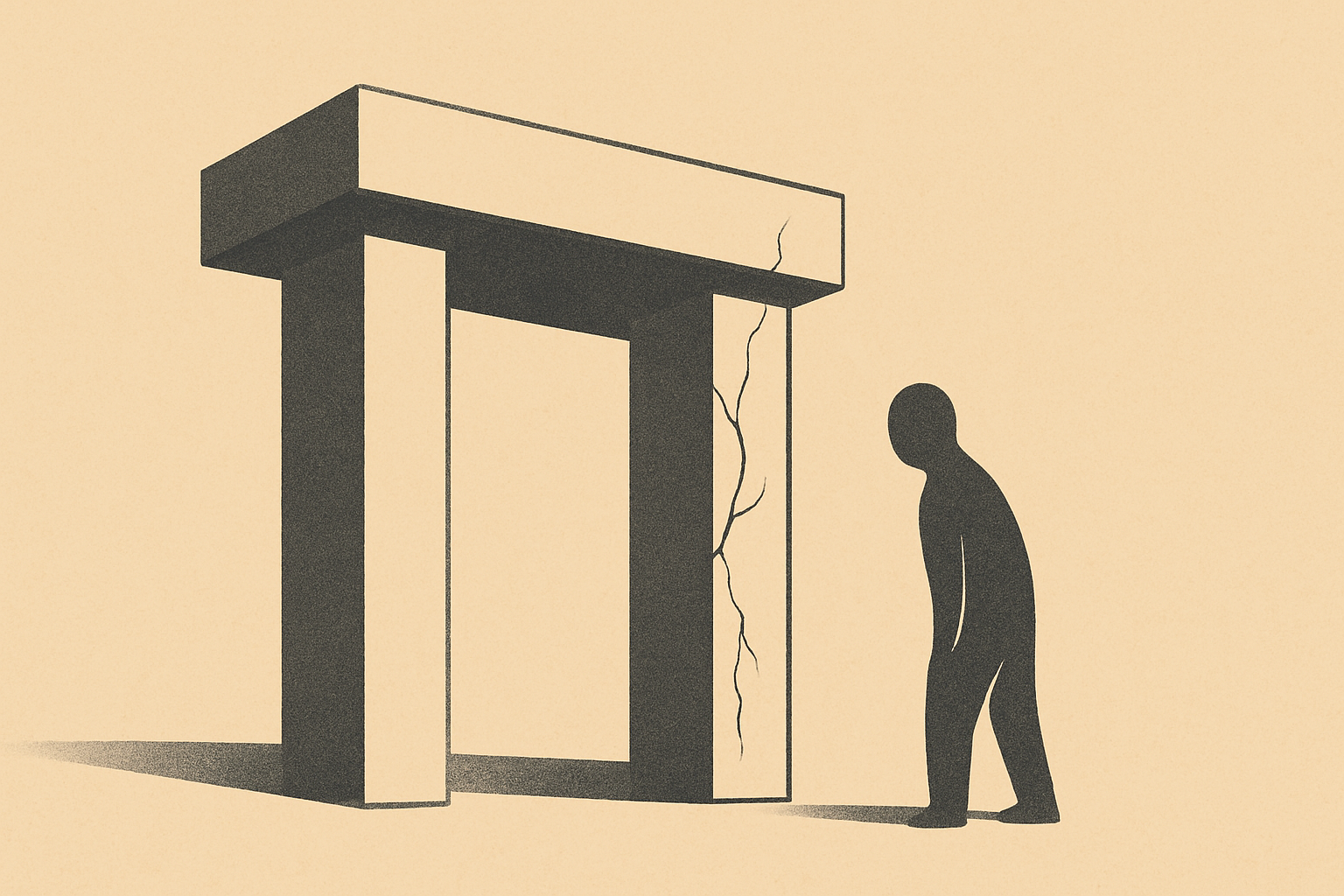
When the Structure Starts to Crack
Most systems do not fail without warning. They send small signals that accountability is slipping. People arrive a little later. Agreements slide without conversation. Tension becomes quiet distance instead of honest dialogue. The structure still stands, but the load begins resting on a few silent points that cannot carry it forever.
Early Signs of Accountability Breakdown
Early warning signs rarely look dramatic. They look like patterns. People stop naming concerns directly and move to side conversations. Missed commitments are dismissed as personality instead of discussed as solvable. Standards remain on paper while convenience becomes the real rule.
Silence is one of the clearest signals. When people stop offering questions, updates, or pushback, it usually means they no longer believe speaking up will lead to repair. Workarounds are another sign. If people begin avoiding certain conversations, calendars, or leaders, the system is absorbing more pressure than it admits.
Healthy structures normalize feedback, correction, and reset conversations. Cracking structures only address problems when they have become large enough to threaten reputation, revenue, or relationship. By the time the issue is addressed, the cost of repair is far higher than early maintenance would have required.
The Groundwork
Structural thinking treats small signals as maintenance calls instead of personal attacks. To do this, you need a simple way to scan for cracks before they widen.
- Watch the silence: Notice when questions, pushback, or honest updates suddenly decline. Quiet often signals disengagement.
- Track the drift: Compare what was agreed to with what is actually happening. Small repeated exceptions are structural clues.
- Map the workarounds: Pay attention to side routes, backchannel fixes, and patterns of avoidance. They show where trust has weakened.
The goal is not perfection. It is early intervention. When you treat these early signs as invitations to clarify expectations or repair trust, you keep the structure strong enough to carry real weight over time.
The Next Step
Choose one system in your life or work that matters: a home, a team, or a partnership. List three small signals you noticed in the last month that indicate drift, silence, or workarounds. Then choose one structural maintenance step such as a reset conversation, a clarified standard, or a new check in rhythm, and schedule it intentionally.
MIT Sloan on early cultural breakdown and warning signals: Does Your Company Suffer Broken Culture Syndrome .
Harvard Business Review on team trust dynamics: Do You Really Trust Your Team, and Do They Trust You .