
Where honesty gets the mic because the performance has already wasted enough time.
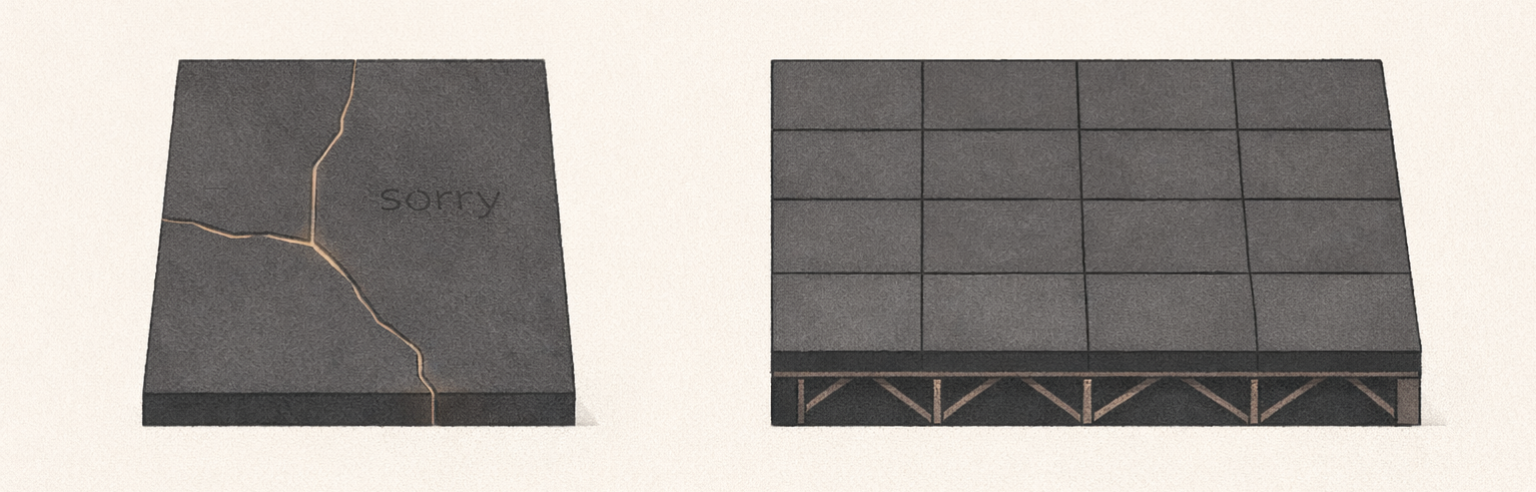
Apology vs repair is the difference between naming harm and rebuilding trust. An apology can sound sincere and still leave the same damage in place. Repair changes behavior. Confusing the two keeps relationships stuck in cycles that feel emotional but solve nothing.
Most folks are not short on apologies. Instead, they are short on follow-through. Saying “sorry” is a moment. Changing how you move is a system.
Why Apologies Feel Satisfying but Do Not Fix the Relationship
An apology can lower tension, reset the vibe, and even spark hope. However, it does not touch habits, routines, or patterns. That work happens later, when the moment passes and nobody is watching.
When the same “I am sorry” shows up without a different outcome, the issue is not forgiveness. In reality, it is avoidance dressed as sincerity.
Why Someone Keeps Apologizing but Does Not Change
Repeated apologies without changed behavior usually signal one of three things:
- They want emotional relief more than accountability.
- There is no concrete plan to act differently.
- The pattern benefits them, even if it drains you.
An apology without a system is just a reset button. And reset buttons do not rewire the house.
Accountability Starts After the Apology
Repair shows up as changed behavior. It looks like planning ahead, communicating early, and correcting course before the same damage repeats. More importantly, repair answers the question people dodge because it is inconvenient:
What will be different next time?
If there is no clear answer, repair has not started.
The Emotional Labor Trap
Apologies without repair quietly hand the monitoring job to someone else. They stay alert. They remind you. They brace for impact. Meanwhile, you keep saying the right words.
Over time, that vigilance becomes exhausting. Not because mistakes happen, but because nothing shifts. As a result, trust erodes quietly, like termites in the foundation.
- Does the apology come with a specific plan?
- Does behavior change without constant reminders?
- Is trust rebuilding over time, or just pausing?
If the answer keeps being no, that apology is doing emotional theater.
Apology vs Repair: What Actually Rebuilds Trust
This is the real tension in apology vs repair: one comforts, the other corrects. If you want repair instead of repetition, the work has to become visible. Not dramatic speeches. Not sad faces. A plan and proof.
- Name the pattern. Not just the mistake, but the habit that keeps producing it.
- Make a visible adjustment. Change the schedule, the boundaries, or the decision process. Something concrete.
- Own the monitoring. Do not make the person you hurt manage your change.
- Prove consistency. Trust rebuilds through reps, not rhetoric.
Repair is boring on purpose. It trades drama for discipline.
For more on what makes an apology effective and why behavior matters afterward, the Greater Good Science Center breaks down the elements that move an apology from performance to responsibility.
Apology vs Repair in Real Relationships
People who repair apologize less over time because their behavior changes. The pattern fades. The pressure drops.
People trapped in apology loops stay fluent in emotional language but remain structurally unchanged. Same conversation, new tone, zero progress.
An apology can open the door. Repair is what makes it safe to walk back inside.
If the words stay consistent but the outcome does not, the work has not started yet.
The Groundwork
Component: Accountability
Future Literacy: Repair as a System, Not a Moment
Core Principle: Apology names harm. Repair rewrites the pattern. Trust rebuilds when behavior changes consistently enough that monitoring is no longer required.
Further Groundwork
→ Charm Is Not Contribution
→ Accountability Is a Form of Strength
→ Structure Builds Freedom
