
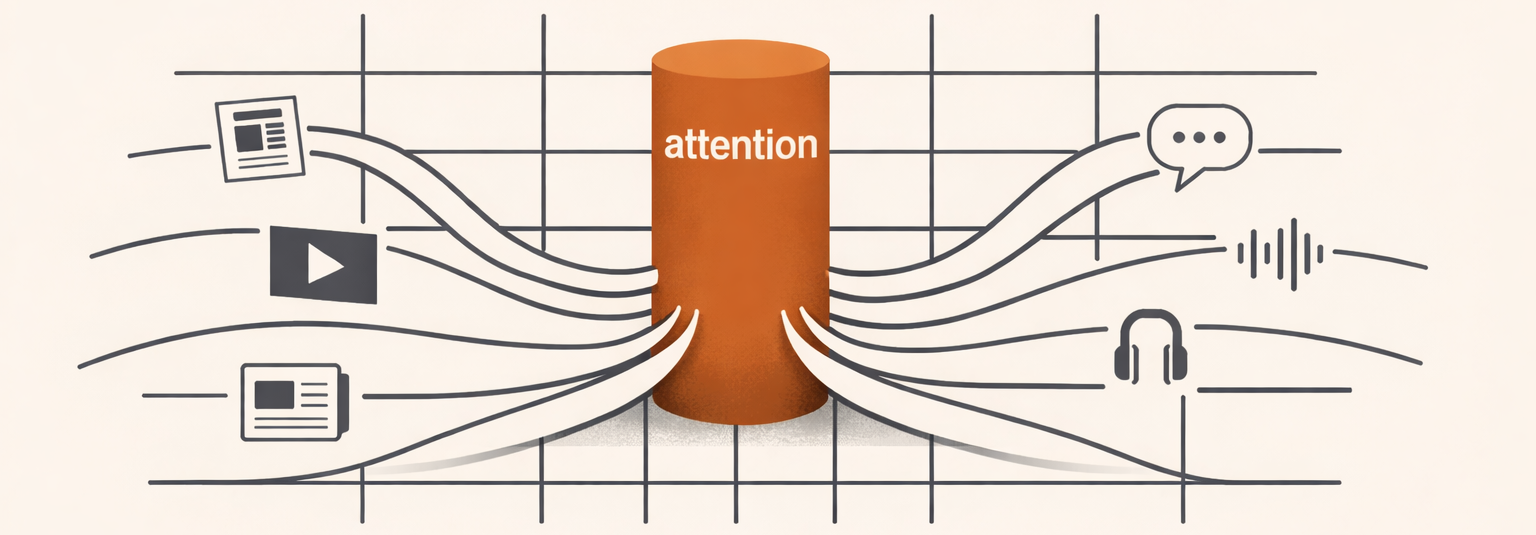
The attention economy changed journalism more than most newsrooms expected. News no longer competes only with other reporting. It now competes with video, podcasts, gaming, livestreams, social feeds, group chats, memes, and every other system built to hold attention for one more second.
That pressure shapes modern media. Journalism still matters. However, it now operates inside an environment where attention is scarce, distraction is endless, and digital platforms reward whatever keeps users engaged the longest.
In practical terms, this means news must do more than inform. It must survive inside a crowded digital marketplace where novelty, speed, and emotional reaction often outperform depth, patience, and context.
Table of Contents
- What the Attention Economy Is and Why It Matters for News
- Why News Now Competes With Entertainment in the Attention Economy
- How Social Media Changed News Consumption
- Why Journalism Struggles Online
- How Algorithms Shape News Consumption
- The Economics of Attention
- What Stronger Media Organizations Will Do Next in the Attention Economy
- Key Takeaways About the Attention Economy
- Questions About the Attention Economy
What the Attention Economy Is and Why It Matters for News
The attention economy describes a digital environment where information is abundant but human attention is limited. News organizations, social platforms, creators, and entertainment companies compete for the same finite focus. Algorithms, engagement systems, and platform design often determine which information captures attention first.
The attention economy describes a media environment where information is abundant but human attention is limited. That imbalance creates competition. Every article, alert, post, clip, and notification pushes into the same narrow channel of human focus.
This is why digital media feels crowded even when individual pieces are small. The issue is not only the volume of content. The deeper problem is that the supply of information keeps expanding while the amount of attention available from each person stays fixed.
That bottleneck changes how media behaves. It changes what gets promoted, what gets ignored, and what kind of journalism becomes economically sustainable. In plain English, more content does not create more focus. It simply creates a fiercer fight for it.
Disciplined information habits matter here. As Structure Builds Freedom argues, clear systems protect people from constant interruption. Attention without structure scatters fast.
Why News Now Competes With Entertainment in the Attention Economy
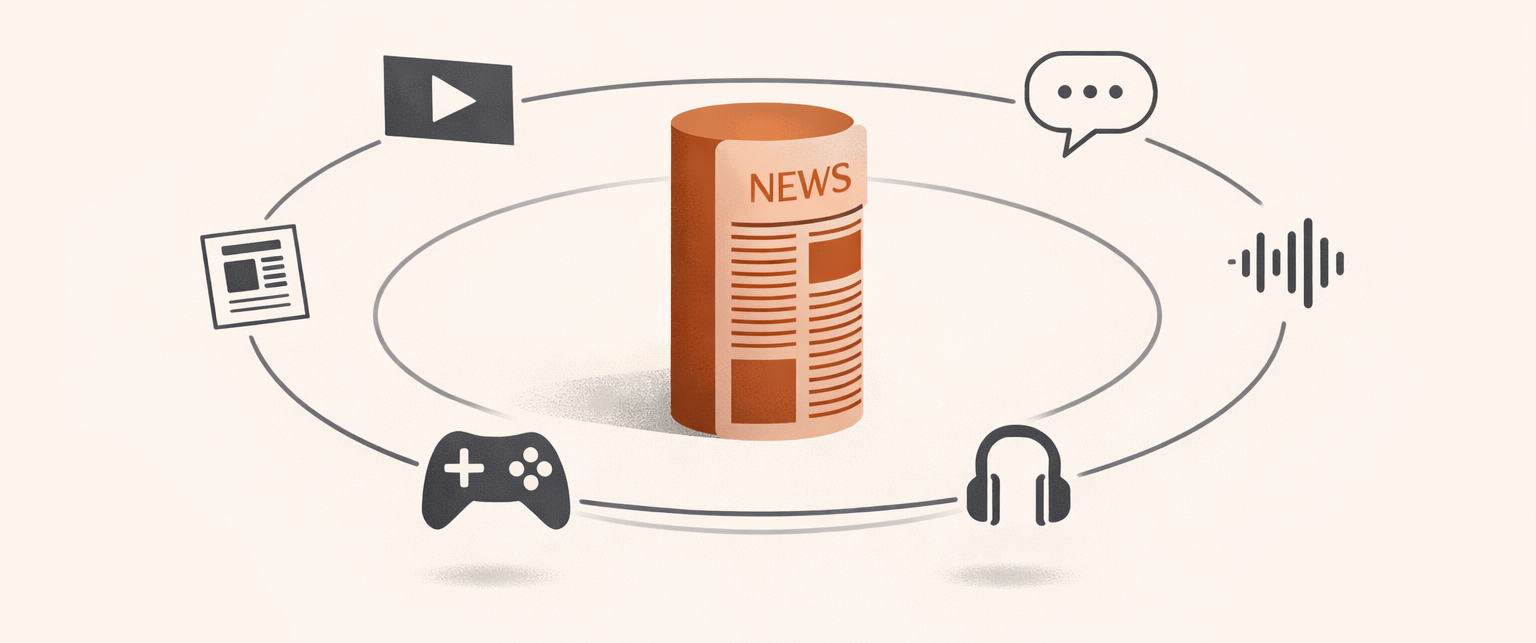
For most of the twentieth century, news had a built-in distribution advantage. Newspapers, radio, and television owned the main routes through which information reached the public. That system had flaws, but it created a stable hierarchy. News had a designated place in public life.
The internet shattered that structure. Today, a breaking headline appears in the same feed as a comedy clip, a creator rant, a sports take, a brand ad, a friend’s update, and a conspiracy spiral. On the screen, all of it looks equally available. In the mind, all of it competes equally for attention.
That flattening is not a side effect. It is the whole game. News is no longer insulated from entertainment. It must perform beside it.
This shift connects directly to the broader media transformation explored in The Future of Journalism. Distribution changed first. Trust and institutional authority shifted after that.
How Social Media Changed News Consumption
Social media did not simply give journalism another channel. It changed the conditions under which people encounter journalism. Readers no longer arrive only in a news setting. Instead, they encounter news while scrolling for entertainment, social validation, distraction, or emotional release.
That shift matters because context changes expectation. A reader opening a newspaper once expected to receive news. A user opening a feed expects stimulation. As a result, news enters the mind as one contender in a larger contest rather than as the default product being sought.
The standard of competition therefore changed. Journalism is no longer judged only against journalism. It is judged against everything else a screen can offer in the same moment.
Why Journalism Struggles Online
Journalism struggles online because digital systems often reward behavior that journalism is supposed to resist. Strong reporting usually requires verification, patience, sourcing, and context. Platform systems often reward speed, emotional reaction, novelty, and repeat engagement.
The Incentive Problem in the Attention Economy
That mismatch creates pressure on the newsroom. Stories that provoke outrage or curiosity often outperform stories that ask for concentration. Headlines become sharper. Framing becomes hotter. Substance gets squeezed by pace. Readers can feel this even when they cannot name it precisely.
That recognition helps explain why trust weakens over time, a pattern examined more directly in Why Trust in Media Is Collapsing. When people sense that coverage follows attention incentives rather than explanation, credibility erodes.
Speed vs. Accuracy in Digital News

Speed also changes editorial risk. When the competition is constant, slowing down can feel like losing ground. That pressure pushes some outlets toward premature framing, thinner verification, or reactive amplification of whatever already trends.
Legacy institutions feel this pressure too. Leadership changes, editorial restructures, and brand repositioning often reflect a deeper fact: legacy media must now compete inside the same attention environment as independent publishers, creators, and platforms. The old moat is gone.
That does not mean traditional newsrooms are useless. It means they now fight inside a harsher market than the one that built them.
How Algorithms Shape News Consumption
Algorithms do not simply distribute content. They shape the conditions under which content appears at all. That means they influence news consumption before a reader even makes a conscious choice.
Most major platforms sort content based on predicted engagement. They test what keeps users watching, scrolling, clicking, and reacting. News enters that system as one category among many, not as a protected public good.
The result is an algorithmic battlefield where emotionally charged content often travels farther than carefully reported analysis. This does not make reporting useless. It makes the distribution environment hostile to nuance.
That is one reason independent journalists and direct-audience publishers gained ground. As explored in Why Creator-Led Media Is Replacing Traditional Newsrooms, publishers who build direct relationships with readers reduce their dependence on engagement-heavy platform logic.
The Economics of Attention
If attention drives revenue, then attention-seeking behavior spreads. That is not cynicism. That is incentive structure. Advertising, sponsorships, subscriptions, and platform reach all react in some way to visibility and engagement.
This is why the attention economy is not just a cultural problem. It is a business problem. Media organizations do not only ask what is true or useful. They also ask what gets seen, what gets clicked, what gets shared, and what earns support.
That is where the danger lives. Once visibility becomes the dominant metric, institutions can begin optimizing for response rather than understanding. The publication may still look like journalism on the surface while it slowly reorganizes itself around stimulation.
That is also why Discipline Before Dollars belongs in this conversation. A publication that chases every spike can damage the very trust it needs to survive. The discipline to protect standards becomes part of the business model.
What Stronger Media Organizations Will Do Next in the Attention Economy
Despite all this, journalism still holds advantages that entertainment content does not. Strong reporting reduces uncertainty. It names causes. It tests claims. It gives public events a usable frame. When done well, it does not merely attract attention. It organizes reality.
That utility still matters. In fact, it may matter more in a saturated media environment because people increasingly need interpreters, not just more raw information.
The outlets and writers who survive this era will probably do three things well:
- Explain clearly. Readers do not need more noise. They need signal.
- Build trust directly. Credibility compounds through consistency.
- Create habits, not just hits. Sustainable journalism depends on repeat attention, not one viral spike.
This is why the comparison in Legacy Media vs Independent Journalism: What Each Still Does Best matters. The strongest ecosystem will not be built by one format alone. It will be built by institutions and independent publishers who know what they actually do well.
The future of news will likely belong to organizations that understand attention without worshipping it. Chase attention blindly and journalism becomes performance. Ignore attention entirely and journalism becomes invisible. Both mistakes are expensive.
The stronger path is structural. Build formats that respect time. Develop recognizable editorial voices. Create direct channels through newsletters, podcasts, memberships, and communities. Use algorithms when useful, but do not let algorithms define the whole institution.
In short: the attention economy does not eliminate journalism. It forces journalism to compete harder, explain better, and build stronger systems for trust.
Key Takeaways About the Attention Economy
- The attention economy exists because information is unlimited but human attention is not.
- Modern news competes with entertainment, social media, gaming, and streaming platforms for audience focus.
- Algorithms shape news consumption by promoting content that generates engagement.
- Journalism struggles online when platform incentives reward speed and emotional reaction over careful reporting.
- Stronger media organizations will survive by building trust, direct audiences, and consistent editorial habits.
Questions About the Attention Economy
What is the attention economy?
The attention economy is a system where information is abundant but human attention is limited, forcing every piece of content to compete for the same finite focus.
Why does news compete with social media?
News competes with social media because both now appear inside the same digital environments. On most platforms, journalism sits beside entertainment, commentary, and personal content rather than above it.
Why is journalism struggling online?
Journalism often struggles online because digital platforms reward speed, reaction, and engagement, while strong reporting depends on verification, context, and trust.
How do algorithms affect news consumption?
Algorithms affect news consumption by deciding which stories get visibility. They often amplify content likely to keep users engaged, which can disadvantage slower, more nuanced reporting.
The Groundwork
Attention is the real currency. Noise is cheap. Focus is expensive.
News now competes with everything, but that does not make journalism obsolete. It makes discipline more important. The outlets that endure will be the ones that know how to earn attention without surrendering standards.
Further Groundwork
The Future of Journalism
A broader look at how media authority, trust, and distribution are changing.
Why Creator-Led Media Is Replacing Traditional Newsrooms
How direct audience relationships changed the economics of publishing.
Why Trust in Media Is Collapsing
Why credibility weakens when incentives and explanation drift apart.
Legacy Media vs Independent Journalism
What each model still does well inside the same evolving ecosystem.
Structure Builds Freedom
A pillar essay on why systems protect clarity in a noisy environment.
Discipline Before Dollars
Why standards and structure must lead before scale, speed, or attention chasing.
