
Black American culture is often treated like a playlist or a mood. In reality it is a full framework. A Black American cultural framework. It formed under pressure, across centuries of constraint, and still manages to hold families, communities, and entire industries in place. If you want to understand the present or plan for the future, you have to understand the structure that already exists underneath everything.
This framework did not appear by accident. It grew out of survival choices, spiritual commitments, migration routes, and constant negotiation with systems that were rarely built with Black life in mind. The result is a set of pillars that carry more weight than most people realize. When those pillars are honored and strengthened, Black communities gain stability. When they are ignored or exploited, instability spreads fast. This Black American cultural framework helps explain why these pillars still shape identity today.
The Pillars of the Black American Cultural Framework
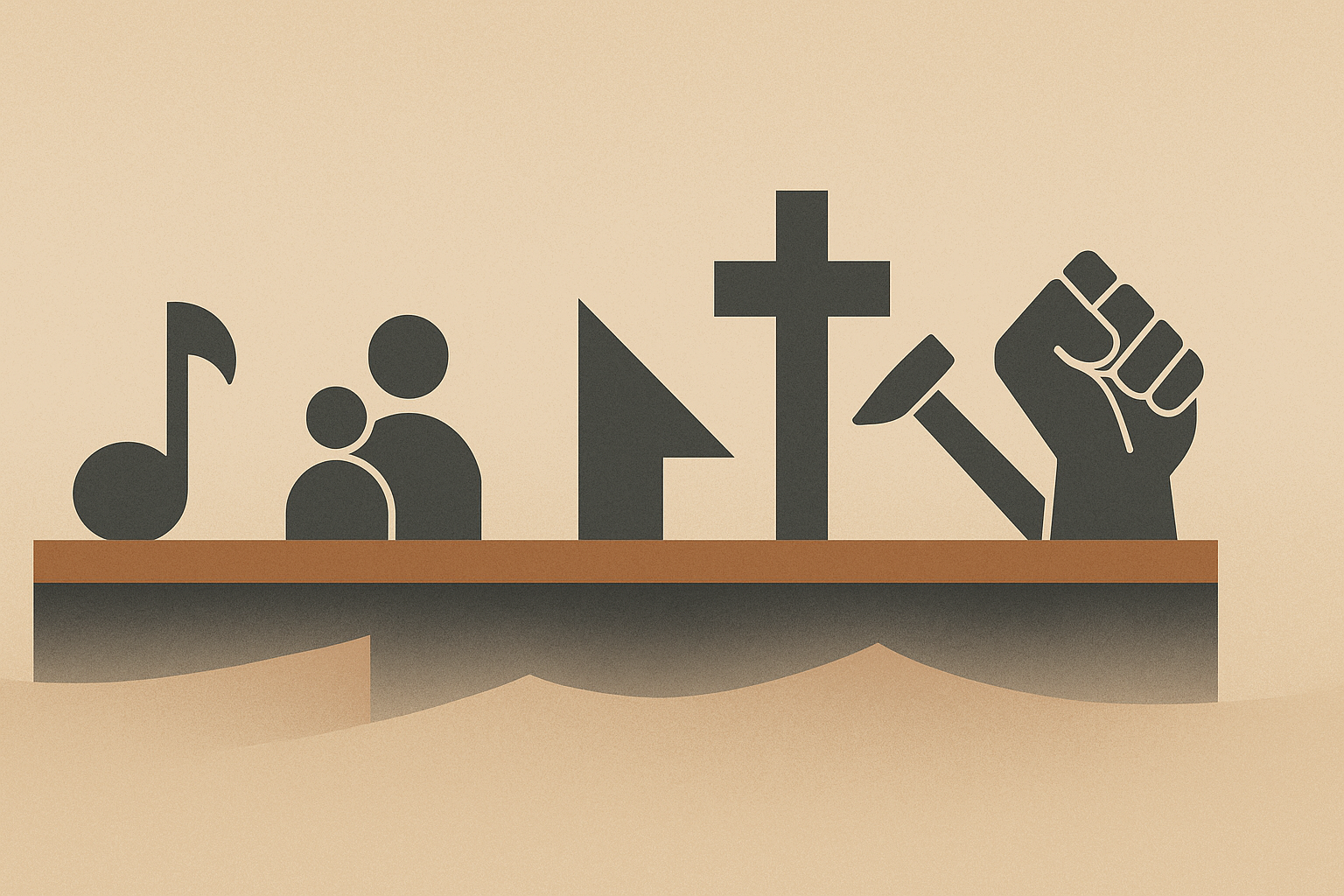
At the core, the framework rests on six major pillars. Music, family, migration, faith, craftsmanship, and political struggle. Each pillar holds a different part of life, but all of them connect. Together they form a structure that explains why Black American culture has such reach and such resilience.
Music documents memory and sends it forward. Family networks distribute care and responsibility. Migration routes create new blends of tradition and strategy. Faith keeps meaning alive when circumstances do not make sense. Craftsmanship turns limited resources into functioning systems. Political struggle forces the country to adjust the rules. None of this is random. It is organized behavior that repeats through time.
Music as a Memory System
Black American music is not just sound. It is a memory system. Spirituals carried coded messages and theology in the same breath. Blues recorded the cost of exploitation with blunt honesty. Jazz experimented with freedom in real time. Soul, funk, and hip hop mapped out both pain and possibility. Each era layered new language on top of the old foundation.
That is why entire regions of the world rely on Black American musical vocabulary without always recognizing the source. The music is portable. It allows people to feel seen, even when they have never visited the neighborhoods where the sound first took shape. This is cultural infrastructure. It moves memory across distance and across generations.
Family, Kinship, and Chosen Responsibility
Family inside the Black American framework is not limited to legal definitions. It includes blood relatives, church aunties, block elders, godparents, and the people who stepped in when systems stepped back. The Family Stability lens explains this clearly, which is why The Family Stability Framework sits beside this piece as a partner document.
Roles and expectations developed in response to instability. Grandmothers raised grandchildren. Older cousins covered the gaps. Men and women worked out division of labor in real time, often under economic and legal pressure. The point was not perfection. The point was survival with dignity. That same instinct still shapes how Black families think about discipline, protection, and legacy today.
Migration and the Geography of Culture
The Great Migration turned internal movement into a cultural superpower. Families carried Southern habits into Northern cities and Western towns. They brought cooking methods, music, church styles, and standards of respect with them. In new environments, those habits adjusted and blended but rarely disappeared.
As a result, the framework expanded. Neighborhoods in Chicago, Detroit, Los Angeles, and New York developed signature versions of Black American life. At the same time, they stayed connected to Southern roots. This is why a single song, recipe, or familiar phrase can feel at home in multiple cities at once. The framework travels but keeps its base code.
Faith as Operating System
Faith works like an operating system inside this framework. It gives language for suffering, hope, discipline, and accountability. It also produces institutions that anchor life when formal systems fail.
Churches, mosques, and spiritual spaces have hosted political meetings, mutual aid efforts, and quiet counseling sessions for decades. They provide emotional regulation, moral teaching, and a long view of history. For many families, faith explained why it still made sense to work for better conditions even when circumstances were harsh.
Craftsmanship, Work, and Everyday Engineering
Another pillar is craftsmanship. Black Americans have a long record of turning limited resources into workable systems. From early inventors and artisans to modern builders, mechanics, nurses, coders, stylists, and independent trades, the pattern is consistent. People figure out how to make things function under constraint.
This pillar connects directly to pieces like Legacy in Motion. The Architecture of Black American Culture and the Foundation Innovators series. It also links to economic behavior. The ability to maintain, repair, and reconfigure infrastructure is a quiet form of power. It keeps households and neighborhoods steady when external support is unreliable.
Political Struggle and Structural Change
The final pillar in this framework is political struggle. Black Americans have repeatedly forced the United States to confront its contradictions. From Reconstruction to the Civil Rights era to current fights over voting rights and public safety, the community has pushed the system to widen who counts and who receives full protection under the law.
That is why pieces like Civil Rights. Who Fought for Them and Who Benefited and the upcoming Civil Rights Inheritance Ledger sit in the same cluster as this essay. The framework reaches into policy and law, not just culture.
Why the Black American Cultural Framework Matters Now
Without a clear framework, people fall into myths. Some claim Black Americans have no culture of their own. Others reduce culture to entertainment or trends. Both positions ignore the pillars that keep communities standing. They also ignore the level of discipline required to maintain this structure under constant pressure.
A Black American cultural framework helps correct those myths. It shows that culture is organized survival. It is spiritual, emotional, and logistical engineering. That clarity matters for conversations inside the community and across the African diaspora. It sets the record straight on what exists before any debate about unity or critique.
This framework is also a planning tool. When you know the pillars, you can protect them instead of eroding them by accident. You can build policy and community programs that strengthen the structure instead of stripping it for parts. That is where Discipline Before Dollars connects. It describes the personal side of the same architecture.
Standing on What Was Built
For younger generations shaped by rapid cultural turnover, the framework can feel distant. It is not. It is present every time a grandmother passes down a recipe, every choir carries a familiar chord, every father explains a standard, or every neighbor watches the block with intention.
The task now is not to romanticize the past. The task is to acknowledge the inheritance with clear eyes and decide how to extend it. That includes honest critique, updated practices, and new forms of expression. It also includes respect for what held under conditions that were not supposed to produce this level of creativity or endurance.
Black American culture continues to influence the world. That influence did not come from nowhere. It flows out of structure. Understanding the framework makes it easier to protect what previous generations built. Recognizing that fact is the first step toward using it wisely.
The Groundwork
The Black American cultural framework is not nostalgia and it is not theory. It is structure that held under pressure and still holds now. When you understand the pillars, you understand why the community continues to influence the country and why certain patterns repeat across generations.
The assignment moving forward is simple. Strengthen what endured. Modernize what must evolve. Protect the inheritance that built stability when the landscape offered none. Culture is not a mood. It is a system. Treat it like one.
Civil Rights. Who Fought for Them and Who Benefited for a clear view of who paid the cost and who received the gains of the Civil Rights era.
Real Talk Blueprint. The Diaspora Argument People Keep Getting Wrong for a grounded look at how history gets twisted when people debate identity without structure.
Legacy in Motion. The Architecture of Black American Culture for a closer look at how cultural structure and daily life fit together.
Smithsonian National Museum of African American History and Culture for curated exhibits that document cultural pillars and lineage.
Library of Congress Civil Rights History Project for first person accounts that reveal how these pillars operated in daily life.
