
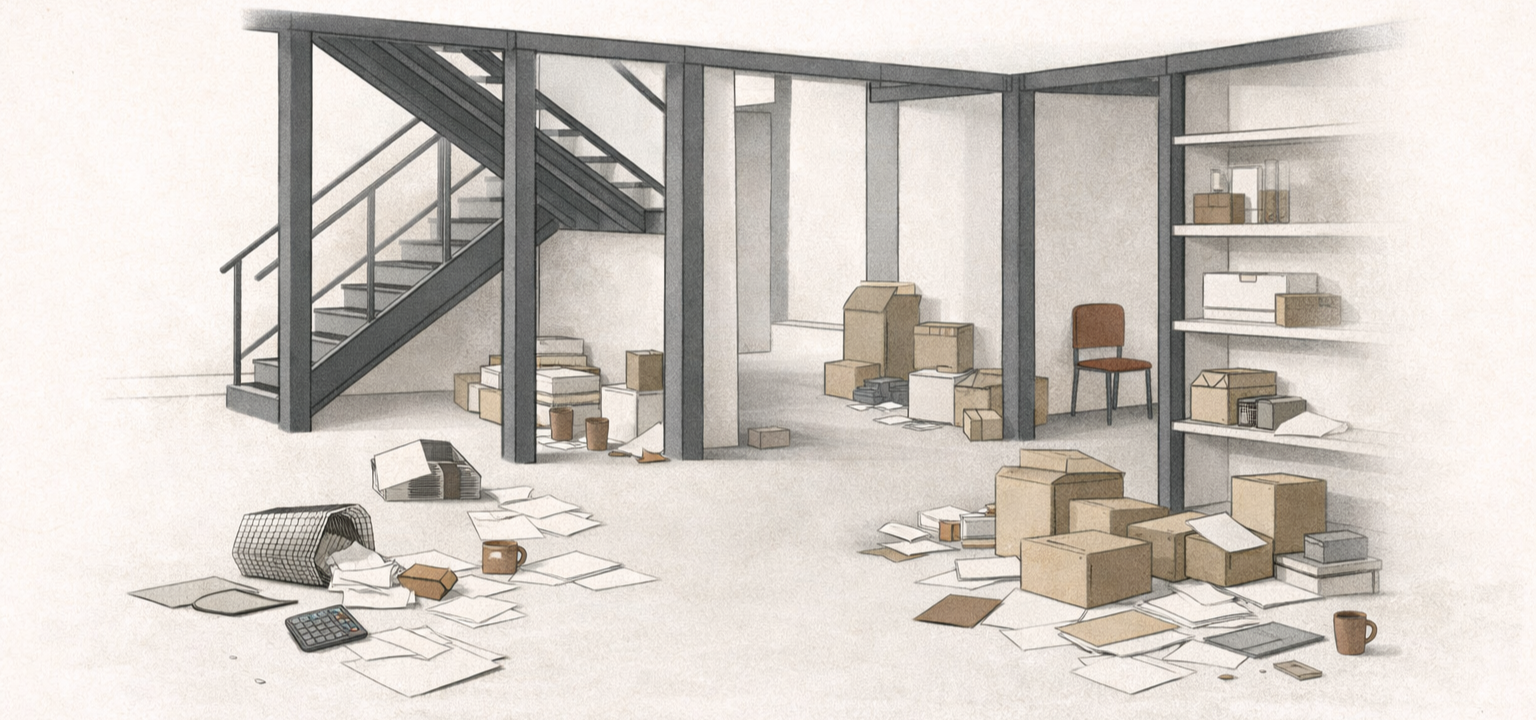
Chaos costs money because it creates friction you keep paying for. Missed due dates. Duplicate purchases. Late fees. Replaced items you already owned. Unused subscriptions. Groceries bought twice because the list lived in your head instead of a system.
Most people call this “life happening.” However, it is usually financial avoidance wearing casual clothes. When money decisions stay undefined, the environment starts making decisions for you. And the environment has terrible taste.
Financial disorder is not a personality trait
Disorder is an operating model. It forces reactive spending. It turns small problems into urgent ones. It also creates decision fatigue, which reliably ends in “just buy it” because clarity takes energy you already burned earlier in the day.
As a result, budgets fail not because the math is hard, but because the workflow is missing. A budget without routines is just a wish with columns.
Where the leak actually starts
Start by looking for the three most common leak points:
- Untracked recurring charges that quietly compound.
- Disorganized due dates that trigger penalties and stress buying.
- Unplanned convenience spending caused by poor prep (food, transit, last-minute anything).
Then tighten the system in this order: visibility, cadence, automation. First, you see it. Next, you touch it weekly. Finally, you let tools handle the predictable parts.
The fix is boring on purpose
“Getting better with money” is mostly creating a small set of repeatable moves:
- One weekly money review. Same day. Same time.
- One running list for purchases. No impulse buying off vibes.
- Auto-pay for fixed bills. Manual pay for variable categories.
- A default buffer that protects you from random life.
Discipline is not restriction here. It is friction removal. You are buying back time and reducing expensive surprise.
The Bottom Line
Chaos costs money because it turns simple decisions into repeated emergencies. Clean up the environment, and the budget starts working again.
