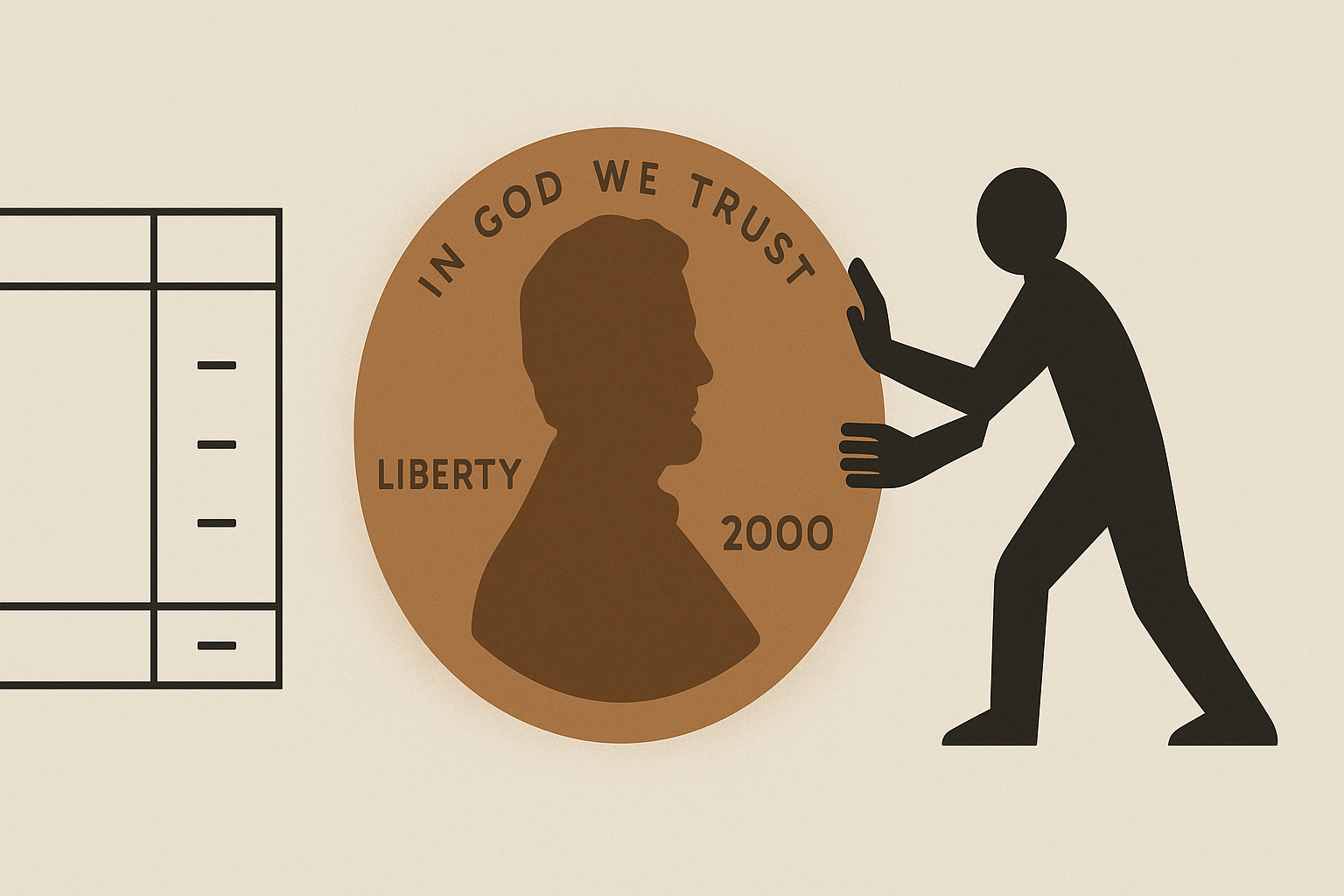
The penny is not extinct. It only feels that way. The United States Mint still produces billions of pennies every year, even though each one costs more to make than it is worth. The arithmetic is upside down, but the culture refuses to let go. This tension sits inside the broader culture of pennies, where sentiment often outweighs arithmetic.
The Culture of Pennies and What It Reveals
In financial terms, the penny is a loss. In cultural terms, it is a relic we protect. People assume the coin has been discontinued because it rarely circulates and often ends up in jars, drawers, and parking lots. Yet production continues, not because the math works but because the nation is emotionally attached to the smallest unit of perceived value. The culture of pennies shows how emotional logic often overrides economic clarity.
That attachment surfaces in everyday transactions. When a store runs out of pennies, it must round the total, usually to the nearest five cents. Some round down. Some round up. The tension appears when a business demands exact payment while lacking the coins needed to return exact change. A customer cannot supply precision that the institution itself cannot provide. This friction is not about money. It is about responsibility.
This is where the Culture Ledger draws the line: America often demands accuracy from individuals while tolerating inefficiency in its systems. The penny becomes a symbol of that imbalance. A coin that costs more than it delivers. A tradition defended long after its value evaporated. A national habit of holding onto the familiar even when it generates quiet losses.
The persistence of the penny is not an economic decision. It is a cultural one, driven by an instinct to preserve small comforts instead of updating outdated processes. And the cost scales. If the country cannot retire a coin worth one cent, how will it retire systems that drain billions? If businesses cannot adjust to the disappearance of pennies, how will institutions adjust to the disappearance of old assumptions?
The culture of pennies shows how small objects reveal larger cultural patterns of value and resistance to change. A culture that struggles to release the smallest weights will always strain under the larger ones. The penny is copper without value, but full of meaning. It shows us the price of nostalgia and the future cost of refusing to modernize what no longer works.
Note: U.S. Mint production cost data sourced from the U.S. Mint annual report. Cash-use decline data referenced from the Federal Reserve Payments Study.
Further Groundwork
Receipts