
Ethnicity in a multiracial democracy presents a structural question, not merely an emotional one. Plural societies cannot survive on sentiment alone. They require architecture. When identity groups grow, differentiate, and seek recognition, the state must determine how to acknowledge those distinctions without dissolving civic unity.
Some argue that ethnic delineation inevitably fragments democracy. Others insist that suppressing ethnic identity produces resentment and instability. However, both views miss the deeper institutional question: can carefully defined delineation actually reinforce civic stability?
Ethnicity in a Multiracial Democracy Requires Structure
Ethnic identity in plural societies is not accidental. It forms through lineage, culture, language, memory, and historical experience. Because of that, ethnicity in a multiracial democracy does not disappear simply because constitutional language avoids it. Suppression does not equal integration.
Instead, democracies face a structural decision. They can ignore ethnic categories and risk informal hierarchy. Alternatively, they can formally define boundaries and regulate how those boundaries function within shared law.
Political theorists and sociologists, particularly those working within social identity theory, explain that group attachment strengthens when threatened or denied. Consequently, unmanaged identity often radicalizes. By contrast, recognized identity tends to stabilize.
Therefore, the issue is not whether ethnic identity exists. The issue is whether the civic system can integrate it without surrendering constitutional authority.
Delineation and Civic Stability Are Not Opposites
Delineation means clarity. It does not mean hierarchy. In fact, healthy delineation draws lines that prevent overreach. Within a multiracial democracy, such clarity can serve as a pressure valve.
For example, constitutional democracies often recognize protected classes for the purpose of anti-discrimination law. That recognition does not grant sovereignty to ethnic groups. Rather, it establishes equal protection under shared standards.
Moreover, the American legal system has repeatedly confronted questions of classification. In United States v. Wong Kim Ark and later equal protection cases, courts examined how ethnic and racial classifications interact with citizenship and rights. These rulings demonstrate that ethnic categories may exist in law without displacing civic identity.
Importantly, the legal framework subjects ethnic classification to scrutiny. Strict scrutiny ensures that classifications serve compelling governmental interests and are narrowly tailored. As a result, delineation operates within constitutional constraint rather than cultural impulse.
That constraint is what prevents democracy and ethnic nationalism from collapsing into one another.
Balancing Delineation and Civic Unity
Balancing delineation and civic unity requires layered identity. Citizens must understand themselves as members of an ethnic lineage and members of a civic body simultaneously. When either layer dominates completely, instability follows.
If civic identity erases ethnicity, minority communities often experience alienation. Conversely, if ethnic loyalty overrides civic obligation, democratic cohesion weakens.
Ethnicity in a multiracial democracy therefore works best when civic identity operates as the governing frame. Ethnic affiliation exists inside that frame, not above it.
Consider comparative examples. Plural societies that institutionalize power-sharing without constitutional guardrails frequently experience factional paralysis. Meanwhile, societies that deny difference often witness underground polarization. Neither extreme produces durable stability.
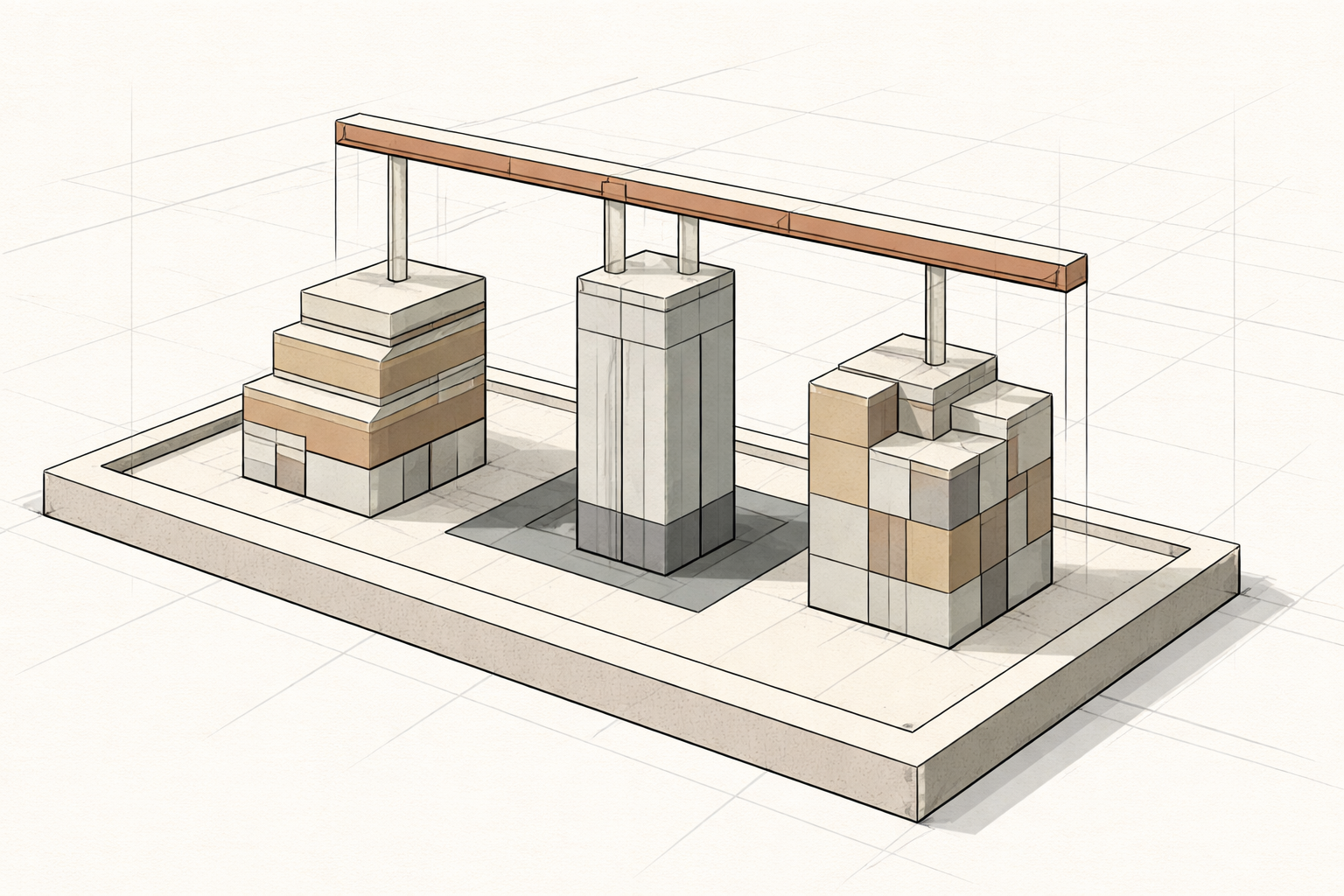
Instead, durable systems create shared constitutional beams strong enough to carry differentiated blocks.
Ethnic Identity in Plural Societies and Democratic Design
Ethnic identity in plural societies follows predictable developmental stages. Scholars studying minority identity development note that early stages often include separation, affirmation, and boundary protection. Over time, however, integrated identity becomes possible.
Within a multiracial democracy, institutions influence which stage dominates publicly. When civic frameworks reward participation across groups, integration accelerates. When incentives reward grievance escalation, fragmentation intensifies.
This is why civic design matters. Electoral structures, federalism, judicial review, and civil rights law all shape how ethnicity expresses itself politically.
In previous posts within this cluster, we examined how law defines group boundaries in How American Law Recognizes Ethnic Groups. That legal analysis demonstrated that recognition is already embedded in doctrine. Meanwhile, Pride Without Contempt explored the psychological formation of ethnic identity at the individual level.
This Principles essay extends those analyses to the civic plane. Here, the question shifts from psychology or doctrine to structural design.
Democracy and Ethnic Nationalism
Democracy and ethnic nationalism often collide when lineage becomes the basis for sovereignty. However, ethnicity in a multiracial democracy differs from ethnic nationalism in one crucial respect: sovereignty remains civic, not tribal.
Ethnic nationalism asserts that a specific lineage owns the state. By contrast, constitutional democracy asserts that the people, collectively and equally, govern through shared law.
Therefore, delineation strengthens civic stability only when sovereignty remains neutral. The state may acknowledge cultural particularity, yet it must refuse ethnic hierarchy.
Additionally, democratic systems require institutional humility. Legislatures cannot engineer cultural harmony through proclamation alone. Courts cannot erase memory through doctrine. Nevertheless, institutions can enforce fairness consistently.
Consistency reduces perceived injustice. Reduced injustice lowers volatility. Lower volatility strengthens democracy.
Ethnicity in a Multiracial Democracy and Long-Term Stability
Long-term civic stability depends on predictability. Predictability depends on clear rules. Clear rules require definitional boundaries.
When ethnic delineation is vague, political actors exploit ambiguity. When delineation is rigid and supremacist, conflict escalates. The productive middle ground is constitutional clarity with equal standing.
Balancing delineation and civic unity is therefore not an abstract aspiration. It is an institutional discipline.
Furthermore, economic and educational infrastructure influence how ethnic identity manifests publicly. In Money Monday analyses, we have repeatedly shown that economic stability reduces identity-driven volatility. Likewise, civic literacy strengthens participation across lines of difference.
In other words, ethnic pluralism without structural investment breeds resentment. Structural investment without constitutional equality breeds hierarchy. Stability demands both.
What Strengthens Civic Stability?
First, constitutional supremacy must remain unquestioned. Second, equal protection must apply uniformly. Third, civic participation must be incentivized across identity lines.
Additionally, public rhetoric must avoid contempt. Pride without contempt, as explored in Joseph Mercer’s Stillness Notes essay, allows lineage affirmation without hostility.
Importantly, civic leaders must articulate a shared story larger than ancestry. Without that overarching narrative, delineation risks hardening into tribalism.
Yet when ethnic identity in plural societies is framed as a cultural inheritance inside a constitutional republic, cohesion increases.
Conclusion: Delineation as Discipline
Ethnicity in a multiracial democracy does not threaten stability automatically. Disorder arises when identity escapes structure.
Properly constrained delineation, however, may function as discipline. It clarifies boundaries. It prevents erasure. It channels pride into participation rather than dominance.
Therefore, the question is not whether democracy can survive difference. The question is whether institutions are strong enough to regulate it.
Multiracial democracy requires beams capable of carrying weight. When those beams hold, differentiated blocks do not fracture the foundation. They reinforce it.
Further Groundwork Reading
Each essay in this cluster examines lineage and delineation from a different structural level: psychological, legal, and civic.
