
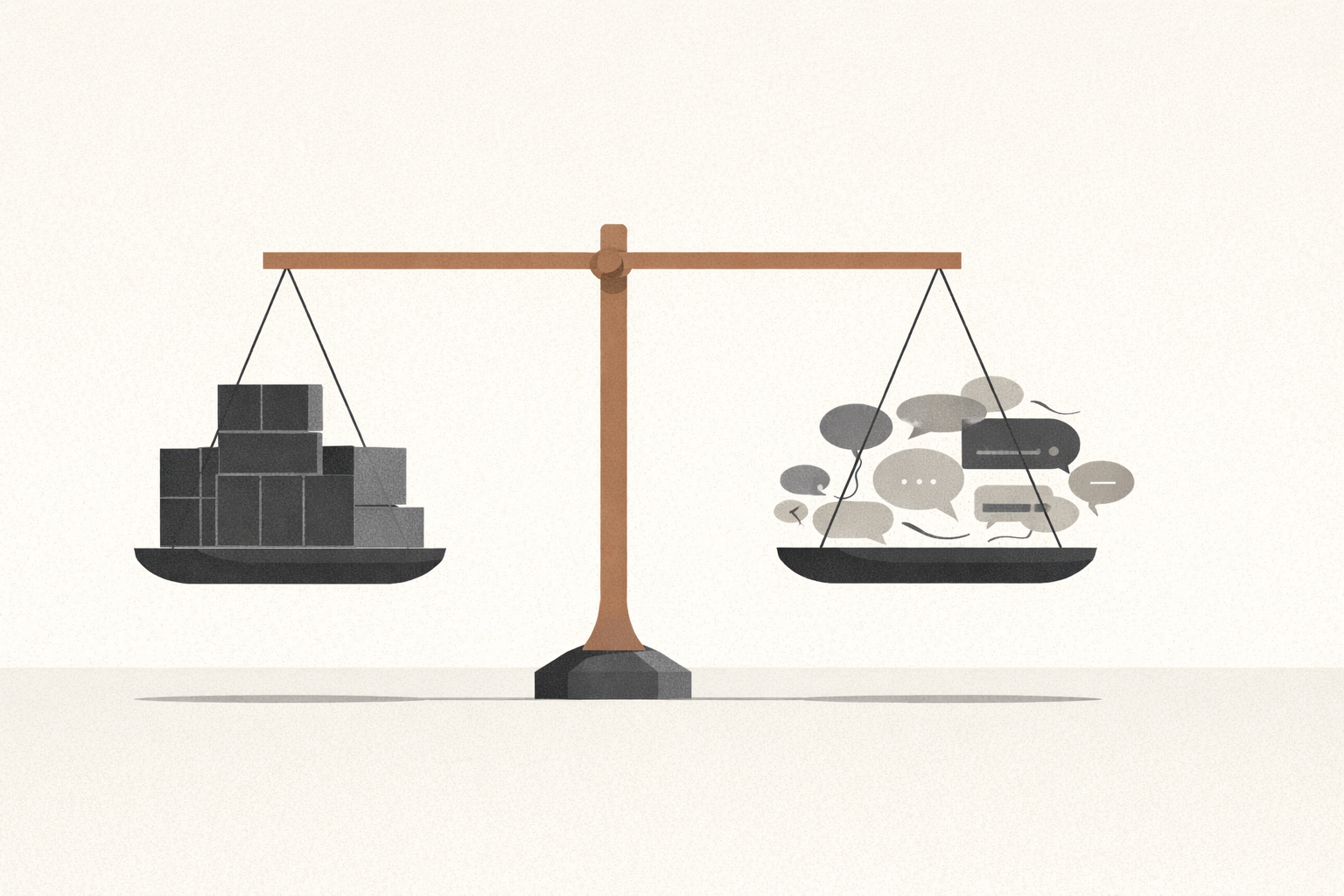
False equivalence distorts judgment by forcing unequal ideas, conditions, or systems to appear balanced. It does not create fairness. Instead, it removes context, weakens standards, and makes distortion look reasonable.
At first glance, false equivalence often sounds disciplined. Two sides are named. Two perspectives are acknowledged. A comparison appears balanced. However, the structure underneath is wrong.
One side may rest on measurable evidence, outcomes, or institutional reality. Meanwhile, the other side may rely on perception, symbolism, or incomplete framing. When both are treated as though they carry the same weight, clarity breaks down.
False Equivalence Creates the Illusion of Fairness
False equivalence works because it mimics fairness while quietly removing proportion. It presents unequal conditions as though they deserve equal standing, even when the evidence, consequences, or scale do not match.
As a result, the conversation shifts away from accuracy and toward performance. The goal stops being correct judgment. The goal becomes appearing neutral.
That is not a small error. It is a structural failure in reasoning.
False Equivalence Removes Context That Determines Weight
Context gives comparison its integrity. Without context, weight disappears. Without weight, judgment becomes theatrical.
A system-level burden can be reduced to a personal opinion. A measurable outcome can be flattened into a competing feeling. A documented asymmetry can be reframed as a disagreement between equals.
Therefore, false equivalence does not simplify reality. It distorts reality by removing the factors that make honest comparison possible.
False Equivalence Damages Public Discourse
Once false equivalence enters public discourse, accountability weakens. Responsibility gets spread evenly where it should not. Standards soften where they should hold. Precision fades where it should sharpen.
- Unequal claims receive equal treatment.
- Clear failures start sounding debatable.
- Real differences lose their analytical force.
Consequently, people begin debating tone instead of structure. They argue over posture instead of evidence. Then the discussion loops without producing clarity.
For a related example of how public framing can distort meaning, see Black Fatigue vs. Conversation Fatigue: Why the Language Is Breaking the Discussion.
False Equivalence in Media and Civic Reasoning
Media systems often reward symmetry because symmetry looks responsible. However, equal airtime does not guarantee equal merit. Two claims can appear side by side while carrying very different levels of evidence and consequence.
That is why disciplined readers must evaluate structure, not presentation. The appearance of balance is not proof of balance.
For additional research on how distorted framing affects public understanding, review Britannica’s overview of false equivalence.
How to Correct False Equivalence
The correction is not louder opinion. The correction is stronger structure.
First, measure the claims being compared. Next, identify differences in scale, evidence, and consequence. Then decide whether the comparison has actually earned its balance.
Not all inputs deserve equal weight. Not all arguments deserve equal standing. Most importantly, not all outcomes can be compared honestly without restoring context.
When structure returns, clarity returns with it.
The Groundwork on False Equivalence
False equivalence is not a harmless rhetorical habit. It is a logic failure that makes unequal systems look equal, weakens accountability, and damages public discourse.
Clear reasoning requires proportion. Proportion requires context. When those conditions hold, comparison becomes useful instead of deceptive.
Further Groundwork
Notes
When unequal claims are forced into the same frame, analysis stops measuring reality and starts performing fairness.
