Filters don’t create better partners. They create better sorting. In modern relationship culture, filters are treated like improvement tools. However, filtering only removes options. It does not build skill, capacity, or shared responsibility.
This confusion mirrors a broader civic failure. Systems obsessed with screening often neglect development. As a result, people pass through gates unchanged, then wonder why outcomes stagnate.
Why Filters Don’t Create Better Partners
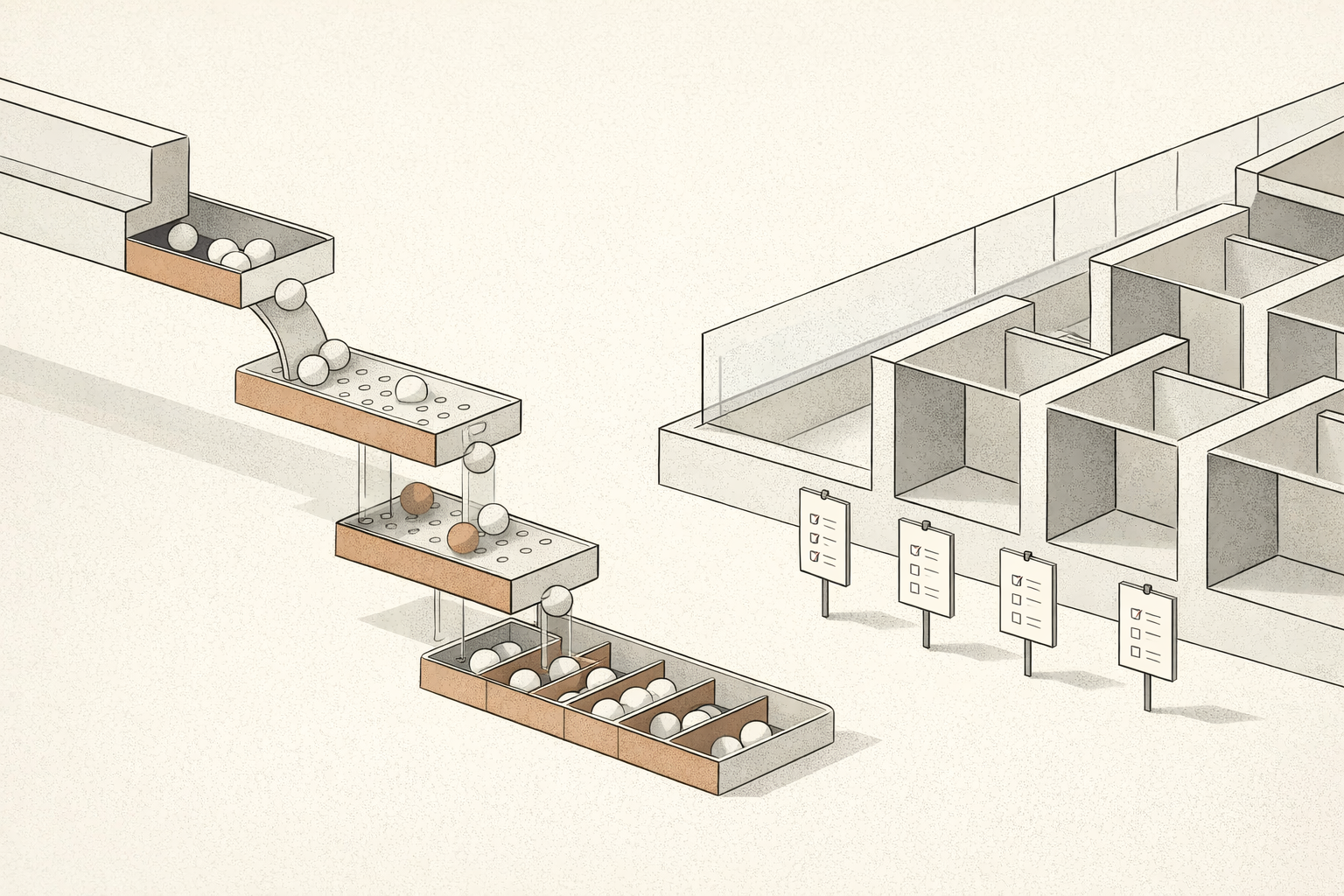
Filters are designed to exclude. They identify what someone lacks, not what they can learn. Consequently, relationships become compliance tests instead of cooperative projects.
When people rely on filters to produce better partners, they outsource growth to selection. Instead of asking, “How do we build capability?” the system asks, “Who already qualifies?” That shift replaces investment with inspection.
In civic terms, this is the difference between public training and private screening. One expands capacity. The other narrows access.
Filtering Is Efficient, but It Is Not Development
Efficiency feels productive. It looks organized. It feels rational. Yet efficiency without development leads to stagnation.
In relationships, filters screen for income, emotional availability, or alignment. Meanwhile, they rarely address how those traits are sustained under pressure. Therefore, the same failures repeat across increasingly “qualified” pools.
Filtering improves inputs. It does not improve systems.
The Civic Parallel: Screening Without Infrastructure
This logic appears everywhere in public policy. Institutions screen applicants, beneficiaries, and participants while underfunding training, education, and repair. Predictably, outcomes plateau.
Relationships follow the same pattern. Without shared frameworks for communication, conflict, and contribution, filtering becomes a substitute for preparation.
As a result, people emerge approved but unsupported.
Filters don’t create better partners because they address access, not ability.
Men are often trained to give without learning how to require.
Women are often taught what to expect without learning how to sustain.
The system screens participants while neglecting shared training in responsibility, communication, and repair.
Why Filters Don’t Create Better Partners at Scale
At scale, filtering produces the illusion of progress. Standards rise. Pools shrink. Frustration grows.
Meanwhile, the underlying issue remains untouched. People are navigating complex relational systems with no shared operating manual. Predictably, mismatch gets mislabeled as incompatibility.
What looks like a dating crisis is often a training failure.
What Creates Better Partners Instead
Better partners are built through practice, not prequalification. That requires frameworks, not checklists.
Shared language for conflict. Clear norms for contribution. Mutual accountability. These are civic skills applied at the household level.
When systems prioritize development over filtering, outcomes stabilize. Relationships last longer. Conflict becomes navigable instead of terminal.
Filters don’t create better partners. Training does.
Why Modern Dating Feels Hard explains how missing instruction creates systemic friction.
We Were Never Taught How to Build Relationships outlines the absence of shared training.
What Men Are Taught to Give examines responsibility without reciprocity.
What Women Are Taught to Expect explores expectation without maintenance.
Pew Research Center analysis on family and relationships documents how shared responsibility, communication frameworks, and role clarity predict long-term stability.