
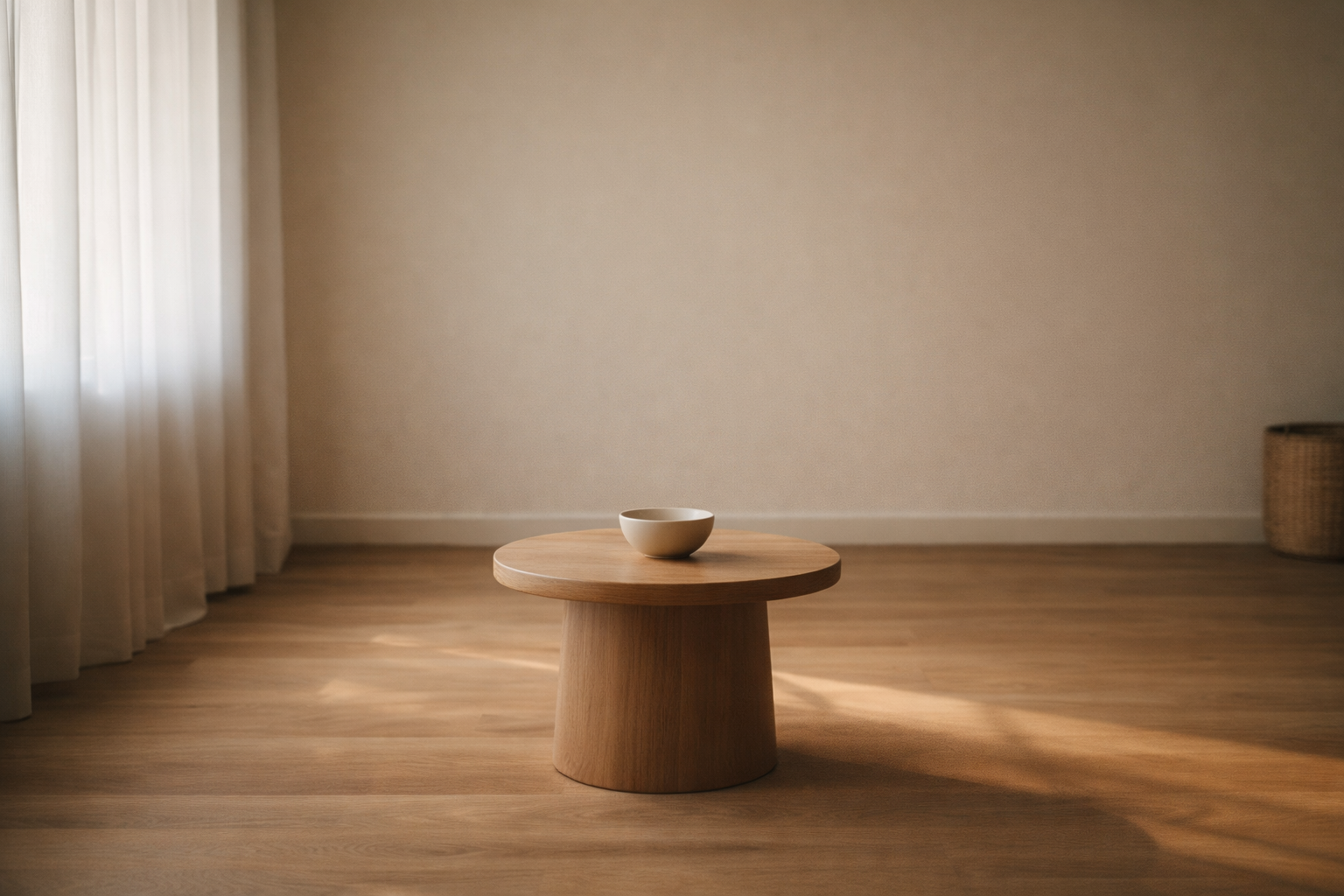
Holding the center at home begins when everything else feels slightly off balance.
When the Edges Get Loud
Some seasons stretch the perimeter of the house. Schedules shift. Energy thins. The edges of the day feel crowded with movement, noise, and unfinished thoughts.
In those moments, the home does not ask for total order. It asks for one place to remain steady.
What the Center Does
The center is not always physical, but it often lives in a specific spot. A table that stays clear. A chair that remains where it belongs. A room that resists becoming storage for everything unresolved.
Holding the center at home creates orientation. When one space stays grounded, the rest of the house adjusts around it.
Stability Without Control
This practice does not require force. You do not correct every imbalance. You choose not to let one area absorb the weight of everything else.
You return items to their place there. You pause before adding more. You protect that space from overflow.
The house responds to consistency faster than it responds to effort.
What Remains Steady
Homes, like people, need something to orbit. When every surface carries responsibility, nothing feels trustworthy.
A held center signals reliability. It reminds the nervous system that not everything is in motion at once.
Letting the Rest Shift
Holding the center at home allows flexibility elsewhere. Mess can exist at the edges without taking over the whole structure.
The goal is not perfection. It is containment.
A Quiet Form of Care
This is not a visible practice. No one praises it. It rarely photographs well.
Yet the house feels it. The body feels it. Balance returns not because everything aligns, but because something holds.
That is how rhythm stays intact.
Stillness, practiced deliberately, becomes a form of structure that protects peace. Stillness Is Strategy.
