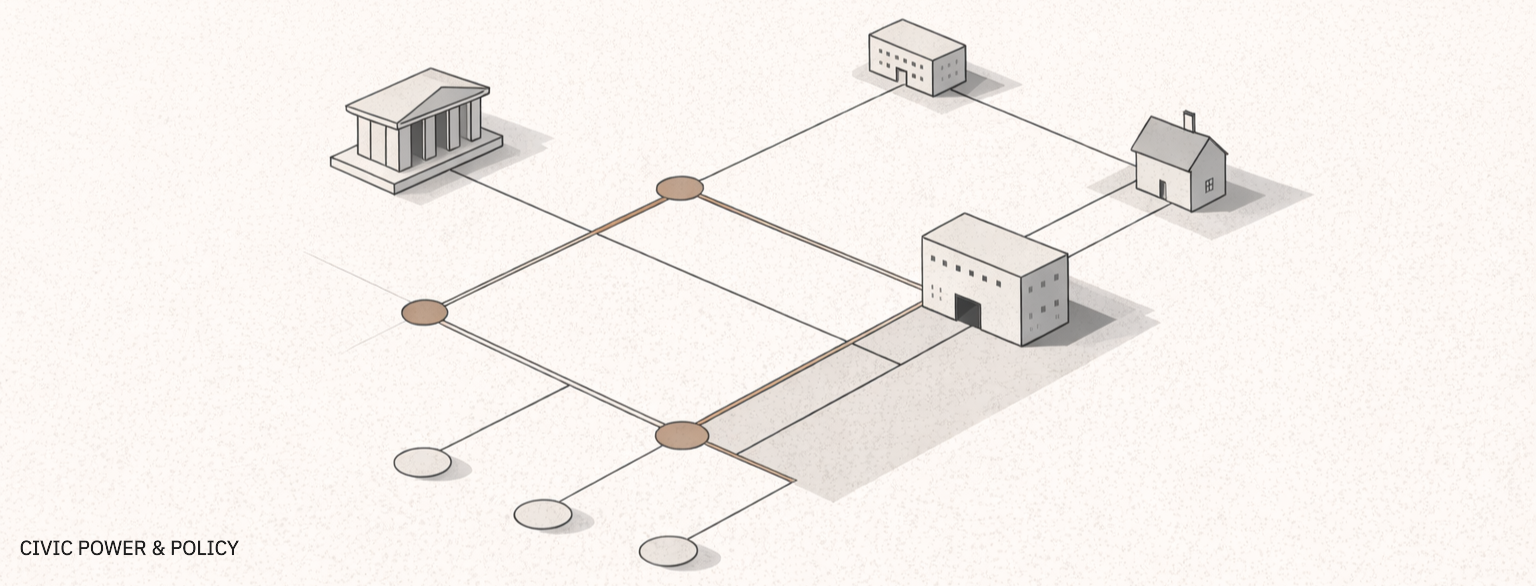
Institutional capacity migration absorption defines how much pressure a system can actually carry. Policy may signal entry. Economic pressure may trigger movement. Even so, institutions determine whether that movement can be processed, housed, integrated, and stabilized.
However, this is where many migration debates collapse. They focus on intention and ignore throughput. A system can only absorb what it is built to handle. Once intake rises beyond structural limits, strain appears quickly. Housing tightens. Administrative backlogs grow. Labor integration slows. As a result, public trust weakens. The issue is not abstract. It is operational.
How Institutional Capacity Migration Absorption Works
In practice, institutions absorb pressure through design. They rely on staffing, funding, infrastructure, coordination, and clear procedures. When those elements hold, systems can process movement with greater order. If those elements weaken, the same intake produces visible dysfunction.
In other words, institutional capacity migration absorption is not about rhetoric. Instead, it is about system load. Capacity sets the real boundary between manageable intake and destabilizing strain.
That capacity includes:
- case processing systems
- housing and shelter infrastructure
- school and health service readiness
- labor market onboarding
- local governance coordination
Each layer matters. When one layer constricts, the rest of the system begins to slow around it.
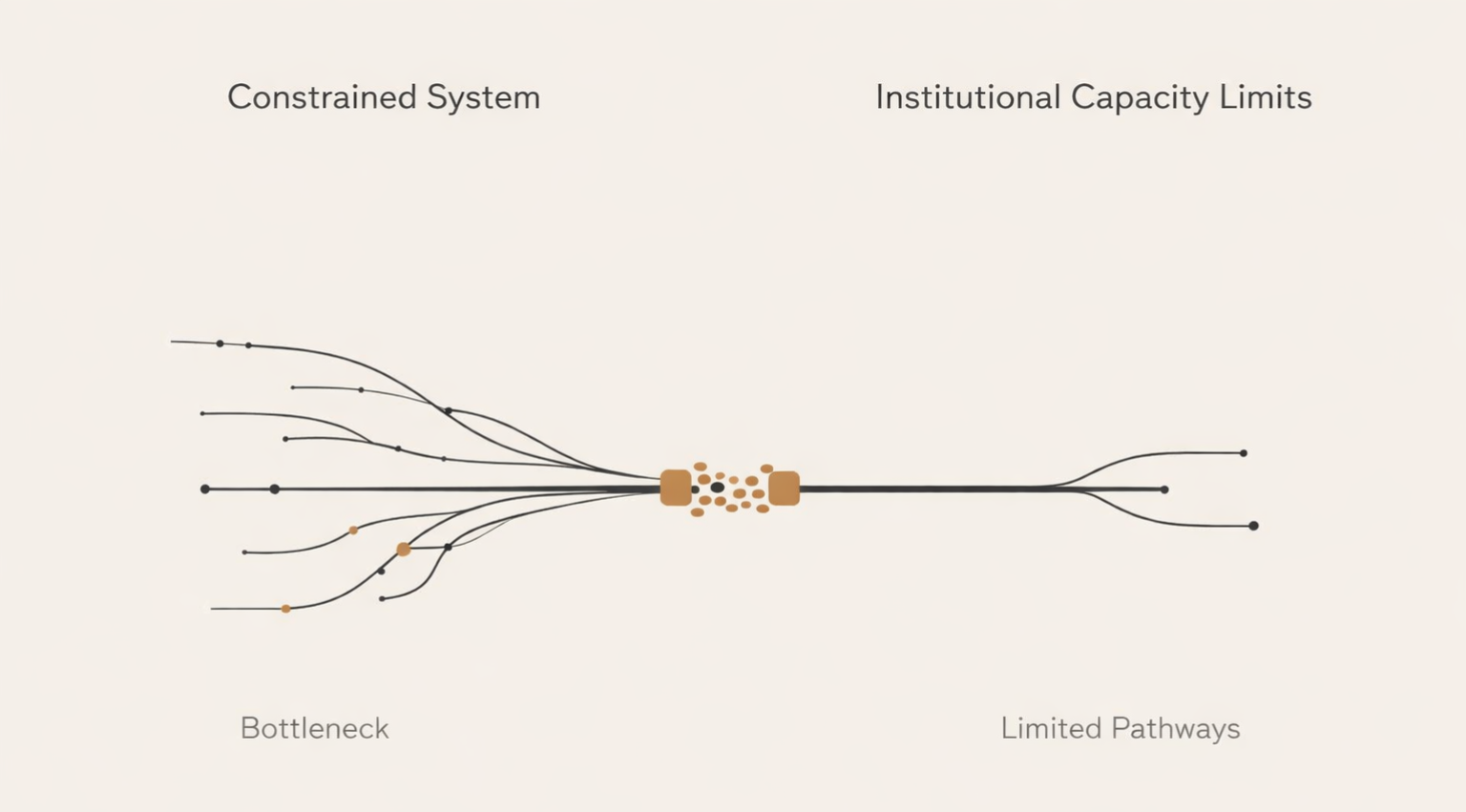
Why Bottlenecks Create System Strain
Most failures do not begin everywhere at once. Instead, they begin at the bottleneck. A narrow point in the system compresses flow, delays response, and increases downstream instability. As a result, institutions stop functioning like stabilizers and start acting like pressure traps.
Therefore, the bottleneck matters more than broad declarations. Capacity failure usually starts with one constrained layer that cannot keep pace with demand. From there, strain spreads outward.
Migration Pressure Is a System Failure explains how unmanaged load creates breakdown. This post adds the next layer. Systems do not fail only because pressure exists. They fail because absorption capacity remains limited.
Institutional Capacity Migration Absorption Sets Real Limits
Institutions cannot absorb infinite movement simply because policy intends stability. They need throughput, sequence, and reinforcement. That is why institutional capacity migration absorption must sit at the center of serious migration analysis.
Without that lens, people confuse aspiration with function. They assume a system can process more because it should process more. However, systems do not run on sentiment. They run on structure.
Research from the International Organization for Migration and the World Bank continues to show that migration outcomes depend heavily on state capacity, local infrastructure, and institutional coordination. When those supports weaken, strain compounds fast.
The Groundwork
Institutional capacity migration absorption is the difference between intake and overload. If capacity holds, systems can process movement with more order and legitimacy. If capacity breaks, every other layer starts to wobble.
For the broader sequence, return to The Migration Systems Framework. Then continue with Migration Narratives Obscure System Reality to see how public interpretation often misreads structural failure.