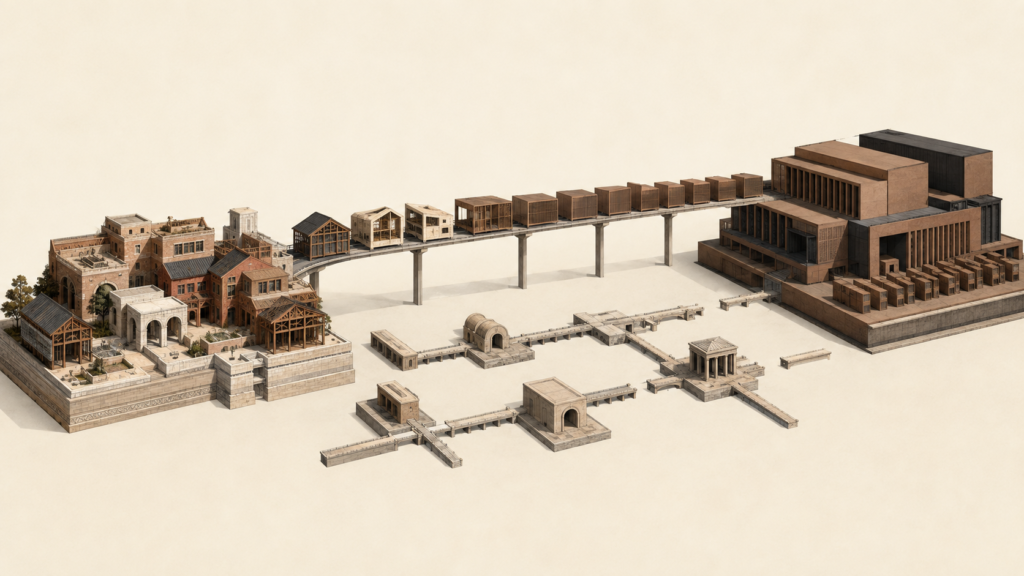
Minimalist editorial architectural illustration showing a continuous civic structure supported by changing underlying transfers to represent institutional translation between agreement and execution.
Civic Power & Policy

Why Institutions Translate Before They Act

Institutions rarely move the moment something happens.

They translate first. They convert pressure into language, language into process, and process into action. This piece explains why institutional delay is often not hesitation but structured interpretation and why understanding that translation layer changes how we read public decisions.

Minimalist architectural illustration showing a completed structural foundation supporting an elevated platform, symbolizing disciplined financial behavior before investing.
Economy & Ownership

Financial Freedom Begins Before Your First Investment

Most people believe financial freedom begins with investing. It doesn’t. Long before the first dollar enters a retirement account, index fund, business, or property, financial habits have already established the direction money will follow. Investing magnifies existing behavior. It does not replace it. Without disciplined spending, consistent saving, delayed gratification, and structured decision-making, even the best investments struggle to create lasting wealth. Financial freedom is built through repeated behaviors that make ownership sustainable, not through a single investment decision. In this Economy & Ownership essay, Marcus Vaughn explores why disciplined financial behavior is the true foundation of wealth, how structure shapes long-term ownership, and why investing should be viewed as the result of a stable financial system rather than its beginning. Before money can compound, behavior must. The strongest investment portfolio in the world cannot overcome a financial system that lacks discipline, consistency, and purpose.

Scroll to Top