
Inflation can fall without prices falling with it.
A headline says inflation is cooling. The grocery receipt still looks expensive, rent has not returned to where it was a few years ago, and the restaurant check still stings. The household looks at the headline, looks at the bill, and assumes somebody is describing a different economy.
Usually nobody is lying. Inflation and the price level are answering two different questions, and once that distinction is clear, why prices stay high when inflation falls stops being a mystery and starts being arithmetic.
Contents
- Inflation and Prices Are Not the Same Thing
- Prices Keep Climbing Even While Inflation Cools
- The Price Level Is What Households Remember
- Disinflation Is Not Deflation
- Prices Rarely Reset After They Rise
- Income Growth Is Where the Relief Has to Come From
- Not Every Price Moves Together
- Household Inflation Has a Memory
- Why the Headline Can Be Right and Still Feel Wrong
- Watch Wages and Categories, Not Just the Headline Rate
- What the Numbers Reveal
Inflation and Prices Are Not the Same Thing
Start with a plain example. Suppose something costs $100. If its price rises 10%, it now costs $110. Then suppose inflation slows sharply and the price rises only 2% the following year.
The new price is not $102.
It is $112.20.
I ran that one twice before I trusted it, because a 2% increase stacked after a 10% increase feels like it should land close to where you started. It does not, because the 2% applies to the new, higher base, not the original one. That is compounding doing what compounding does, not anyone hiding the ball.
The rate of increase fell from 10% to 2%, which is real progress on inflation. The actual price still moved higher. That is the distinction at the center of this whole conversation: lower inflation describes a slower rate of increase, not a lower price. Economic reporting tends to emphasize the rate. Households experience the level, because nobody pays an inflation rate at checkout. They pay the price. A falling inflation rate can be genuinely good news while producing almost no relief at the register.
Prices Keep Climbing Even While Inflation Cools
When economists say inflation is falling, they generally mean prices are increasing more slowly than before. That process is called disinflation, and it is usually what policymakers are trying to achieve after a stretch of unusually high inflation: slow the rate of increase without triggering the broader damage that can come with outright, economy-wide price declines.
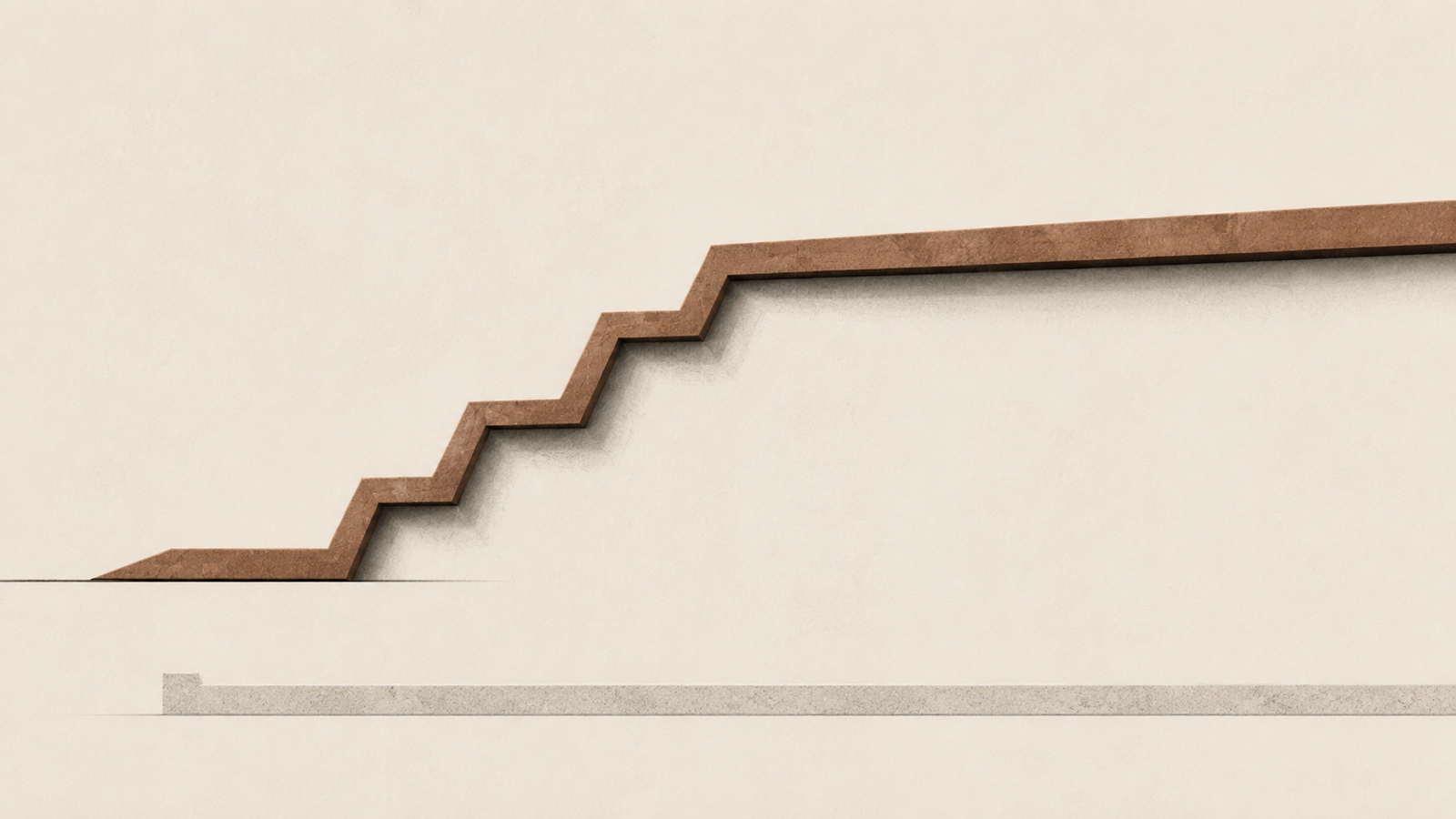
For households, the wording can sound more reassuring than the experience. If inflation moves from 7% to 4% and then to 3%, prices are still rising the entire time. They are simply rising at a decreasing rate. That is why someone can hear that inflation improved for months running and still feel like nothing got cheaper. Much of it did not. The improvement happened in the slope, not the level.
The Price Level Is What Households Remember
Households experience inflation cumulatively. If groceries rise sharply for a few years and then grocery inflation returns to a more ordinary pace, the household does not forget the earlier increases. The new prices become the starting point.
That creates an asymmetry between how economic improvement gets reported and how consumers experience it. Official data may show the rate of inflation has normalized substantially from an earlier peak. The household is comparing today’s grocery bill, rent, restaurant check, or insurance premium with what those same expenses cost several years ago. Both comparisons are legitimate. They just use different baselines.
I think a lot of economic commentary is unnecessarily dismissive here. Telling someone inflation is lower does not answer the question they are actually asking when they say everything still feels expensive. They are asking about the accumulated price level. That deserves a direct answer, not a rate.
Disinflation Is Not Deflation
Three terms do most of the work in this conversation. Inflation means the overall price level is rising. Disinflation means it is still rising, just at a slower rate. Deflation means it is falling. These are not interchangeable. If inflation falls from 6% to 3%, that is disinflation. If prices broadly decline instead, that is deflation.
Consumers understandably like the sound of lower prices, but sustained economy-wide deflation creates its own problems. If businesses expect selling prices to keep falling, revenue weakens. Debt gets harder to manage because the dollar value of the debt does not fall along with prices. Companies delay investment or cut labor costs, and consumers postpone purchases if they expect a better price later. That is why policymakers generally aim for low, stable inflation rather than a permanent decline in the price level. The goal is not to rewind every price increase. It is to stop rapid inflation from continuing to compound.
Prices Rarely Reset After They Rise
Once businesses raise prices, nothing automatically forces those prices back down when inflation cools. Some prices do fall: gasoline can drop quickly, airline fares move in both directions, commodity-sensitive food prices can reverse, and electronics get cheaper as technology improves. But many prices are tied to costs that do not reset easily. Labor contracts may reflect higher wages. Rent may have renewed at a higher level. Insurance, financing, and supplier costs may have risen. Property taxes, utilities, maintenance, and transportation can all become part of the new operating baseline.
A business facing those conditions does not lower its price just because the national inflation rate fell. Slower inflation usually just means the business stops raising the price as aggressively. And if customers keep paying the higher price, the business has little economic reason to volunteer a cut. Competition, substitution, weaker demand, or falling costs can eventually force the issue. The inflation rate by itself does not.
Income Growth Is Where the Relief Has to Come From
If prices do not broadly return to their old levels, household relief has to come from somewhere else. The main channel is income. Suppose prices rise rapidly for several years while wages lag behind: purchasing power deteriorates because each dollar buys less. Now suppose inflation slows while wages keep increasing. Prices stay high, but household purchasing power can start recovering because income is gaining faster than the cost of living.
That is why nominal wage growth alone is not enough. The comparison that matters is income growth against inflation over time. When wages outpace prices, real purchasing power improves. When prices outpace wages, households lose ground.
Even recovery has a memory problem. A worker whose income eventually catches up may still remember the years when margins were squeezed, savings shrank, credit balances grew, and purchases got deferred. Economic recovery does not automatically erase the balance-sheet consequences of the period before it. That is one reason the lived economy stays cautious even after the inflation rate improves.
Not Every Price Moves Together
Another mistake is treating “prices” as one thing that moves in a single direction at a single speed. The Consumer Price Index combines many categories into a broad measure, and inside that average, individual categories behave very differently. Food moves at one rate, shelter at another, energy in sharp swings, and medical services, insurance, apparel, and transportation each follow their own path.
As a result, two households can experience the same national inflation rate very differently. A renter with young children, high insurance costs, and a long commute has a different expense structure than a mortgage-free retiree with limited transportation costs. The aggregate measure is still useful, but no national average can perfectly reproduce any one household’s spending pattern. That is not evidence the inflation data is fake. It is evidence that averages describe populations while budgets belong to individual households.
Household Inflation Has a Memory
Consumers experience inflation through comparison. A person may not know the official inflation rate for restaurant meals, but they remember when their usual lunch was $11 instead of $16, when the grocery run stayed under a certain total, or what the old insurance premium was. Those reference prices become household memory, and that memory can make economic improvement feel slower than the data suggests, because the comparison is against a much earlier anchor, not last month.
Businesses run into the same mismatch. A restaurant can accurately say it has barely raised prices this year. The customer can accurately say the meal still costs far more than it did a few years ago. The company is describing the current rate of change. The customer is describing the accumulated level. Neither statement resolves the other.
Why the Headline Can Be Right and Still Feel Wrong
The June 2026 Consumer Price Index is a useful example. On a seasonally adjusted basis, the CPI declined 0.4% from May to June, the largest one-month drop since April 2020. Over the previous 12 months, consumer prices were still 3.5% higher. Those two numbers describe the same economy. The monthly figure says overall prices fell that particular month, after seasonal adjustment. The annual figure says the broader price level remained well above where it stood a year earlier.
Worth naming directly: most of that monthly drop was energy unwinding a shock, not a broad cooling across the economy. Energy prices had spiked earlier in the year alongside the conflict involving Iran, and June’s decline was largely that spike reversing. It is a real number and it is accurately reported, but a single volatile category doing most of the work is a different story than disinflation spreading evenly across the basket. Food prices told a steadier story: up 3.0% over the year, with food at home up 2.7% and food away from home up 3.4%.
That is why one inflation headline can never tell a household exactly what happened to its own budget. The headline is a summary. The budget is the distribution, and this month’s summary was leaning on one especially noisy line item.
Watch Wages and Categories, Not Just the Headline Rate
If lower inflation does not automatically produce lower prices, what should people watch instead? Start with the rate of inflation, since persistent high inflation keeps compounding the problem. Then watch wage and income growth, since household purchasing power improves only when income consistently outpaces price increases. Look beneath the headline CPI at the categories doing the most damage to household budgets: shelter, food, energy, insurance, transportation, and healthcare do not move together.
Finally, watch behavior. Are households rebuilding savings or leaning more on credit? Are people substituting cheaper products, cutting back on restaurant visits, or delaying large purchases? Those behaviors reveal whether inflation relief is creating real financial margin or just slowing the rate at which that margin disappears. The difference matters.
- Wages Lag, Assets Lead — Why rising income and rising wealth are not the same economic experience.
- The End of the $20 Lunch — How higher prices become a test of consumer value and purchase frequency.
- Structure Builds Freedom — Why durable financial and economic systems create room to absorb pressure.
What the Numbers Reveal
Inflation produces a strange asymmetry. The damage is experienced through the level of prices, while the recovery is usually described through the rate at which those prices are changing. Falling inflation can be real progress without feeling like restoration, because the economy does not ordinarily rewind the price level. The task shifts instead toward stopping rapid increases, letting incomes and productivity catch up, and rebuilding the household margin that higher prices compressed.
I did not expect one energy category to be carrying this much of a widely reported “good news” print, and it changed how much weight I am willing to put on a single month’s headline number going forward.
The same pattern shows up throughout economic life: a system can stop deteriorating without returning to its previous condition. Lower inflation tells us the pressure is accumulating more slowly. Whether households feel better depends on what happens to everything around that slower climb.
Economy Commentary follows the gap between economic indicators and the conditions households, workers, and businesses actually experience. Subscribe to Groundwork Daily for new structural economic analysis.