
Stacking the odds is not about taking reckless risks. It is about understanding where pressure goes when money gets tight. Most people do not lose financially because one bill shows up. They lose because one bill stacks on top of another bill, on top of weak savings, on top of high-interest debt, on top of income that only comes from one place.
That is not bad luck. That is structure.
Money Monday is not here to make poverty sound poetic or turn pressure into motivation. The math has to be respected. If the structure is weak, pressure compounds against you. If the structure is built with margin, ownership, and discipline, pressure can be absorbed, redirected, and turned into leverage.
Stacking Is Arithmetic
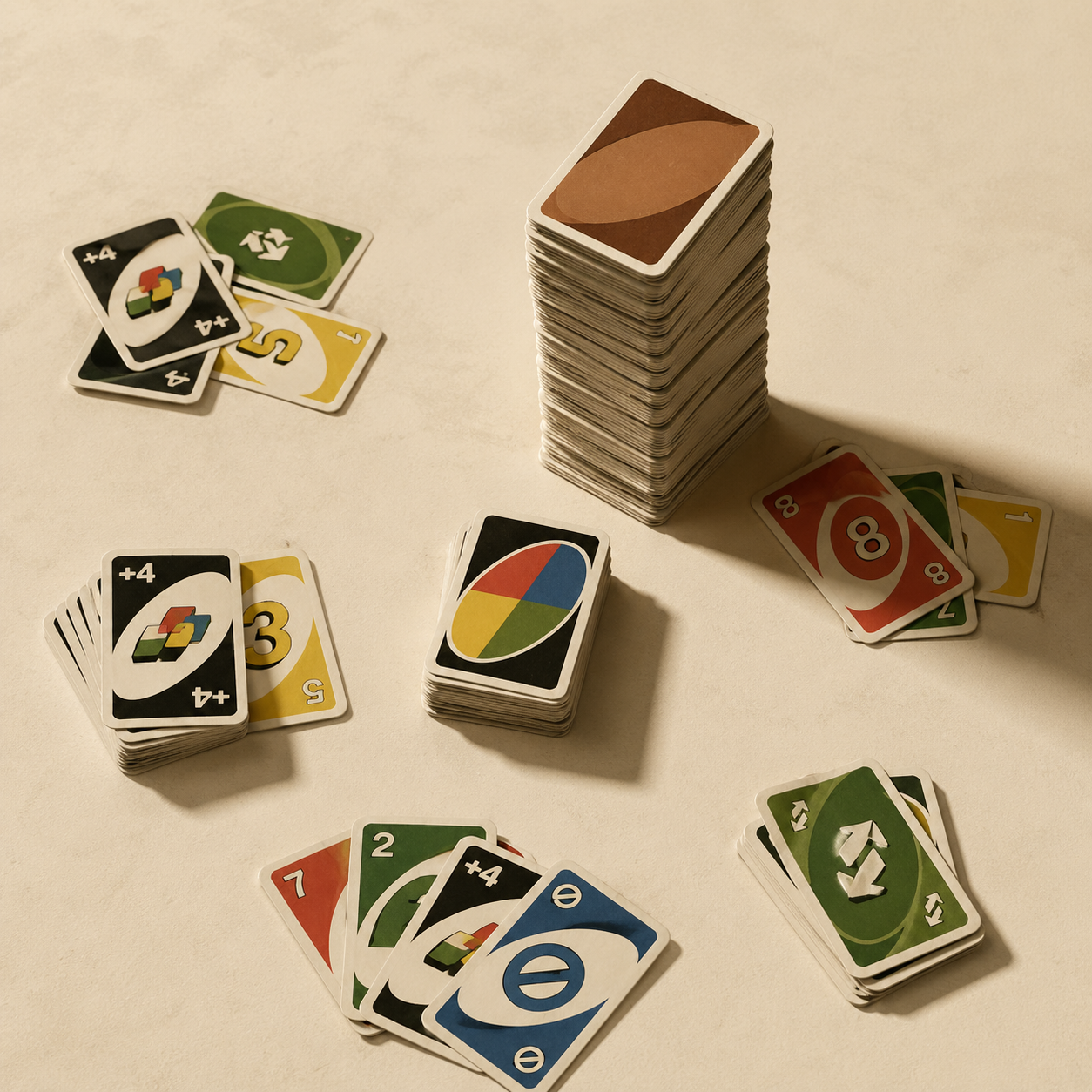
In Uno, stacking changes the whole table. A Draw Two does not stay two. It becomes four, then six, then eight. One card changes the pressure, but the stack changes the outcome.
Money works the same way. One missed payment rarely stays one missed payment. It can become a late fee, a higher balance, a lower credit score, a worse interest rate, and less room next month. The first hit is the event. The stack is the system.
That is why financial discipline cannot only be about willpower. It has to be about structure. A weak structure lets penalties stack. A strong structure lets advantages stack.
Most People Play Financial Defense
Financially, most people live in reaction. They earn, spend, recover, and repeat. That cycle may look normal because so many people are trapped inside it, but normal does not mean stable.
Every unexpected cost hits directly when there is no margin. A car repair becomes a credit card balance. A medical bill becomes a payment plan. A slow month becomes overdraft fees. The problem is not only the expense. The problem is that the expense has nowhere safe to land.
That is playing a no-stacking game inside a stacking economy. The system stacks pressure. The household absorbs it.
The Economy Already Stacks
The economy rewards people who understand compounding. That is not motivational language. That is arithmetic.
Capital stacks. Interest stacks. Skills stack. Relationships stack. Ownership stacks. Distribution stacks. One advantage creates a better position for the next advantage.
The reverse is also true. Debt stacks. Fees stack. Missed time stacks. Bad credit stacks. Weak income options stack. Poor systems make every next decision more expensive than the last one.
The question is not whether stacking is happening. It is already happening. The question is whether it is stacking for you or against you.
Pressure Reveals the Balance Sheet
Pressure tells the truth faster than comfort does.
When money gets tight, two things become visible: what you control and what controls you. If a small disruption breaks the whole system, the issue is not only income. The issue is exposure.
A routine can look stable until it is tested. Bills may be paid on time. The account may stay barely above zero. The schedule may hold. But if one unexpected event wipes out the plan, that is not stability. That is a fragile routine pretending to be a system.
Money needs a place to absorb pressure. That place is called margin.
Leverage Changes the Direction
Leverage is not about pretending to be rich. It is about reducing how much damage pressure can do.
Emergency savings are leverage. Transferable skills are leverage. A second income stream is leverage. Lower fixed expenses are leverage. Ownership is leverage. Good credit is leverage when used with discipline.
Each layer changes the direction of pressure. It gives pressure somewhere to move besides straight into crisis.
That is stacking in real terms. Not flash. Not noise. Not pretending that everything is fine. Just more layers between the problem and your collapse point.
The Cost of Playing Small
There is a hidden cost to avoiding all pressure. People call it safety, but sometimes it is just stagnation with better branding.
Never learning a higher-value skill has a cost. Never building credit discipline has a cost. Never owning anything that appreciates has a cost. Never creating margin has a cost. It may not look dramatic in one month, but over time the gap widens.
Playing small does not keep you safe if the cost of living keeps moving. It only keeps you predictable. Predictable without leverage becomes vulnerable.
The Money Move
The answer is not to chase risk. The answer is to build layers.
Start with one layer of margin. Then reduce one recurring leak. Then build one transferable skill. Then create one additional income pathway. Then move toward one asset that can grow instead of drain.
This is not glamorous. Good. Glamour is usually expensive.
Money Monday is about repeatable structure. The goal is not to look like you have leverage. The goal is to actually have it when pressure arrives.
- List every recurring payment that leaves your account this month.
- Circle one expense that does not protect stability, health, income, or ownership.
- Redirect that amount toward emergency savings, debt reduction, or skill development.
The Bottom Line
The economy already stacks pressure.
The real question is whether your structure absorbs the pressure or multiplies the damage.
Weak systems turn small problems into financial emergencies. Strong systems create margin, flexibility, and leverage before pressure arrives.
That is why stacking the odds has nothing to do with luck.
It has everything to do with structure.
