
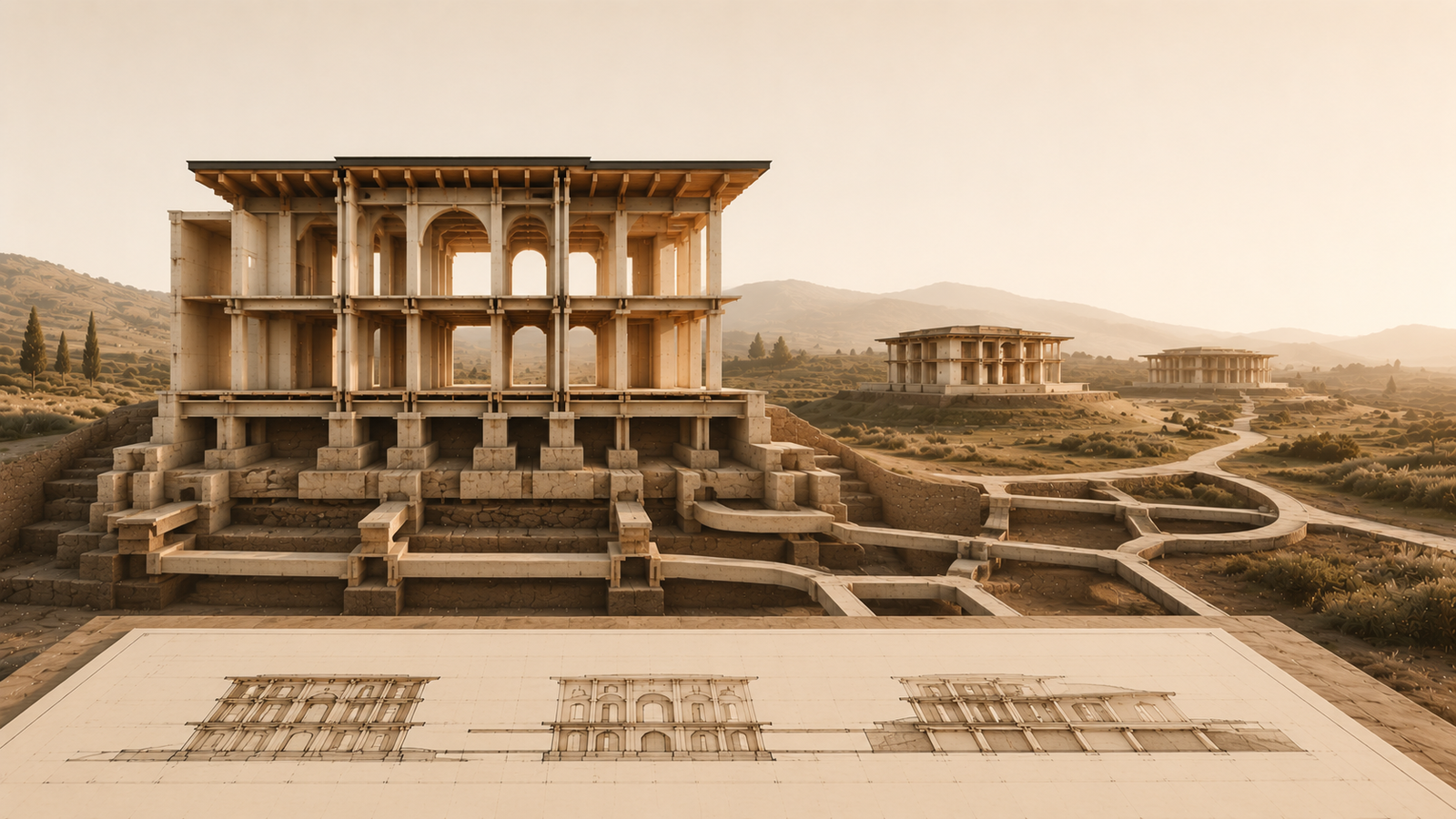
Legacy in Motion · The Architecture of Family Stability · Part 8
Generational legacy is not measured by wealth or recognition alone. It is measured by the people, values, institutions, and opportunities that continue serving others long after your lifetime has ended.
Generational legacy begins with a hard truth: everyone leaves something behind.
That is not the real question.
The real question is whether what remains will serve anyone well.
Some people leave money but no wisdom. Others leave property but no shared values. Some leave a name but no discipline attached to it. Meanwhile, others leave no grand estate, yet their habits, sacrifices, stories, standards, and decisions continue shaping people for generations.
That is legacy.
Legacy is not only what survives you. Instead, it is what continues because you built something strong enough to keep serving after you are gone.
This article closes the first Legacy in Motion cycle. The Architecture of Family Stability established the family as a designed system. Children Inherit Normal showed how family culture moves across generations. Love Needs Structure explained why durable relationships need intentional support. Every Household Has a Constitution named family governance. Family Meetings Change Everything turned governance into practice. The Discipline Children Remember showed how repetition forms memory. Finally, Raising Adults, Not Just Children reframed parenting as the formation of capable adults.
Now the series reaches the larger question.
What are we building that will outlive us?
Generational Legacy
Generational legacy requires more than inheritance.
Inheritance transfers assets. Generational legacy transfers capacity. It carries values, stories, skills, habits, responsibilities, relationships, and institutions into the future.
That distinction matters.
A family can pass down money and still lose its center. A community can preserve a building and still lose its purpose. Likewise, an organization can honor a founder and still drift away from the standard that made the work matter.
Legacy Must Be Useful
The strongest legacy remains useful after the builder is gone.
It helps people make better decisions. It strengthens families under pressure. It teaches younger people how to carry responsibility. It also gives institutions enough memory to avoid starting over every generation.
Therefore, generational legacy should not be reduced to nostalgia. Nostalgia remembers. Legacy equips.
Legacy Needs Structure
Good intentions do not automatically become legacy.
Values need habits. Stories need keepers. Assets need stewardship. Children need formation. Institutions need governance. Communities need trust. Without structure, even noble work can fade.
That is the central claim of Legacy in Motion. What matters must be practiced, protected, and transferred.
Building What Outlives You
Building what outlives you requires a different kind of ambition.
It is not the ambition to be admired. Rather, it is the ambition to remain useful beyond your own moment. That is harder because it demands patience, humility, and structure.
A person can chase attention quickly. However, durable legacy takes time. It grows through repeated decisions, clear values, disciplined stewardship, repaired patterns, and people prepared to carry the work forward.
Generational Legacy Requires a Long Horizon
Short-term thinking asks, “What can I get?”
Legacy thinking asks, “What will this make possible after me?”
That one question changes everything. It changes how people spend money, raise children, build relationships, handle conflict, document knowledge, preserve stories, and serve communities.
If the horizon is only the self, every decision bends toward comfort. However, when the horizon includes future generations, decisions begin to carry more weight.
Legacy Begins Before It Is Needed
People cannot assemble legacy at the end of life like a last-minute project.
It begins earlier, often quietly. A parent teaches responsibility. A couple repairs conflict. A family tells the truth about money. Elders preserve memory. Adults prepare younger people for leadership before leadership becomes urgent.
The final result may become visible later, but the construction begins now.
Legacy Is Not Fame
Many people confuse legacy with being remembered.
That frame is too small.
Fame is recognition. Legacy is continuation. Fame depends on attention. Legacy depends on transmission. Fame asks people to look back at you. Legacy gives people something useful to carry forward.
Being Known Is Not the Same as Being Useful
A person can become widely known and still leave very little that strengthens anyone.
Meanwhile, a grandmother who never becomes publicly famous may leave habits that stabilize generations. A father who teaches repair may shape marriages he never sees. A teacher may change the direction of a student’s life. A neighbor may preserve trust on a block. A founder may build an institution that serves people long after the original personality fades.
Useful legacy does not require public applause.
Memory Is Not Enough
Memory matters. Stories matter. Names matter.
Still, memory alone is not legacy. A family can remember someone fondly while losing the values that person tried to build. Likewise, an organization can honor a founder while betraying the principles that made the institution matter.
Real legacy requires more than remembrance. It requires continuity.
The Groundwork
A legacy is strong when future people can still use what previous people built.
What Continues
The most important legacy question is simple.
What continues?
Not what people praised. Not what someone posted. Not what looked impressive in one season. Instead, what continues to serve, teach, protect, prepare, and strengthen people when the original builder is no longer present?
Generational Legacy Continues Through Practice
Values do not continue because a family claims them.
They continue because people practice them. Responsibility continues when children become adults who carry responsibility. Repair continues when adults apologize and teach younger people to do the same. Service continues when generosity becomes a family rhythm instead of a holiday performance.
This is why Children Inherit Normal is central to the whole series. The future does not only inherit words. It inherits repeated behavior.
Wisdom Continues Through Teaching
Wisdom that no one teaches becomes private property.
A family may hold hard-earned lessons about money, marriage, faith, work, grief, survival, ownership, or education. Yet those lessons can disappear in one generation if no one turns them into stories, practices, documents, or conversations.
Legacy requires transmission.
Therefore, people must teach what they learned. They must explain mistakes. They must tell the truth about what worked and what failed. Otherwise, the next generation pays tuition for lessons the previous generation already purchased.
Stewardship Over Ownership
Ownership asks, “What belongs to me?”
Stewardship asks, “What has been entrusted to me?”
That shift sits at the heart of legacy.
Ownership can become possessive. Stewardship becomes responsible. Ownership can end with the owner. However, stewardship keeps looking forward.
You Do Not Own the Future
No generation owns the future.
Each generation receives a season of responsibility. It receives stories, assets, wounds, traditions, institutions, opportunities, and unfinished work. Then it must decide what to preserve, what to repair, what to retire, and what to build.
That decision is stewardship.
Stewardship Requires Editing
Not everything inherited deserves preservation.
Some traditions are wise. Others are fear wearing old clothes. Some family patterns create resilience. Others create silence, resentment, financial disorder, or emotional distance. Some institutions deserve renewal. Others need reform.
Stewardship does not mean worshiping the past. Instead, it means handling the past with enough honesty to protect the future.
The Stewardship Test
Preserve: What inherited strength should continue?
Repair: What damaged pattern needs correction?
Retire: What tradition no longer serves life?
Build: What must be created for the next generation?
Transfer: Who is being prepared to carry it forward?
Systems Outlast Sentiment
Sentiment is not enough.
A family may love its values and still fail to preserve them. A community may honor its elders and still lose their wisdom. An organization may admire its mission and still drift from it.
Why does that happen?
Because systems outlast sentiment.
Good Intentions Need Structure
Good intentions are fragile without structure.
If a family values education, it needs a structure that protects learning. If it values service, it needs practices that make service normal. If it values financial stability, it needs money rhythms, documents, conversations, and habits. If it values unity, it needs repair practices before conflict hardens into distance.
This is why Every Household Has a Constitution matters. A value becomes more durable when it enters the family’s operating system.
Documentation Protects Memory
Families and institutions lose too much because they fail to document what they know.
Who holds the family history? Who knows the medical patterns? Who understands the property paperwork? Who knows how the business began? Who remembers the stories behind the photographs? Who knows why certain decisions happened?
If only one person knows, the legacy is fragile.
Documentation is not cold. It is care made durable.
People Are the First Legacy
The first legacy is people.
Money matters. Property matters. Institutions matter. However, none of them can carry legacy well if people do not know how to steward them.
A family can pass down assets to people who have never learned responsibility. An organization can pass leadership to people who never learned service. A community can inherit buildings without inheriting the trust required to use them well.
Formation Comes Before Transfer
Before something transfers, someone must learn how to receive it.
This is why Raising Adults, Not Just Children is the direct bridge into this capstone. The purpose of parenting is not permanent dependence. It is the formation of capable adults who can carry responsibility forward.
Without formation, inheritance can become burden. With formation, inheritance becomes opportunity.
Capability Multiplies Generational Legacy
Capable people can extend what they receive.
They can build homes, businesses, ministries, schools, friendships, civic institutions, and traditions. They can also improve the blueprint. That matters because legacy should not create replicas. It should create stewards.
A true generational legacy does not need the next generation to copy everything. It needs the next generation to carry the core forward with wisdom.
Institutions Carry Memory
Families matter deeply, but legacy does not stop at the front door.
Eventually, strong families build institutions. They build businesses, churches, schools, civic groups, mutual aid networks, scholarship funds, neighborhood associations, archives, mentorship circles, and cultural traditions.
Institutions carry memory beyond individual personality.
Institutions Protect Shared Work
A person can inspire people during one lifetime. An institution can organize that inspiration into durable service.
Institutions matter because they hold agreements. They preserve standards. They train successors. They protect resources. They also make it possible for work to continue even when one person steps aside.
Without institutions, much of the work depends on memory and charisma. That is risky.
Small Institutions Count
An institution does not have to be large to matter.
A family meeting is a small institution. A scholarship fund is a small institution. A standing Sunday dinner can become a family institution. Likewise, a neighborhood cleanup, annual gathering, oral history project, or mentorship group can become a structure that carries values forward.
Legacy grows when values have a place to live.
Repair What You Inherited
Building what outlives you also means repairing what should not pass forward.
This is where legacy work becomes honest.
Some people inherit silence. Others inherit financial fear. Some inherit emotional distance. Others inherit conflict without repair. Some inherit family stories with missing chapters. Others inherit shame around failure, grief, mental health, money, or vulnerability.
A responsible generation does not simply hand all of that forward untouched.
Interruption Is a Gift
When a person interrupts a harmful pattern, that person gives the future a gift.
A parent who learns to apologize changes what authority looks like. A couple that learns repair changes what love feels like. A family that starts discussing money changes what security means. An elder who tells the truth about the past changes what memory can carry.
These are not small acts. They are legacy repairs.
Repair Requires Humility
Repair is difficult because it requires humility.
It requires people to admit that some inherited patterns were not wisdom. Some were survival strategies. Some were pain. Some were fear. Some may have helped a previous generation endure but now prevent the next generation from thriving.
That does not mean despising ancestors. It means honoring the future enough to tell the truth.
This is the deeper lesson of The Discipline Children Remember. What adults repeat becomes formation. Therefore, adults must be careful about repeating what was never repaired.
The Generational Legacy Blueprint
Generational legacy needs a blueprint.
Not because every detail can be controlled. It cannot. The future will bring conditions no one can fully predict. Children will make their own choices. Institutions will face new pressures. Communities will change.
Still, a blueprint matters because it gives the future a starting structure.
Name What Matters
Start by naming what matters.
What values should continue? What stories should be preserved? What skills should be taught? What assets should be protected? What relationships should be strengthened? What institutions should be built or renewed?
If a family cannot name what matters, it cannot reliably transfer it.
Build Transfer Systems
Then build transfer systems.
That may include regular family meetings, written family principles, financial education, mentorship, estate planning conversations, oral history recordings, documented recipes, business succession planning, shared service projects, or annual gatherings.
The point is not complexity. The point is continuity.
The Generational Legacy Blueprint
1. Values: What must continue?
2. People: Who is being formed to carry it?
3. Practices: What routines make the values visible?
4. Assets: What resources need stewardship?
5. Stories: What memory must not be lost?
6. Institutions: What structures can continue the work?
7. Succession: Who is prepared to lead next?
Make the Blueprint Usable
A legacy blueprint should be practical.
If it is too complicated, no one will use it. If it is too vague, no one can follow it. The best blueprint is clear enough to guide action and flexible enough to mature across generations.
Legacy is not a museum. It is a living structure.
How to Measure Generational Legacy
Generational legacy should be measured by continuation, not image.
The strongest measure is not how many people praised the builder. It is whether the work continued to strengthen people after the builder was gone.
Ask Better Questions
Better questions produce better legacy.
- Are people more capable because of what was built?
- Are future generations better prepared?
- Are values becoming practices?
- Are assets protected by wisdom?
- Are stories preserved with honesty?
- Are institutions stronger than one personality?
- Are harmful patterns being repaired instead of repeated?
- Are successors being trained before urgency arrives?
These questions are more useful than asking whether someone will be admired.
Legacy Should Create Capacity
The best legacy creates capacity.
It helps people think better, act better, build better, love better, govern better, and serve better. It does not trap future generations inside one person’s ego. Instead, it gives them tools, standards, and courage.
That is the difference between control and stewardship.
The Legacy Measure
If what you build requires your constant presence to remain useful, it is not yet legacy. It is still dependency.
The Work That Remains
Building what outlives you is not glamorous most days.
It looks like consistency. It looks like documentation. It looks like family meetings, hard conversations, corrected habits, disciplined money, honest memory, repaired relationships, trained successors, and repeated service.
It looks ordinary until time reveals what it was holding together.
Begin Where You Are
Not everyone begins with property, wealth, or institutional power.
That does not mean legacy is unavailable. Begin with what can be built now. Build a rhythm. Repair a pattern. Teach a skill. Document a story. Save consistently. Mentor someone. Start the family meeting. Name the values. Make the apology. Preserve the photograph. Write down the recipe. Train the next person.
Legacy often begins smaller than people expect.
Build Generational Legacy for People You May Never Meet
The deepest form of generational legacy serves people who may never know your name.
That is not failure. That is maturity.
A foundation does not complain because people admire the building. A bridge does not resent the travelers. A tree does not ask future children to know who planted it.
Some work is noble because it serves beyond recognition.
Building what outlives you means accepting that the future may use your strength without applauding your sacrifice.
Build anyway.
Build the family rhythm. Build the adult capability. Build the repair practice. Build the institution. Build the memory. Build the standard.
Most of all, build the thing that keeps serving after your hands are no longer on it.
That is generational legacy.
That is stewardship.
That is the work of Legacy in Motion.
Further Groundwork
The Architecture of Family Stability
The cornerstone framework for understanding how strong families are intentionally built.
Children Inherit Normal
How repeated adult behavior becomes the first inheritance children receive.
Love Needs Structure
Why healthy relationships require expectations, communication, responsibility, and repair.
Every Household Has a Constitution
How shared values and clear governance help households remain steady.
Family Meetings Change Everything
How regular communication turns household governance into living practice.
The Discipline Children Remember
Why routines, consistency, and emotional steadiness shape childhood formation.
Raising Adults, Not Just Children
Why the true purpose of parenting is capable adulthood.
Receipts
Harvard Center on the Developing Child
Research on childhood development, resilience, executive function, stress, and the environments that shape long-term outcomes.
Child Trends
Research on child well-being, family stability, parenting practices, and youth outcomes.
Pew Research Center · Family and Relationships
Research on families, parenting, marriage, household structure, and generational change.
Urban Institute · Families
Research on household stability, economic mobility, family policy, and opportunity.
Search Institute · Developmental Assets Framework
Research-based framework on support, boundaries, expectations, empowerment, and youth development.
Subscribe to Groundwork Daily
Groundwork Daily publishes practical frameworks for structure, responsibility, stewardship, and building what outlives you.
