Masculinity without costume rarely announces itself. Over time, one pattern becomes hard to ignore: the men who feel the strongest need to look like men are often the ones still trying to convince themselves. They dress the part. They talk the part. They collect the signals. Eventually, the performance begins carrying more weight than the man underneath it.
By contrast, masculinity without costume shows up quietly. It does not arrive with accessories or explanation. Instead, it carries responsibility, absorbs pressure, and leaves things standing. When attention becomes the filter, substance often disappears from view.
When Masculinity Relies on Appearance
Costume masculinity depends on being seen. Because of that dependence, it stays busy. There is always something to prove, someone to correct, or a standard to enforce loudly. Movement replaces depth. Volume substitutes for stability.
Underneath that activity sits a familiar fear. If the performance stops, authority might disappear with it. A man who must keep reminding others what he is has not yet built a life that confirms it.
Masculinity without costume operates differently. It does not rush. It does not demand immediate understanding. Its values show up through follow-through, maintenance, and restraint. Instead of signaling strength, it demonstrates it through use.
Masculinity Without Costume When Nobody Is Watching
The difference becomes clearest in unobserved moments. You see it in how a man handles responsibility when nobody is watching. You see it in whether his word survives pressure. You also see it in how he responds to boredom, frustration, and long stretches of routine.
Performance masculinity collapses in those spaces. Masculinity without costume holds.
That distinction explains why older men rarely explain themselves. Time already handled the explanation. Their lives either work or they do not. The porch they sit on—literal or figurative—tells the story. The condition of the house matters more than the volume of their opinions.
Why Costumes Eventually Burn Out
Costumes belong in theater. They help an audience understand a role quickly. Life does not function that way. Masculinity is not a role to put on. It accumulates through habits, decisions, and endurance built over years.
For that reason, performative masculinity often burns hot and fast. It relies on intensity rather than consistency. It confuses aggression with strength and noise with authority. Eventually, exhaustion sets in because nothing underneath can carry the load.
Meanwhile, masculinity without costume often gets misread as passivity. That reading misses the point. Restraint is not absence. It is control exercised deliberately.
The Porch Test for Masculinity Without Costume
There is something unfashionable about masculinity built this way. It does not photograph well. It does not trend. It does not translate into slogans. That limitation explains its durability. Masculinity without costume was never designed for consumption. It was designed for use.
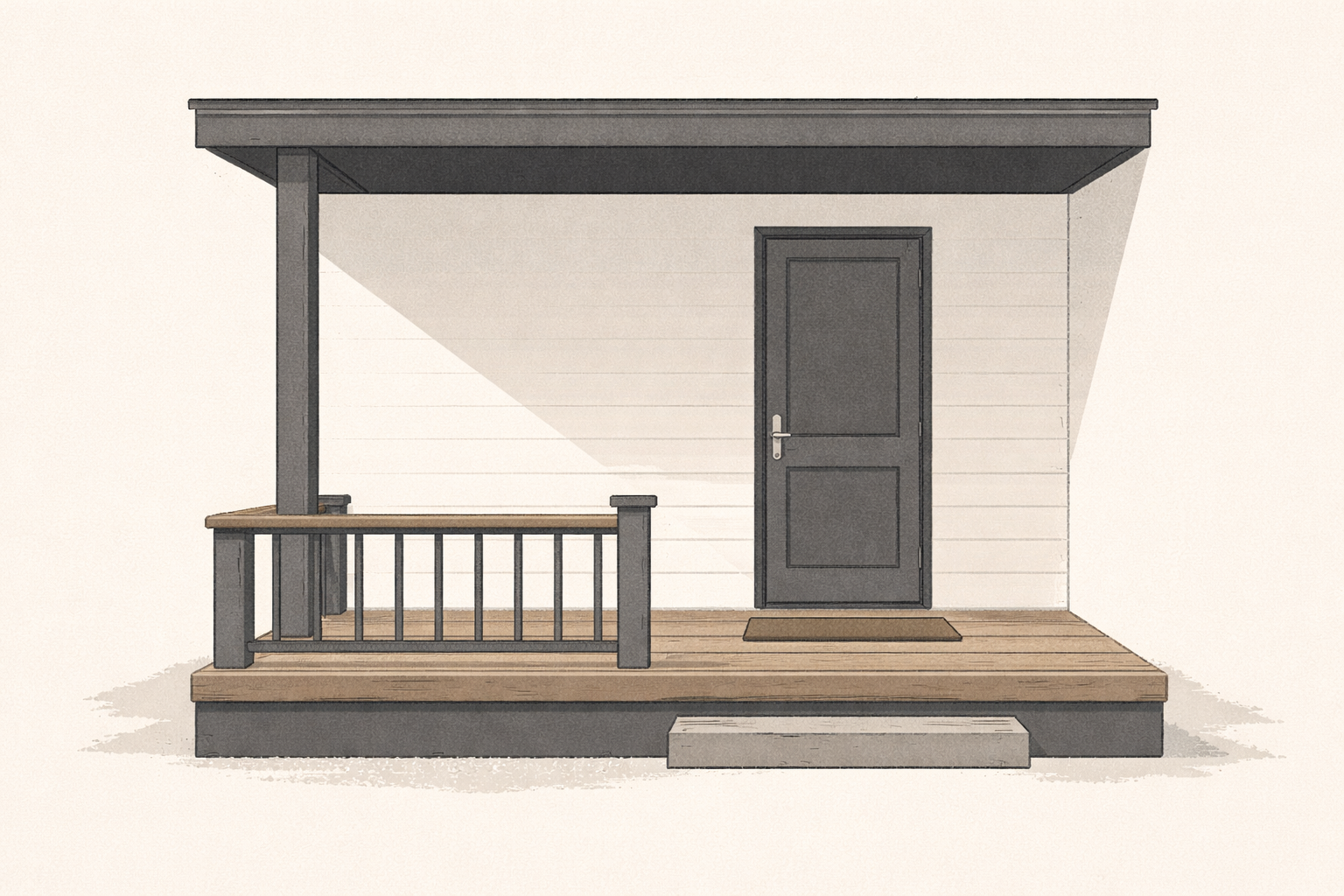
The porch offers a practical test. A porch is not decoration. It exists to support weight, provide shelter, and offer rest after work is done. If it cannot do those things, it fails regardless of how it looks.
Masculinity works the same way. When pressure arrives, appearance stops mattering. What matters is whether the structure holds, remains useful in quiet seasons, and stays present when nothing needs to be performed.
Trust, Not Applause
This distinction does not reject confidence or expression. Instead, it separates expression from substitution. When image replaces substance, something essential hollows out over time. Eventually, that hollowness shows.
Masculinity without costume does not ask to be admired. It asks to be trusted. It does not demand recognition. Dependability earns respect without noise.
The men who matter most are not the ones who taught others how to look strong. They showed how to remain standing when nothing about the situation looked impressive.
That is masculinity without costume. It does not need a uniform, a microphone, or permission. It shows up day after day, carries what needs carrying, and leaves things standing.
The Groundwork
Costume masculinity drains energy because it demands constant signaling and comparison. Masculinity without costume builds slowly through repetition. Keep your word. Maintain what you own. Show up when nothing feels inspiring.
That’s the truth, from the front porch. Now go build.
Further Groundwork