
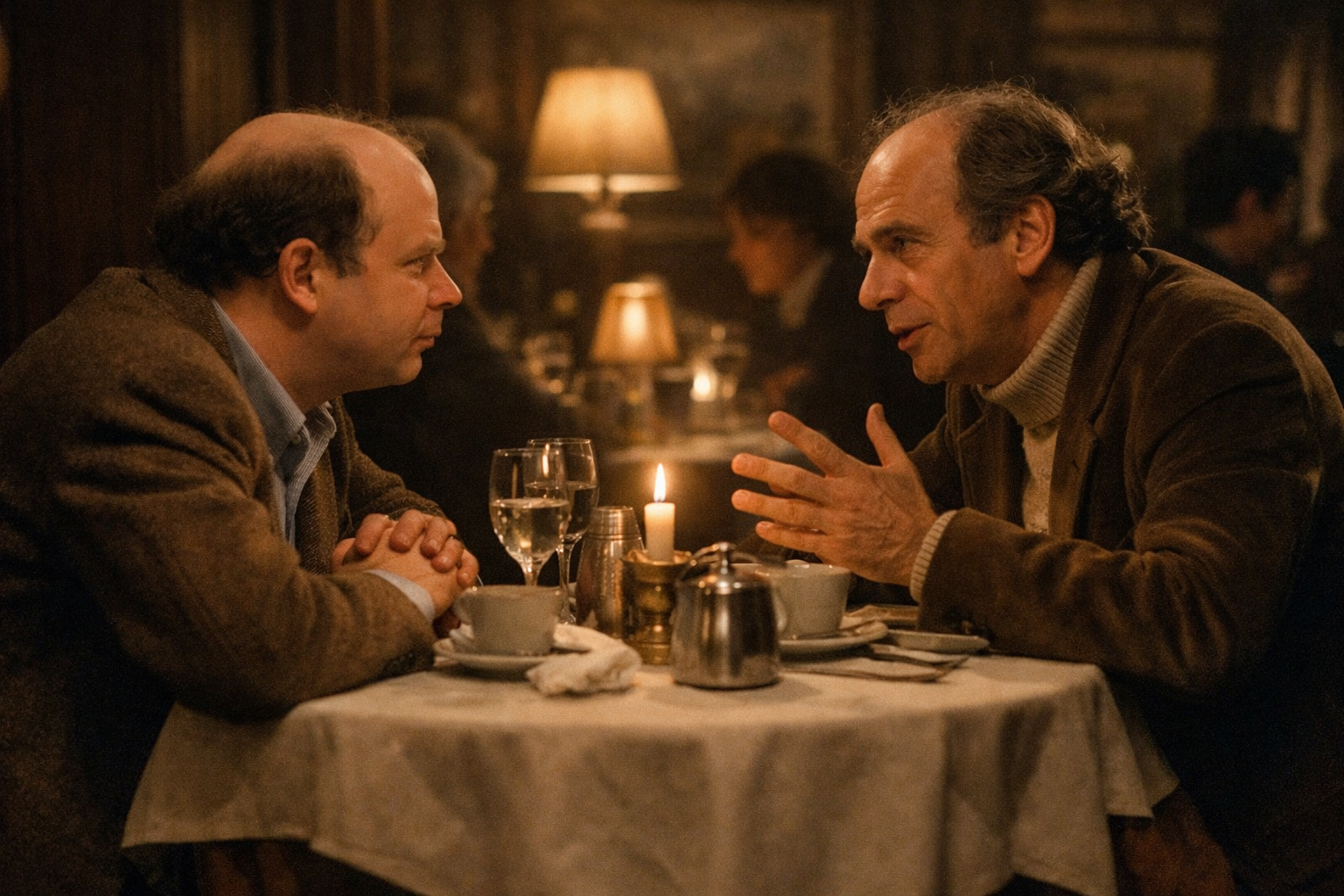
My Dinner with Andre and modern society might not seem like an obvious pairing, but the quiet 1981 film anticipated one of the biggest cultural debates of our time: the fight for human attention.
Back in 1981, two men sat down in a Manhattan restaurant and talked for nearly two hours. No car chase. No dramatic reveal. No shiny distraction to keep everybody halfway awake. Just two grown men sitting at a table, thinking out loud and telling the truth as they understood it.
And somehow that simple setup became one of the most quietly unsettling films ever made.
My Dinner with Andre and Modern Society
Midway through the dinner, Andre Gregory delivers a monologue that still lands hard today. He argues that modern life can turn into a self-sustaining prison. No visible guards. No warden pacing the floor. Just people learning how to maintain the system themselves.
That is the part that still stings.
Because he is not talking about chains in the obvious sense. Instead, he is pointing to habits, routines, and expectations people defend because those structures feel familiar. We call it stability. We call it responsibility. We call it being grown. But sometimes what we are really doing is decorating the same cage and congratulating ourselves for picking nice curtains.
In other words, the system does not always need to force obedience. Most of the time people enforce it on themselves through routine, performance, and the constant pressure to stay busy, stay reachable, and stay distracted.
Andre’s deeper concern was not simply power. It was attention.
He suggests boredom is not just a feeling. It can become a kind of training. If people are dulled long enough, they stop asking larger questions. They stop examining the structure around them. Meanwhile, they reach for small bursts of stimulation instead of clarity.
The Economics of Attention
Now look around.
Forty years later, that idea has an entire business model wrapped around it. Social platforms compete for your focus. Media companies optimize for clicks. Notifications arrive like tiny taps on the shoulder all day long. Every app wants your eyes, your time, your reaction, and your little piece of mental real estate.
Your boredom gets monetized. Meanwhile, your curiosity gets tested, and your attention gets sold in pieces.
This is not a conspiracy. It is incentives doing what incentives do.
Companies chase profit. Media chases engagement. And people chase relief, stimulation, and something to cut through the noise.
So when those incentives combine, you get a culture that rewards distraction and quietly discourages reflection.
If you slow down too much, you might notice what is shaping you. And if you notice what is shaping you, you might question it. That is precisely the moment systems prefer to avoid.
That is why this monologue still matters.
My Dinner with Andre does not hand anyone a perfect escape plan. Instead, it offers something more useful: awareness.
It asks you to pause long enough to see the machinery. To notice the habits that are not serving you. And most importantly, to ask one very necessary question:
Who benefits from my attention right now?
Once you can see the machine, you do not have to keep mistaking it for life. Once you can name the pattern, you do not have to keep worshipping it. And once you realize distraction is profitable to somebody, you start getting more careful about what gets access to your mind.
The Real Talk
Freedom does not always look dramatic. Sometimes it looks like turning the noise down low enough to hear your own mind again.
That is what this film understood long before half the internet learned the word algorithm.
In a world built to scatter your focus, attention is not just productivity. It is discernment. It is self-respect. It is the difference between living on purpose and being managed in public.
And baby, anything that helps you get your mind back is not a small thing. That is structure. That is power. That is a way out.
Further Groundwork
