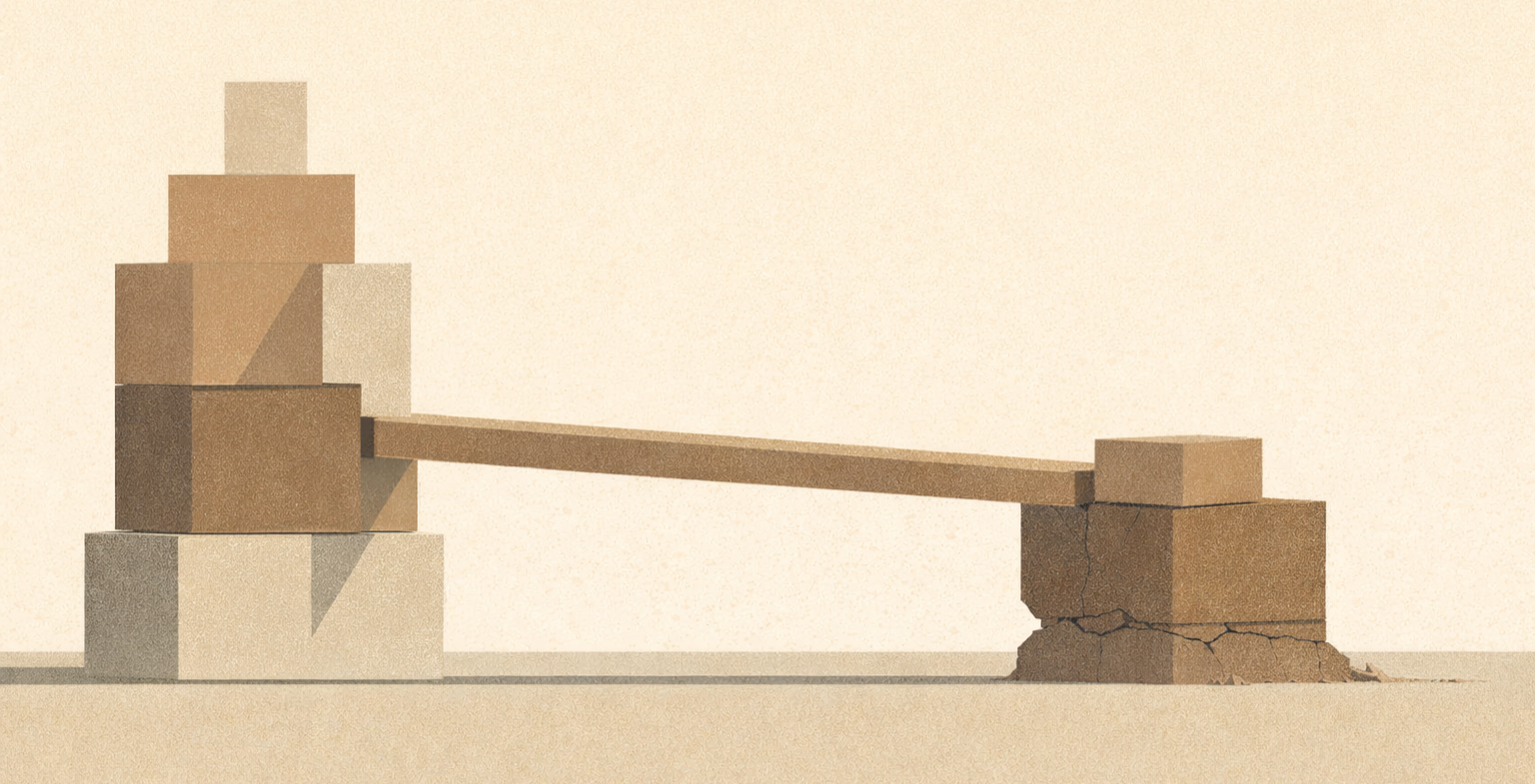
Power and price do not separate. When a system protects comfort, it still pays a cost. It simply decides who will carry it.
Most people do not notice the transfer at first. The surface stays calm. The output stays steady. However, the strain moves to a place with less leverage.
How Power Moves Costs
Cost transfer is the quiet engine behind many stable looking systems. Leaders preserve appearance by shifting pressure away from the center. Then they rename the shift as efficiency, flexibility, or optimization.
The pattern repeats in every arena. A company holds margins by cutting labor hours. A city balances budgets by delaying maintenance. A household keeps peace by letting one person carry the emotional load.
Because the system stays functional, the story becomes denial. People say nothing is broken. Yet the base begins to crack.
Power prefers transfers because transfers avoid conflict. A direct payment requires accountability. A transfer spreads the burden until no one can point to a single decision.
This is why the cost rarely looks like a bill. Instead, it shows up as burnout. It shows up as turnover. It shows up as deferred repairs. It shows up as children growing up inside instability that adults call normal.
In economic terms, the system converts immediate expense into long term fragility. In human terms, it converts responsibility into resentment.
The solution starts with visibility. Name who benefits. Name who pays. Then name what the system protects.
Discipline matters here because discipline refuses magical thinking. Discipline forces tradeoffs into the open. That principle sits at the center of Discipline Before Dollars.
External research supports the same idea. The Brookings Institution emphasizes that stable institutions depend on clear responsibility and credible enforcement. When roles blur, hidden transfers of burden accelerate decline.
Power and price remain linked. The only question is whether the cost gets paid honestly or transferred quietly.
The Bottom Line on Power and Price
Costs do not disappear. They move to the person or place least able to refuse them.
If a system looks stable, ask what it is protecting. Then ask who is paying for that protection.