
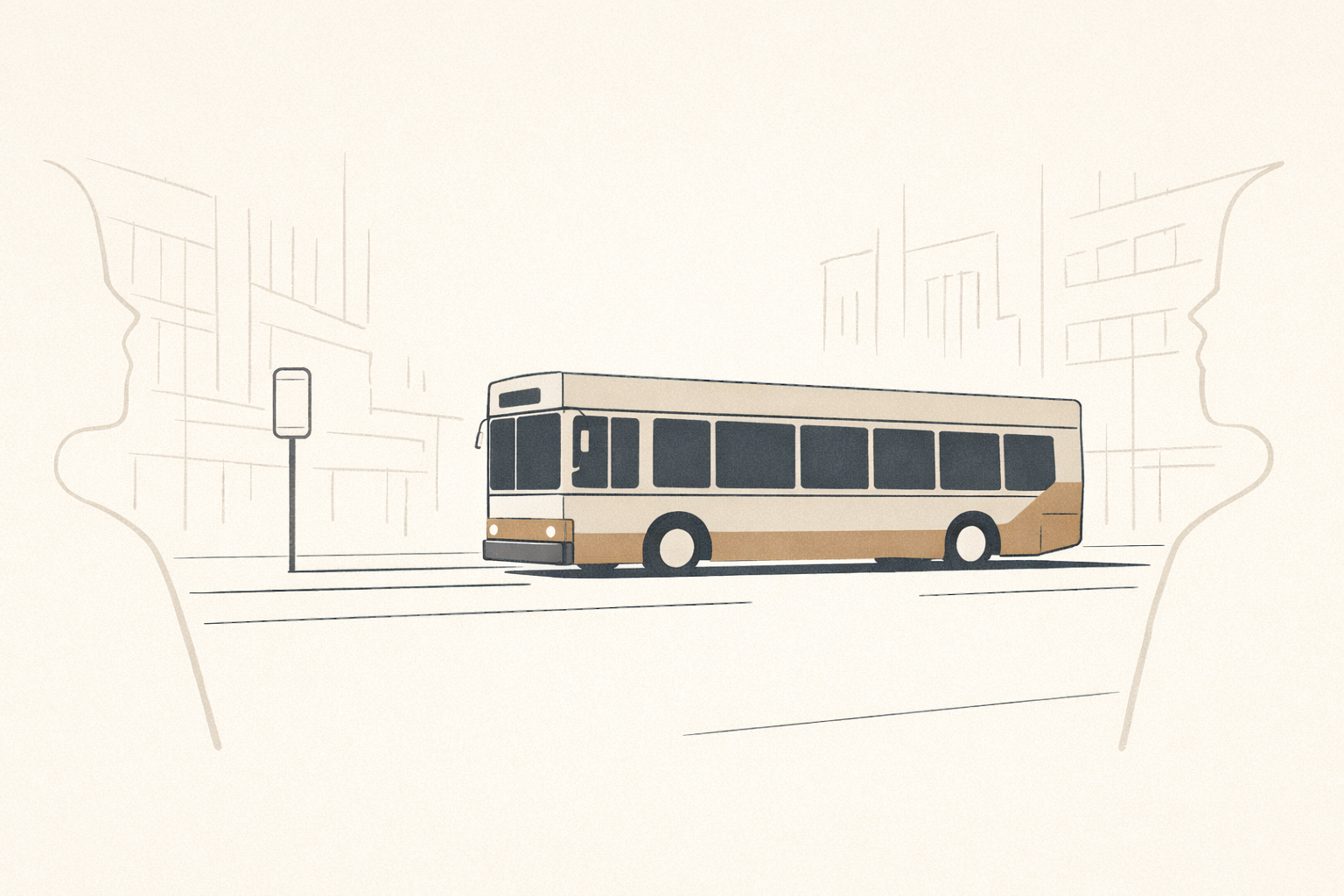
Shared restraint is what allows public space to function without constant enforcement. Buses run, streets work, and shared systems endure because most people choose not to test every boundary available to them. When shared restraint erodes, the system does not fail loudly at first. It fails quietly through delays, damage, risk, and retreat.
Shared restraint is the unseen infrastructure
Public life depends on agreements that are rarely spoken out loud. Riders do not climb vehicles. Pedestrians respect lanes and signals. People take turns. People give space. These are not small courtesies. They are load-bearing norms that reduce friction so the city can move.
When those norms dissolve, enforcement must replace them. Enforcement is slower and more expensive than restraint. It requires staffing, escalation protocols, paperwork, repair cycles, and constant attention. Every additional enforcement layer is a tax on the entire public, paid through time, stress, and diminished service.
Why shared restraint matters in public space
Shared restraint matters because public space is shared risk. A single impulsive action does not stay personal for long. It spreads cost outward to operators, riders, bystanders, and the institutions responsible for safety. The individual experience may feel momentary. The institutional consequence is cumulative.
That consequence compounds in predictable ways:
- Reliability declines as systems become easier to disrupt.
- Costs rise through repairs, reroutes, overtime, and security response.
- Trust erodes as people stop believing shared space will be protected.
- Participation drops as families and workers withdraw to private options.
Eventually, the shared environment becomes contested. Contested space becomes fragile. Fragile space becomes avoided. The result is not freedom. The result is abandonment.
Shared restraint is not repression. It is maintenance.
Norms reduce the need for force
A functioning society cannot police every impulse. It survives because most people self-regulate most of the time. That is the operational definition of adulthood. The alternative is a public realm that requires constant intervention to remain usable.
For context on how behavioral standards stabilize groups over time, see this reference on public space norms.
Discipline makes freedom usable
Shared restraint is a discipline practiced in ordinary moments. It is the decision to protect what is shared even when no one is watching. A culture that values shared restraint does not need to create a crisis to remember the rule. It installs the rule in advance.
Related doctrine: Structure Precedes Freedom.
Builder Note
Shared restraint is a private choice with public consequences. Protect shared space the same way you protect your home: by refusing to treat it as disposable.
Further Groundwork
