Part of the Thinking Laws Framework: Start here
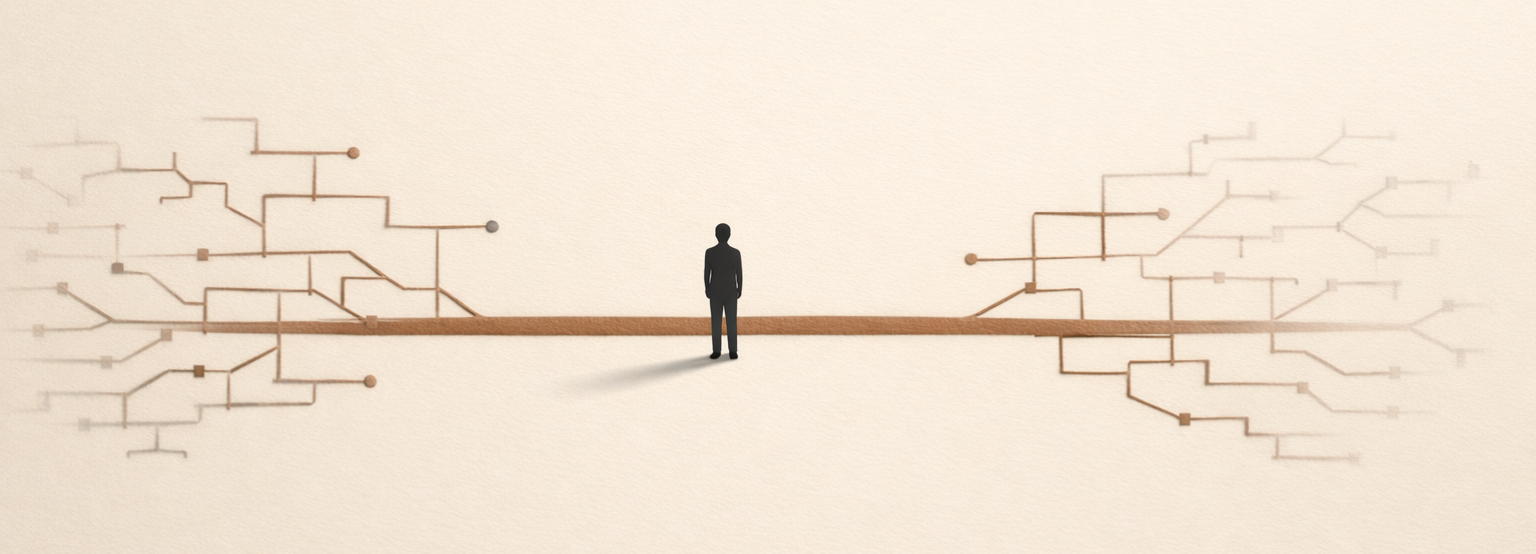
Decision fatigue is not caused by too many important choices. It is caused by too many unnecessary ones. Most people do not lose clarity because life is complex. They lose clarity because they refuse to filter what deserves their attention.
This is where discipline begins. Not in doing more, but in deciding less.
Every unnecessary decision consumes attention. Over time, that cost compounds. Focus weakens. Judgment declines. The system breaks down.
This is not a personality issue. It is a structural failure.
Decision Fatigue Is a System Problem
Most people treat decision fatigue like a personal weakness. However, it is not about capacity. It is about design.
When every choice is treated as equal, attention gets scattered. Small decisions begin to compete with important ones. As a result, nothing receives the focus it requires.
This is how clarity erodes.
A well-structured system does not ask you to decide everything. It removes what does not matter.
For the structure behind that system, see the Thinking Laws Framework.
Why Most Decisions Do Not Matter
Many decisions feel important because they are immediate. That does not make them meaningful.
Low-impact choices consume disproportionate attention:
- What to respond to first
- What to adjust prematurely
- What to reconsider without new information
- What to optimize before it is stable
These decisions create noise, not progress.
The problem is not volume. It is lack of filtering.
This is where discipline separates signal from distraction.
Selective Attention Improves Decision Making
Strong decision makers do not try to manage everything. They reduce the number of decisions they need to make.
Selective attention is a structural advantage. It preserves clarity for what actually moves outcomes.
This requires restraint:
- Ignoring what does not change results
- Delaying what does not require action
- Refusing to engage with low-value inputs
Most people struggle here because ignoring feels passive. It is not.
It is controlled decision-making.
How to Reduce Decision Fatigue
If decision fatigue is high, the solution is not effort. It is removal.
Start here:
- Eliminate repeat decisions with simple rules
- Batch low-value choices into fixed windows
- Separate important decisions from urgent ones
- Commit to fewer active priorities
This is how the system stabilizes.
For how clarity improves this process, read If You Cannot Define the Problem, You Cannot Solve It.
Stillness Is a Form of Control
Stillness is often misunderstood as inactivity. In reality, it is discipline.
It is the ability to remain unmoved by noise.
When attention is controlled, decision quality improves. When decision quality improves, outcomes stabilize.
This is not about doing less for comfort. It is about doing less so that what remains actually matters.
For how pressure disrupts this control, see Fear Is Not Foresight. It Is a Stress Test.
Final Thought
You do not need better decisions.
You need fewer unnecessary ones.
Decision fatigue is what happens when everything is treated as important.
Clarity returns when you remove what does not matter.
That is not avoidance.
It is discipline.
The Thinking Laws Framework