Remove system friction before small delays become structural drag.
Friction rarely announces itself.
It hides in approval loops that no longer serve a purpose.
It hides in extra steps, repeated handoffs, and routine delays that survived without review.
At first the system still appears functional.
However, each unnecessary step adds resistance.
Resistance slows execution.
Slow execution weakens consistency.
Eventually the structure produces fatigue instead of flow.
Most teams assume inefficiency comes from complexity.
More often, inefficiency comes from accumulated residue.
An old checkpoint remains.
An outdated rule still interrupts movement.
A tool sits too far from the task it supports.
The system keeps carrying weight it no longer needs.
Remove system friction wherever effort increases without improving the result.
The fix is not more motivation.
The fix is cleaner design.
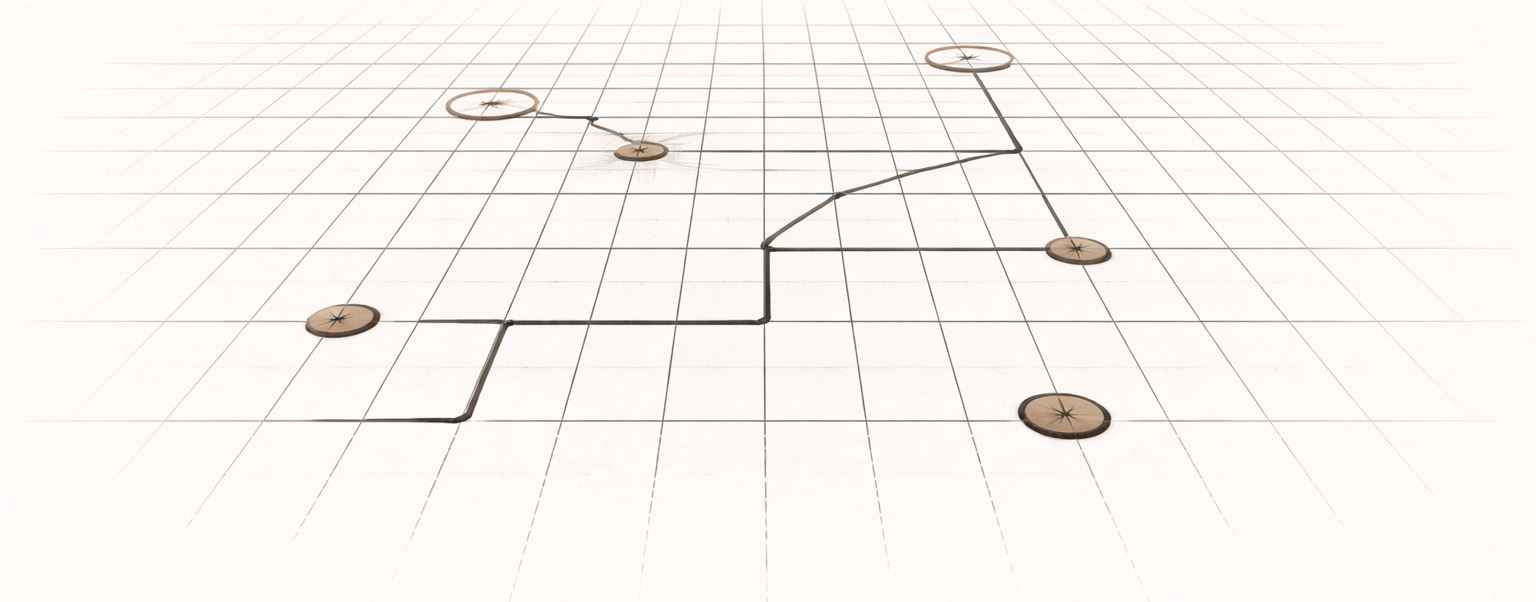
One removed obstacle often restores momentum across the entire grid.
When the path clears, repetition becomes easier.
When repetition becomes easier, the system becomes more reliable.
Today’s Blueprint
Audit one recurring process.
Identify the single step that exists only because it has always existed.
Remove it.
Then observe how much movement returns when you remove system friction instead of asking people to push harder.