Most habits fail for one reason: they rely on motivation.
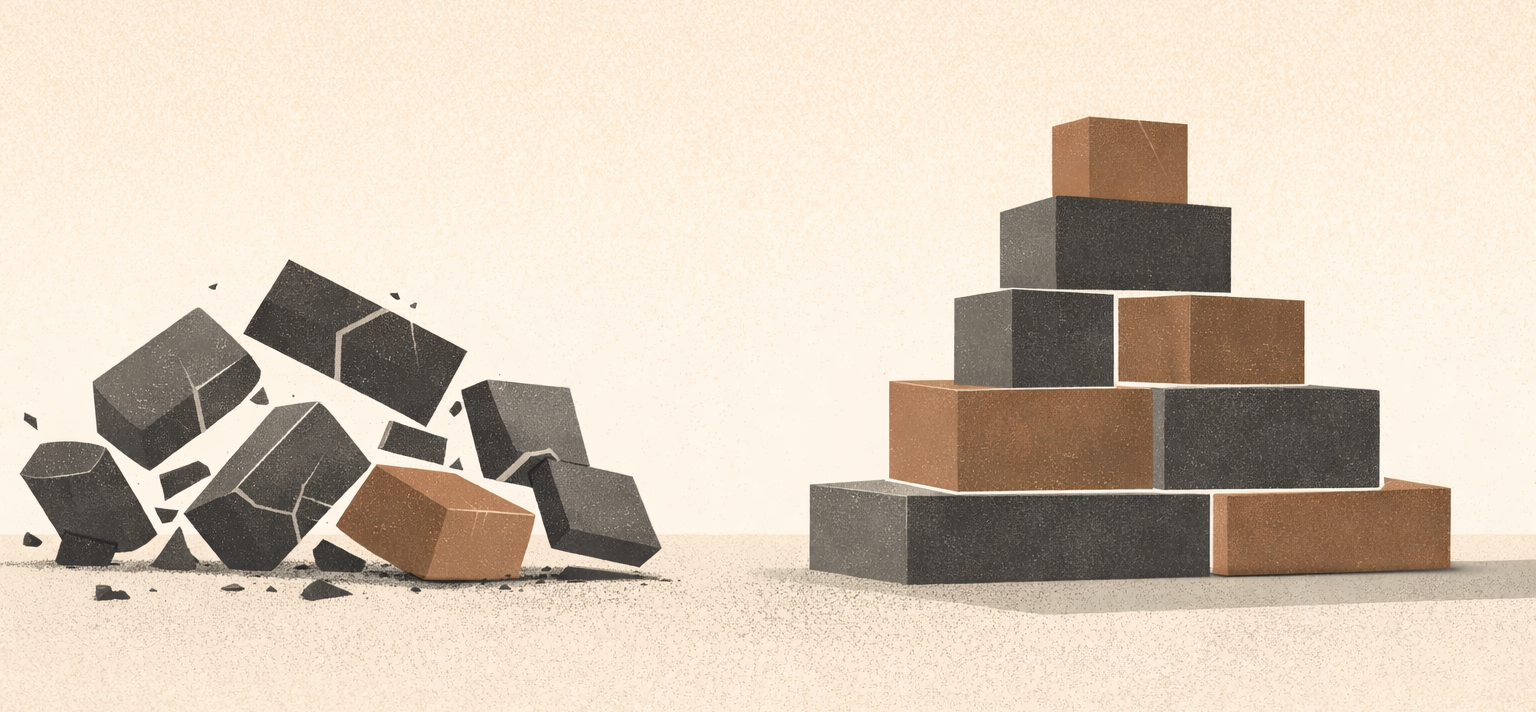
Motivation is a finite resource. Under stress, poor sleep, and decision fatigue, it collapses. As a result, the total life overhaul hits a wall before the system stabilizes.
In other words, what looks like laziness is usually cognitive overload.
Why habits fail under stress
Traditional habit advice pushes intensity. It tells people to wake up earlier, do more, and cut everything at once. However, intensity increases strain, willpower depletes, and the habit collapses within weeks.
Habits do not fail because people lack character. Instead, habits fail because the environment stays chaotic and the plan depends on a mood.
Groundwork replaces motivation with structure.
How to build habits that last
Two principles make the difference. First, build keystone habits that regulate the nervous system. Second, shape environmental cues so the right action becomes the easy action.
Groundwork Daily explores this idea further in Discipline Before Dollars, where structure and consistency are treated as the foundation of long-term progress.
Keystone habits that reduce friction
Keystone habits are small foundational behaviors that regulate the body and mind. For example, regulated breathing, sleep hygiene, and light daily movement lower stress and improve follow through.
Instead of forcing discipline, you reduce volatility.
Environmental cues that keep habits consistent
Your environment drives behavior more than intention. Therefore, when the right choice is the path of least resistance, consistency increases automatically.
In practice, design beats desire.
The 7-day habit reset
This 7-day habit reset focuses on low effort, high impact stabilization. Then, once the baseline is steady, harder habits become easier to maintain.
Day 1: Cortisol reset breathing
Practice six deep diaphragmatic breaths immediately upon waking. This stabilizes your stress response before the day escalates.
Research on stress regulation and breathing techniques has shown measurable improvements in how the body responds to stress. You can review an overview from Harvard Health Publishing.
Day 2: Movement habit stacking
Commit to five minutes of low impact movement. For example, balance on one leg while brushing your teeth or stretch during coffee prep.
Day 3: Nutrition baseline for stable energy
Add one serving of whole grains or vegetables. Over time, this crowds out processed foods with fiber and supports steadier mood.
Day 4: Body scan and positive reinforcement
Perform a 90-second body scan. Release tension in the jaw, shoulders, and lower back. Afterward, name one successful moment to reinforce progress.
Day 5: Sleep hygiene to reduce burnout
Increase sleep by five minutes. In addition, disconnect from screens 30 minutes before bed. Small recovery improvements compound.
Day 6: Environment design for better habits
Place visual cues in your line of sight. For example, set gym shoes by the bed, put a book on the pillow, and keep a water bottle on the desk.
Day 7: Performance audit and iteration
Review the week without judgment. Identify what worked. Then reduce friction and iterate forward.
Symptom vs. system
| If you feel | Adjust this groundwork |
|---|---|
| Distracted or scattered | Day 4 body scan plus Day 6 space cues |
| Low energy or burnout | Day 5 sleep stack plus Day 2 movement |
| High stress or reactive | Day 1 breathwork plus Day 7 reflection |
Applied groundwork at work and at home
These principles apply beyond health. In relationships and work, groundwork means order before rewards. That is why stability in the basics creates capacity for growth.
- Interpersonal stability: Use shared keystone moments like a five-minute walk or a brief check in to regulate the emotional climate of a partnership.
- The discipline principle: Complete the administrative and foundational tasks before chasing high visibility wins. As a result, progress becomes repeatable.
Habits do not fail because you lack discipline. Instead, habits fail because the system lacks structure. Build the structure, and the discipline follows.
Frequently asked questions about habit failure
Why do most habits fail?
Most habits fail because they depend on motivation rather than systems. When stress rises, motivation drops and the habit collapses. Systems make behavior easier to repeat.
How long does it take to reset habits?
A short stabilization routine can begin resetting habit patterns within a week, especially when environmental cues and keystone habits are introduced.