Article Map
Clarity before speed. Substance before show.
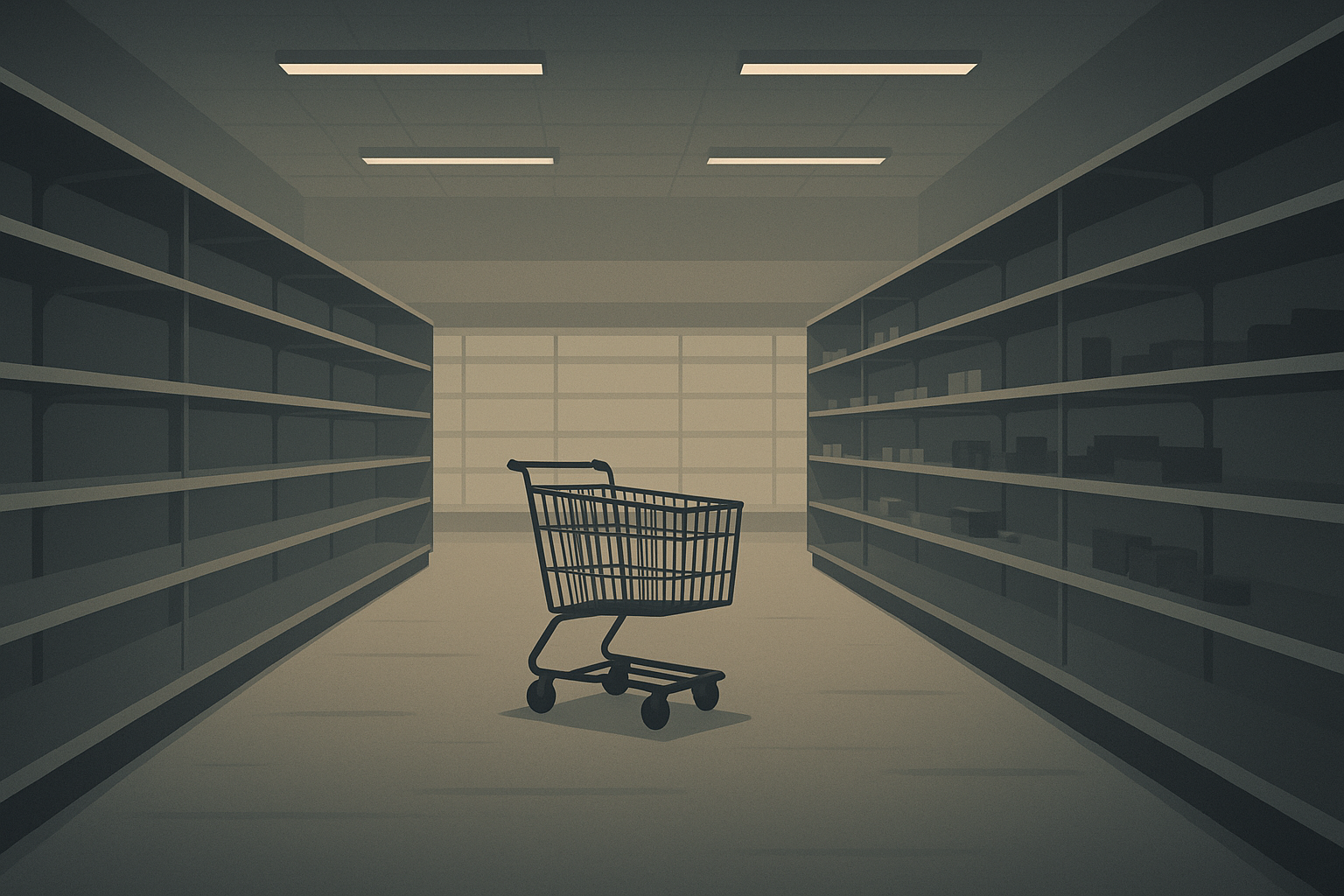
The November 2025 SNAP Crisis
The November 2025 SNAP crisis was not only a benefits lapse. It was a stress test of food aid infrastructure, household stability, local retail systems, and federal response capacity.
This breakdown did not end when benefits resumed. The deeper system failure remained.
When the federal shutdown halted normal SNAP funding, roughly 42 million Americans faced delayed or reduced food assistance. The interruption exposed a hard truth: SNAP is not just a safety net. It is a monthly circulation system that helps families eat, keeps grocery dollars moving, and stabilizes demand in communities already operating close to the margin.
After emergency federal court rulings, the USDA released $4.65 billion in contingency funds to cover partial November payments. However, that amount covered only part of a normal month. Meanwhile, states had to recalibrate payment systems under pressure.
The result was predictable: confusion, uneven timelines, strained food banks, and households forced to absorb the cost of federal delay.
The November 2025 SNAP Crisis Was an Infrastructure Failure
The mistake is treating SNAP as charity. Structurally, SNAP functions as food aid infrastructure. It moves federal dollars into households, then into grocery stores, farms, distributors, workers, and local tax bases.
When that circulation stops, the damage does not remain private. Instead, it spreads through the economy.
USDA Economic Research Service research has estimated that every $1 billion in new SNAP benefits can increase GDP by about $1.54 billion during a slowing economy. That means an $8 billion monthly disruption is not just a household emergency. It is a demand shock.
Federal Funding
↓
SNAP Benefits
↓
Households
↓
Grocery Stores
↓
Food Suppliers
↓
Local Economy
↓
Community Stability
When funding stops near the top, the disruption cascades downward. Therefore, systems that millions depend on cannot be managed like optional programs.
Once food assistance becomes part of the operating rhythm of households and local markets, delayed governance becomes economic sabotage by neglect.
Political Breakdown and Administrative Delay
The political fight around the SNAP benefits shutdown turned a funding lapse into a governance failure. Courts had to intervene before contingency funds were released. That alone says enough.
A system that requires emergency judicial pressure before feeding people is not functioning with discipline.
The administration argued that the shutdown resulted from unresolved budget demands. Opponents argued that available funds should have been used sooner to prevent harm. However, the deeper issue sits beneath the partisan exchange: the country had no fast, trusted, automatic protection for one of its most important household stability programs.
That is the actual system failure. Not the talking point. Not the press statement. The failure was the absence of a durable mechanism that could keep food aid moving while elected officials negotiated above people’s kitchens.
That failure did not resolve when benefits resumed. The system itself remained exposed.
Economic Fallout: When Food Aid Stops Moving
SNAP dollars do not sit still. They move fast because low-income households spend them quickly on essentials. That speed matters because it supports small grocers, rural markets, discount retailers, transportation networks, and food suppliers.
When benefits are delayed, families cut meals, substitute cheaper food, delay bills, borrow, or lean harder on food banks. Retailers lose predictable demand. Food banks face sudden pressure. Local economies lose circulation.
The public debate may call it assistance. However, the marketplace knows it as volume.
This is why the November 2025 SNAP crisis belongs inside a broader discussion about infrastructure. Roads move cars. Wires move power. SNAP moves food purchasing power. When any one of those systems fails, the effects travel outward.
Human Cost: Hunger Moves Faster Than Paperwork
The human impact was immediate. A household does not experience a delayed benefit as an administrative pause. It experiences it as a missing meal, a skipped grocery trip, an unpaid bill, or a quiet calculation at the checkout line.
For families with children, seniors, disabled adults, and workers with unstable hours, even partial payment can create a crisis. Half a benefit does not mean half the hunger. Often, it means the entire household budget has to be rearranged around scarcity.
Everyday Example: The Fifth of the Month
Imagine a parent who normally receives SNAP benefits on the fifth of the month. Groceries are planned around that date. Rent has already been paid. Utilities are due next week.
When benefits are delayed, dinner changes first. Then transportation changes. Medication may be delayed. Debt may grow. Finally, stress becomes the new household schedule.
Administrative delay becomes household instability long before policymakers describe it as a funding interruption.
This is where policy language becomes too clean. “Delayed benefits” sounds technical. “Partial funding” sounds manageable. But inside a home, delay becomes stress. Reduction becomes rationing. Uncertainty becomes fear.
Digital Reaction and Public Safety Risk
The digital reaction added another layer of instability. Social platforms filled with rumors, anger, confusion, and viral claims about benefit restoration. Some posts framed the lapse as collapse. Others exaggerated timelines or encouraged reckless behavior.
This matters because scarcity does not spread only through empty shelves. It also spreads through perception.
When people believe a system has failed, behavior changes before the full facts arrive. Panic buying, misinformation, theft rumors, and social anger become part of the crisis environment.
As a result, information discipline becomes part of food policy. A benefits system needs more than funding. It needs clear communication, trusted timelines, and public-facing updates that prevent fear from becoming its own operating system.
System Insight: Aid Is Infrastructure
The November 2025 SNAP crisis should permanently change how food assistance is discussed. SNAP is not a side program floating outside the economy. It is part of the economy’s foundation.
It stabilizes households. It supports grocers. It preserves purchasing power. It reduces emergency pressure on nonprofits. It keeps food insecurity from becoming public disorder. It converts federal policy into local survival.
That is infrastructure. Quiet infrastructure, but infrastructure all the same.
Electric grids move power. Water systems move clean water. Public transit moves workers. Freight systems move goods. SNAP moves food purchasing power through households and local markets.
These systems are not identical. Still, they share one structural feature: society depends on their reliable circulation. When they stop, instability spreads faster than official explanations.
The failure was not only that benefits stopped. The failure was that the country allowed a core support system to depend on last-minute legal pressure, manual state recalibration, and political brinkmanship.
What This Crisis Reveals
The crisis revealed five structural truths:
- Food aid is economic circulation. SNAP dollars move quickly through households and local markets.
- Partial payments create full instability. Families cannot pause hunger while systems restart.
- Administrative delay compounds harm. Even after funding is released, delivery systems need time to reload.
- Information failure worsens material failure. Confusion and rumor accelerate public anxiety.
- Governance without contingency discipline is fragile. A program this essential needs automatic protection during shutdowns.
The System: Updated
The restart is not the repair.
Even if Congress restores full funding, electronic benefit systems cannot always reload instantly. States need processing time. Retailers need predictable demand. Food banks need recovery capacity. Most importantly, families need to rebuild from the shortfall.
That is the part policymakers often miss. Once a system fails, the damage does not end when money is released. Recovery has a lag. Trust has a lag. Household stability has a lag.
The real repair requires a stronger automatic funding structure for essential food benefits during shutdowns. It also requires clearer public communication, faster state coordination, and a federal commitment to treating food aid as infrastructure rather than political leverage.
The November 2025 SNAP crisis showed what happens when governance loses discipline. Hunger moves first. Markets follow. Trust breaks quietly.
Then the country acts surprised that delay has a cost.
It always does.
Recognition Skill
After reading this System Update, you should now be able to recognize when a public assistance program functions as infrastructure rather than charity.
Essential systems are defined not only by who receives them, but by the broader economic stability they create when they operate consistently.
Further Groundwork
→ Continue to Part 2: After the SNAP Crisis: What Changed and What Didn’t
Receipts
USDA Economic Research Service data explains SNAP participation and the estimated GDP multiplier.
Stay Grounded
Get the weekly Groundwork Daily digest for systems thinking, civic clarity, and practical structure.
Meet the Builder

Langston Reed
Builder, Civic Power & Policy
Langston Reed helps readers understand how institutions, governance, and public policy shape everyday life. His work develops institutional literacy by translating complex civic systems into practical frameworks that remain useful long after the news cycle has moved on.
“Institutions reveal themselves not through what they promise, but through the incentives they create and the outcomes they consistently produce.”
Continue Learning
System Updates is Groundwork Daily’s civic analysis series led by Langston Reed. It studies how policies, institutions, and infrastructure shape everyday life, translating complex systems into practical insight for accountable progress.