Culture as Infrastructure: Why Norms Are Load-Bearing Systems
Culture as infrastructure is not a metaphor. It is a structural reality. Every community runs on a hidden framework of incentives, expectations, and accountability mechanisms that distribute pressure across daily life. When those mechanisms align, institutions stand. When they drift, collapse starts long before anyone names it.
Too many conversations treat culture like performance. We debate symbols. We argue over language. We measure tone. Meanwhile, the load-bearing systems remain untouched. Incentives keep shaping behavior. Norms keep guiding decisions. Accountability either reinforces trust or quietly erodes it.
Infrastructure determines outcomes. Roads shape traffic patterns. Electrical grids shape reliability. In the same way, culture shapes behavior at scale. If a culture rewards short-term applause over long-term stability, institutions will mirror that priority. If a culture tolerates drift in standards, structural cracks widen quietly.
This is why culture as infrastructure must be treated as engineered design rather than emotional expression. Design requires alignment between declared values and operational incentives. When leaders praise discipline but reward spectacle, misalignment spreads. When communities claim unity but tolerate fragmentation, trust thins.
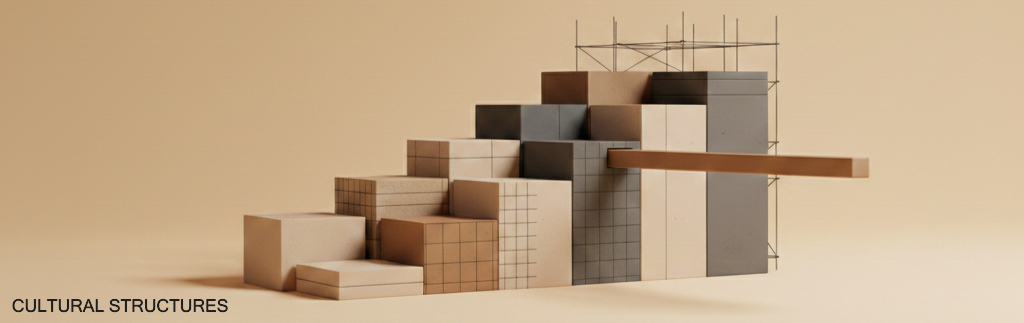
Norms act as beams. Incentives function as joints. Accountability provides reinforcement. Remove any one of those elements and the system weakens. Over time, that weakness becomes a pattern. After that, the pattern becomes identity.
Why Culture as Infrastructure Determines Institutional Stability
Understanding culture as infrastructure clarifies why some institutions compound trust while others decay under pressure. When shared norms reinforce accountability, long-term cooperation becomes predictable. However, when incentives contradict declared values, friction spreads quietly across the system.
For example, policy and governance research from the Brookings Institution repeatedly emphasizes that durable outcomes depend on coherent systems: clear expectations, consistent enforcement, and incentives that reward long-term public benefit rather than short-term optics. In other words, stability grows where rules and rewards match. Conversely, volatility increases when leaders tolerate selective enforcement or treat standards like suggestions.
Internally, this aligns with the Groundwork principle outlined in Structure Builds Freedom: the system you reinforce becomes the system you live in. Therefore, any serious analysis of economic growth, civic order, or organizational leadership must begin here. Messaging can shift narrative. Policy can adjust surfaces. Yet only structural alignment produces durability.
What Cultural Structures Will Examine
This series, Cultural Structures, examines culture through an economic and institutional lens. We will map how incentives distribute pressure, how norms stabilize or destabilize trust, and how accountability shapes the long-term behavior of communities and organizations. Additionally, we will show how structural drift starts small, spreads quietly, and becomes “normal” right before it becomes costly.
Culture is not mood. It is architecture. And architecture carries weight.