
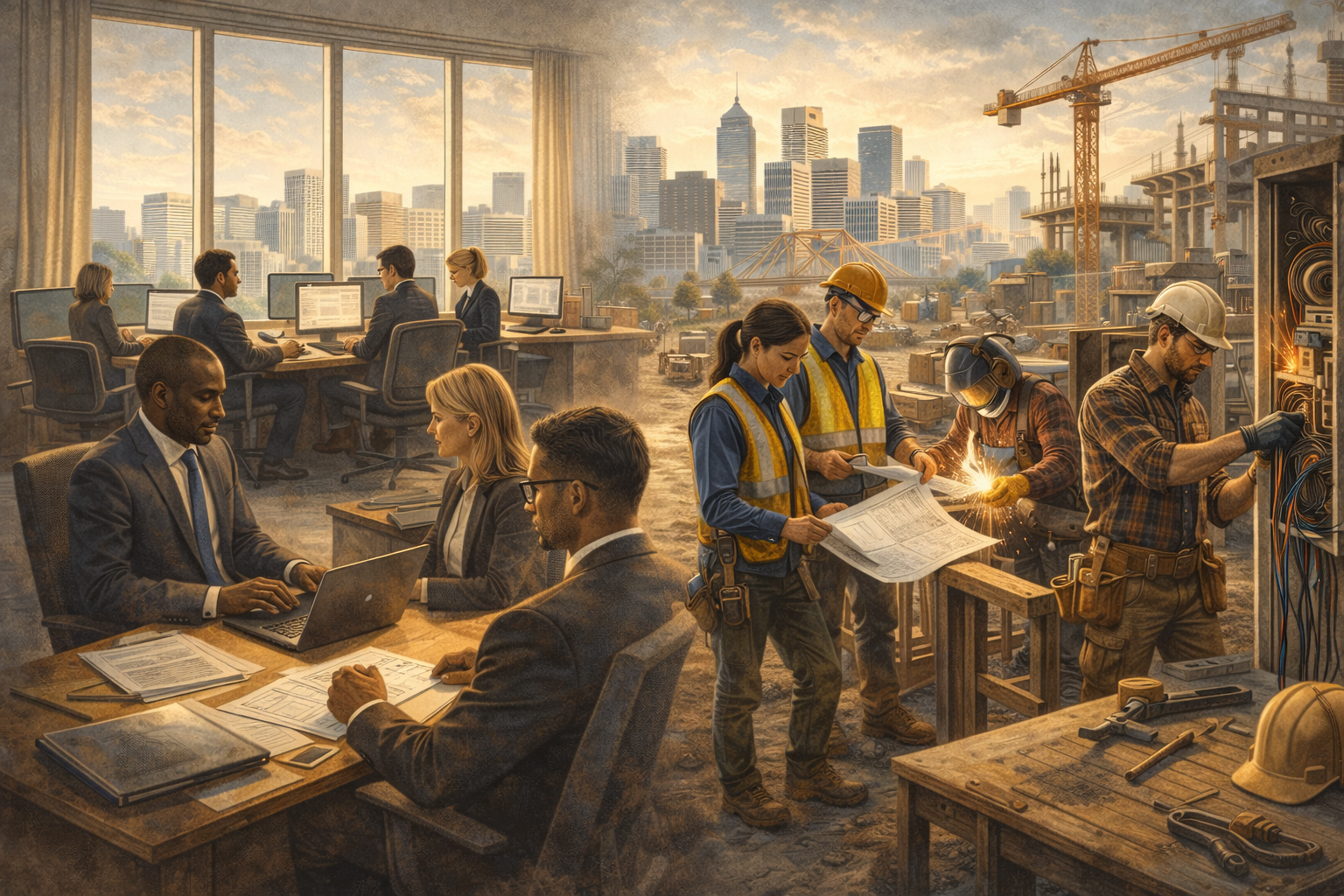
Manual labor stigma did not appear out of nowhere. It was taught. Repeated. Packaged. Sold with a smile, a PowerPoint, and a student loan application.
For years, American culture treated working with your hands like some tragic wrong turn. If you wore a suit, carried a laptop, and said “circle back” with enough confidence, people assumed you were doing well. If you wore work boots, came home dusty, and actually knew how to fix something, folks looked at you like life had not gone according to plan.
That story was always ridiculous.
Because while people were busy worshiping office aesthetics and polished LinkedIn language, somebody still had to wire the building, pour the concrete, repair the engine, install the panel, and keep the whole circus from falling through the floor.
How manual labor stigma got dressed up as progress
The trick was cultural branding. Manual labor stigma got sold as aspiration. Parents were told to want better for their children. Schools were told college was the respectable path. Guidance counselors pushed the same script. Television pushed it too.
The message underneath all that “aspiration” talk was ugly. It said physical labor was what people did when they could not access something more polished. It made office work look elevated and hands-on work look like a fallback.
So a whole generation learned to confuse appearance with value.
You know the type. Somebody cannot change a tire, cannot hang a shelf, cannot read a tape measure, but somehow has very strong opinions about what “successful” people should look like. Adorable.
Manual labor stigma was always a status game
This was never just about jobs. It was about rank.
Manual labor stigma helped create a fake hierarchy where work done in air conditioning looked smarter than work done on scaffolding. One got called professional. The other got called basic. One got prestige. The other got shrugged at, even when the so-called basic worker was making better money and carrying less debt.
That is why this conversation connects directly to The Status Collapse of the College Economy. The old prestige ladder was built on symbolism. And symbolism gets shaky real fast when the “less impressive” person owns a home, has real demand for their skills, and is not buried under educational debt.
The people culture looked down on kept the country running
Here is the part that deserves a long pause and a hard stare.
While culture was busy acting brand-new about white-collar prestige, skilled workers never stopped holding the floor up. Electricians kept power moving. Welders held steel together. Mechanics kept fleets alive. Carpenters framed homes. HVAC technicians kept buildings habitable in weather that does not care about anyone’s self-image.
That is why pieces like Why Skilled Trades Are Rising Again and The Dignity of Skilled Work matter. They are not nostalgia posts. They are reality checks with work boots on.
The economy has started reminding people of something culture tried very hard to forget. Skill has weight. Competence has value. And useful work ages a whole lot better than status performance.
What changed is not the work. It is the illusion
Manual labor did not suddenly become important. It was always important.
What changed is that the illusion started cracking. Student debt got louder. Economic pressure got real. Labor shortages exposed how few people were being trained to do essential work. Suddenly the same culture that used to turn up its nose at trades started acting shocked that skilled workers were in demand.
Yes, shocked. As if bridges build themselves and hospitals wire their own backup systems.
The problem was never the work. The problem was the cultural vanity that taught people to feel embarrassed by honest labor in the first place.
When work became embarrassing, society got unserious
A healthy society does not mock the hands that build it. It does not teach children that usefulness is somehow less impressive than image. It does not turn practical skill into a class signal and then act confused when the workforce pipeline starts wheezing.
That is unserious behavior.
And a lot of modern culture has been unserious for a while now. Too much posing. Too much symbolism. Too many people addicted to looking important while other people quietly do the work that keeps daily life functioning.
Manual labor stigma is what happens when a society falls in love with aesthetics and forgets infrastructure.
The Groundwork
Manual labor stigma was never about the worth of the work. It was about a culture that got too impressed with appearances and forgot who keeps the lights on.
Further Groundwork
The Status Collapse of the College Economy
How prestige lost some of its shine when debt and labor reality entered the chat.
Why Skilled Trades Are Rising Again
Why practical work is regaining economic leverage in a strained labor market.
The Dignity of Skilled Work
A sharper look at why useful labor deserves more respect than culture has given it.
Receipts
U.S. Bureau of Labor Statistics
Labor market data on skilled trades demand, wages, and workforce trends.
Apprenticeship.gov
Federal apprenticeship pathways and training models tied to skilled labor development.
U.S. Department of Labor
Workforce policy and training guidance tied to labor shortages and practical skill formation.
Real talk.
A culture embarrassed by honest work has already confused image for value.
The side-eye belongs to the people mocking the builders, not the builders themselves.
