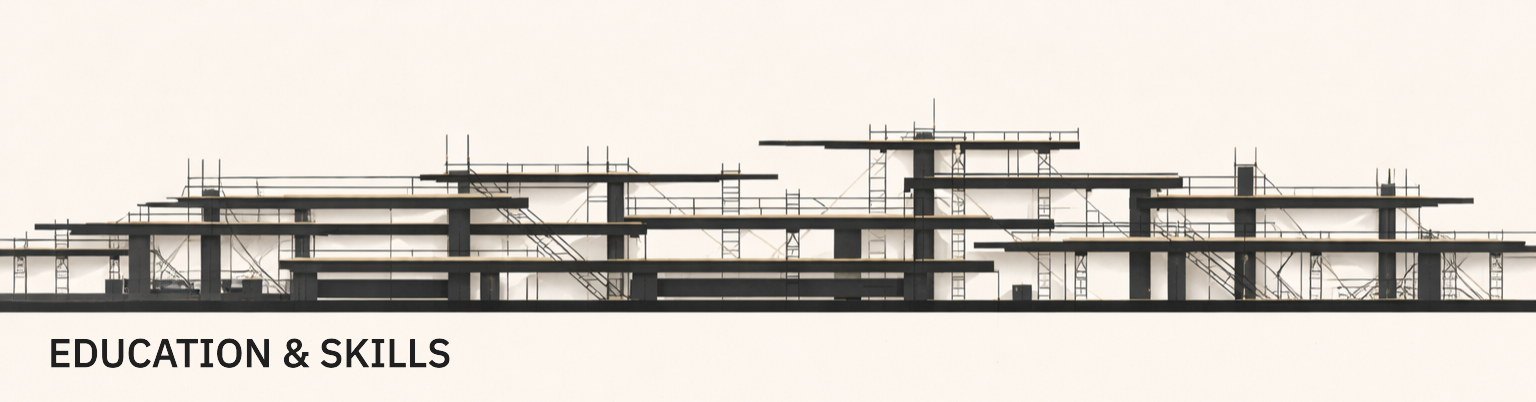
Education & Skills

Education access inequality is not abstract. It shows up when some students move through reinforced pathways while others are pushed through fragmented systems with weaker support.
Education systems do not fail randomly. They fail predictably when access is uneven.
What appears as individual underperformance is often the result of structural imbalance. Entry points differ. Support systems differ. Pathways diverge early and rarely reconnect.
Education access inequality is not a side effect. It is a design condition that shapes outcomes from the start.
As outlined in When Identity Drives Policy, Everyone Pays , systems produce what they are built to produce. Education is no exception.
Multiple Entry Points, Unequal Starting Conditions
Every student enters the system from a different position. Some begin with stable homes, strong schools, clearer expectations, and consistent institutional support. Others begin inside fragmented environments where guidance is limited, resources are thin, and instability is normal.
The pathways are not the same.
Some are wide, reinforced, and structured for continuity. Others are narrow, inconsistent, and vulnerable to interruption.
Once those differences are built into the system, outcomes begin separating long before talent or effort can fully respond.
Pathway Design Determines Outcomes
When access points feed into uneven pathways, outcomes become predictable.
Students are not simply navigating education. They are navigating the quality of the system available to them.
Structured pathways produce consistency. Fragmented pathways produce volatility.
This is why education access inequality matters. It is not just about admission, enrollment, or formal availability. It is about whether the path can hold weight once someone enters it.
In that sense, the issue looks similar to healthcare fragmentation . Layered systems create complexity, duplication, and uneven outcomes even when the stated goal is broader access.
Effort Cannot Outperform Structure Forever
Effort matters. Discipline matters. Individual choices matter.
But effort alone cannot permanently compensate for broken infrastructure.
When systems lack continuity, clarity, and support, individuals are forced to spend energy overcoming structural gaps before they can even begin building momentum.
Some do overcome them. That does not prove the system works. It proves some people are unusually resilient under pressure.
A functioning education system should not depend on exceptional endurance as a normal requirement for success.
The Failure Is Built Into the Design
Education systems fail when they confuse access with delivery.
It is easy to count seats, programs, buildings, and enrollment totals. It is harder to measure pathway quality, instructional consistency, support continuity, and long-term navigability.
But those are the variables that shape real outcomes.
This is where accountability matters. If outcomes remain uneven year after year, the system should not be praised for access alone. It should be examined for design weakness.
What Is Education Access Inequality?
Education access inequality refers to the uneven distribution of resources, support systems, institutional quality, and navigable opportunity inside education structures.
It affects how easily students can enter, move through, and benefit from the system over time.
Why Do Education Systems Fail?
Education systems fail when access points and pathways are inconsistent. If students begin from unequal conditions and move through uneven structures, the system produces unequal outcomes regardless of how loudly it claims to serve everyone.
Can Effort Overcome Unequal Access?
Effort can improve individual outcomes, but it cannot fully erase structural gaps. When systems are fragmented, effort gets redirected toward survival, recovery, and compensation instead of growth.
The Bottom Line
If access is uneven, outcomes will be uneven.
Education access inequality does not disappear because a system is open in theory. It disappears only when the pathways inside that system are stable enough to carry people consistently from entry to outcome.
The issue is not potential. The issue is structure.