Civic Power & Policy
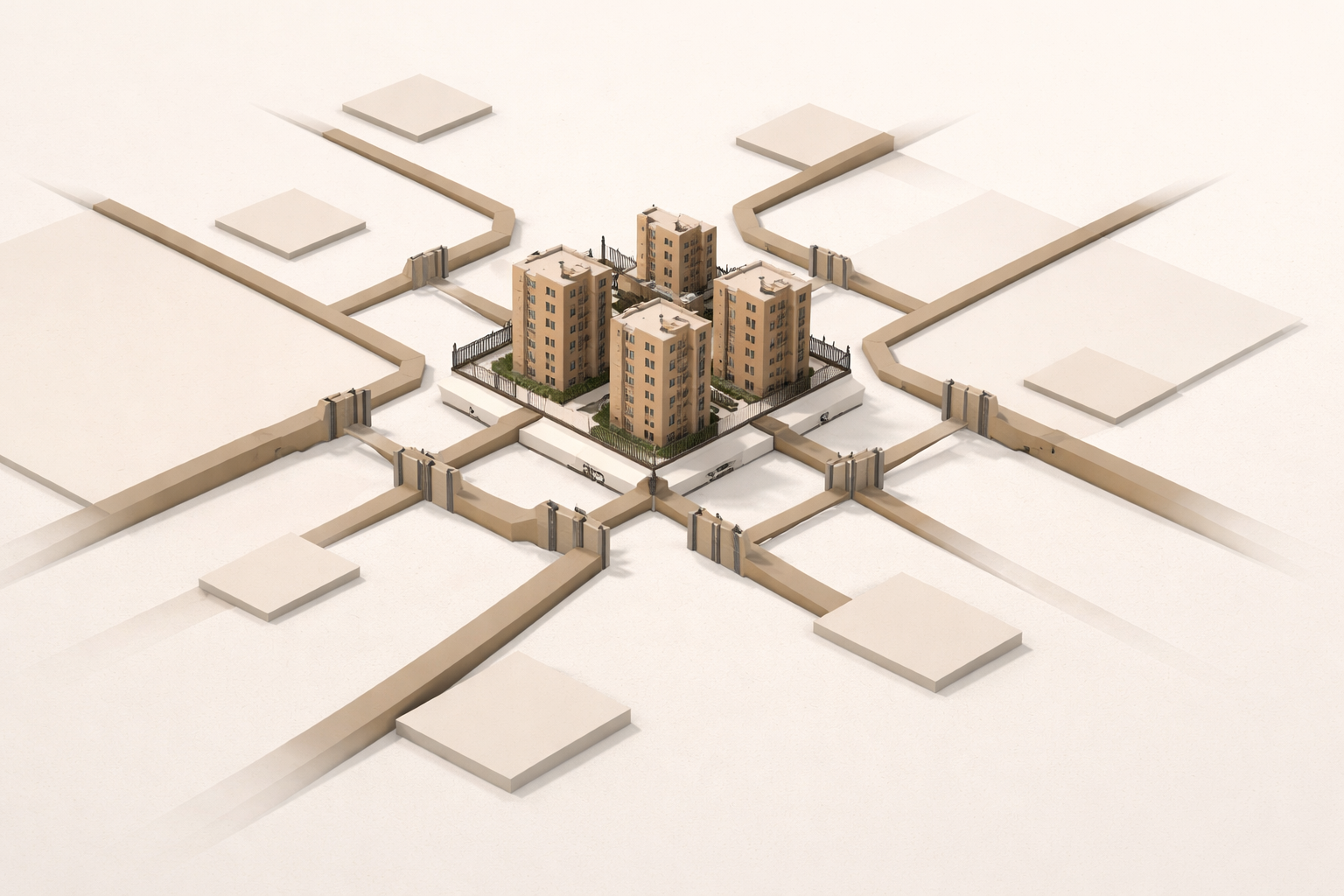
Housing policy scarcity is not an accident. It emerges when systems limit supply, restrict flexibility, and protect existing structures at the expense of long-term stability.
Housing systems do not become unstable on their own. They become unstable when policy constrains what can be built, where it can be built, and who can realistically afford to remain inside the system.
The public language usually focuses on affordability. That is too shallow.
The deeper issue is structure. When policy narrows supply while demand continues to rise, scarcity becomes a design feature rather than a temporary condition.
As established in When Identity Drives Policy, Everyone Pays , systems eventually reveal what they were built to prioritize. In housing, that priority is often preservation of existing advantages rather than expansion of stable access.
How Housing Policy Scarcity Takes Shape
Scarcity does not begin with a headline about rent. It begins with design choices.
- zoning rules that restrict density
- approval processes that slow development
- building rules that increase cost without increasing flexibility
- local incentives that reward preservation over expansion
Each rule may appear manageable on its own. Together, they reduce supply elasticity and make the system harder to adjust when pressure increases.
The result is predictable. New housing becomes harder to build, existing housing becomes more expensive, and mobility declines.
Scarcity Raises More Than Prices
Housing policy scarcity does not only raise rent or home prices. It increases instability across the broader system.
When housing becomes scarce, households delay family formation, move farther from work, tolerate lower-quality living conditions, or cycle through unstable arrangements that weaken long-term planning.
Scarcity also reshapes local institutions. Schools, neighborhoods, labor markets, and small business corridors all absorb the pressure.
This is why housing should not be treated as an isolated market issue. It is a structural stability issue.
Why Stability Requires Supply That Can Respond
A stable housing system must be able to adjust.
When demand rises, supply must be able to move without years of procedural resistance. When household needs shift, housing forms must be flexible enough to absorb those changes.
Policy that blocks adaptation creates fragility. It protects the appearance of order while quietly increasing pressure underneath.
The same pattern appears in education systems with uneven access and in healthcare systems with fragmented structure . When systems cannot adjust cleanly, costs rise and outcomes deteriorate.
Who Benefits From Housing Constraint?
This is the uncomfortable part.
Scarcity often survives because it protects someone’s position. Existing property holders may benefit from restricted supply. Local political actors may benefit from slower change. Institutions built around review, delay, and control may benefit from complexity itself.
That does not mean every constraint is malicious. It means incentives are not neutral.
And when incentives reward constraint, scarcity becomes durable.
What Is Housing Policy Scarcity?
Housing policy scarcity refers to shortage created or reinforced by rules, incentives, and procedural barriers that limit housing supply, flexibility, and responsiveness over time.
It is not simply low inventory. It is low inventory produced by structural choices.
Why Does Housing Instability Keep Growing?
Housing instability grows when policy blocks the system from adapting to rising demand, changing household structures, and shifting labor patterns. The shortage then compounds into higher prices and weaker stability.
Can the Market Fix Housing Scarcity Alone?
Not if policy continues to restrict the conditions required for supply response. Markets operate inside rules. If the rules constrain expansion, scarcity remains embedded.
The Bottom Line
Housing policy creates scarcity when it treats restriction as stability.
Real stability does not come from freezing the system. It comes from building a structure that can absorb growth, adapt to pressure, and expand access without collapsing into shortage.
The issue is not whether housing is valuable. The issue is whether policy allows enough of it to exist.