
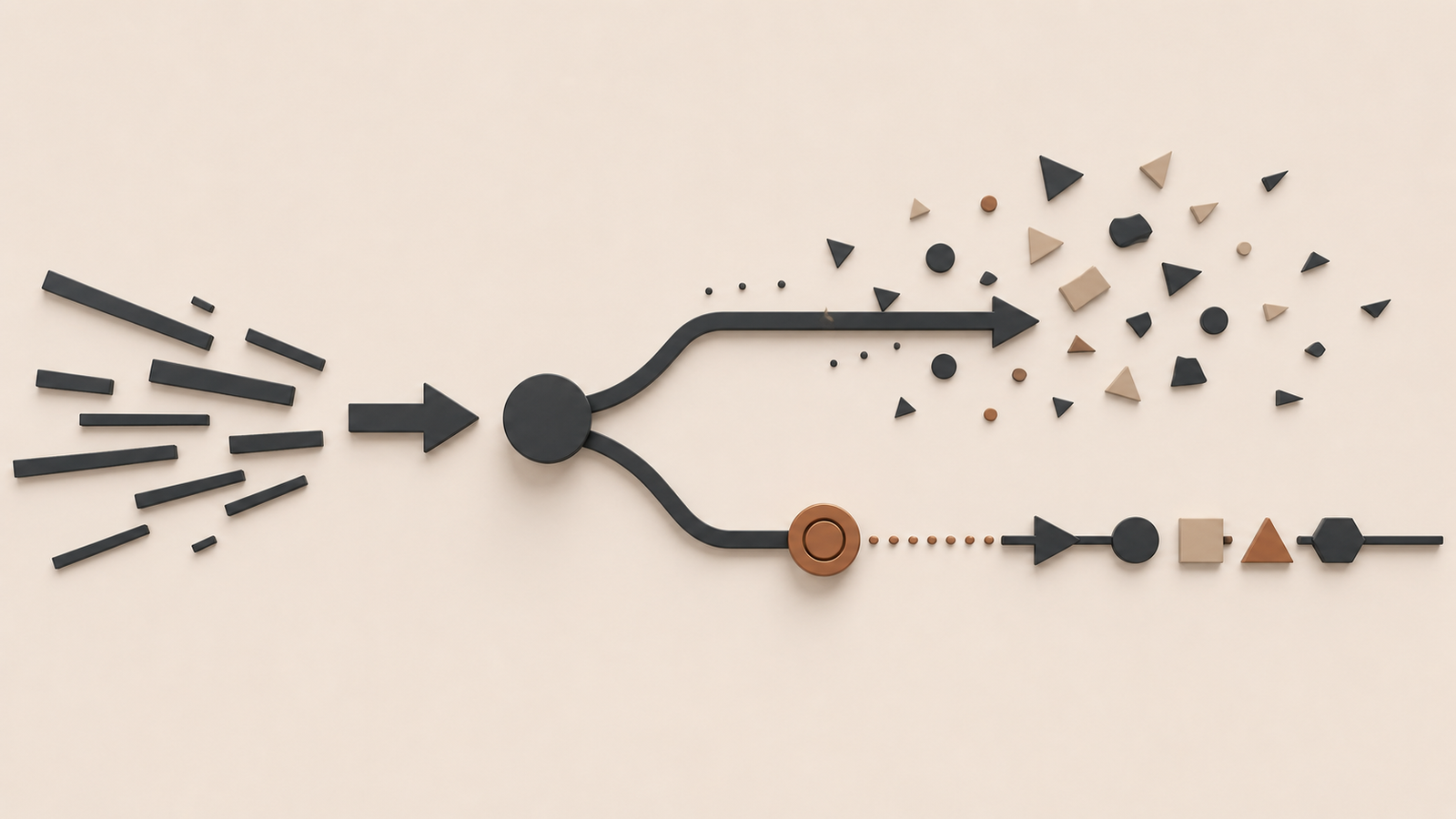
Emotional reactivity timing failure occurs when emotion moves into response before control has time to enter the system. Most people assume the problem is the emotion itself. That assumption is incorrect.
Emotion rises automatically. However, response does not have to follow immediately. Between those two moments sits a narrow window. That window determines whether behavior becomes reactive or controlled.
When that window disappears, reactivity takes over. By contrast, when the window is protected, control becomes possible.
What Emotional Reactivity Timing Failure Means
Emotional reactivity timing failure means the response happens too quickly for judgment to participate. In the moment, the person may feel justified, clear, or certain. Even so, speed often reduces accuracy.
Emotional control is not about eliminating feeling. Instead, it depends on delaying action long enough for the system to stabilize.
Intensity is not the enemy. Rather, timing is the issue. A strong feeling can exist without becoming immediate behavior.
Emotion rises.
Pause creates space.
Space allows control.
Where Emotional Reactivity Timing Failure Happens
The timing failure lives in the gap between stimulus and response. Although the gap is small, it exists in every interaction.
Once that gap is ignored, the system defaults to speed. Reaction feels natural, justified, and necessary. However, speed does not equal accuracy.
As a result, behavior begins to reflect the emotion of the moment rather than the intention of the individual.
Typically, the breakdown appears in three patterns:
- Immediate response: acting before processing.
- Escalation loops: meeting intensity with more intensity.
- Regret cycles: recognizing the mistake after the fact.
Each pattern points back to the same issue: the system moved too fast.
Why Speed Feels Right but Fails
Speed creates the illusion of control. A quick response can feel decisive and strong. However, that feeling is misleading.
In practice, speed removes control. It bypasses evaluation and weakens perspective. As a result, emotion defines behavior before the system can regulate it.
Over time, instability develops. Relationships strain, decisions drift, and patterns repeat without correction.
Therefore, the issue is not emotional presence. The issue is unregulated timing.
How Emotional Reactivity Shows Up in Real Time
Emotional reactivity rarely announces itself. Instead, it appears in small, familiar moments that feel justified in real time but costly afterward.
A conversation can shift quickly. Tone changes. Words land wrong. A message feels dismissive. Within seconds, the system prepares a response.
That response may feel necessary. Still, it is often fast rather than accurate.
In that moment, timing determines the outcome.
A delayed response might sound like a question. Meanwhile, an immediate response often sounds like a defense. That difference shapes the direction of the interaction.
Similarly, the same pattern appears in decision-making. A setback creates urgency. The mind pushes for correction. Action feels required. Yet fast action in an unstable state usually compounds the problem.
This is where emotional reactivity becomes visible. Not just in conflict, but in repeated small moments where speed replaces control.
Internal Signals of Emotional Reactivity Timing Failure
Before a reactive response happens, the system produces signals. These signals are consistent and learnable.
- Acceleration: the urge to respond immediately.
- Narrowing: focus locks onto one interpretation.
- Intensity: emotional tone rises quickly.
Importantly, these signals do not require action. They require recognition.
Once recognized, the system can shift. Instead of moving forward automatically, it can pause. That pause interrupts the pattern.
Without recognition, the system defaults to speed. With recognition, control returns.
Why Emotional Reactivity Repeats Without Correction
Emotional reactivity timing failure does not happen once. Instead, it repeats because the system does not correct itself.
After a reactive moment, the mind often justifies the response. It explains the behavior rather than evaluating it. As a result, the pattern remains intact.
Without correction, the system becomes predictable. The same triggers produce the same reactions. The same reactions produce the same outcomes.
Over time, this creates a loop. The individual begins expecting the pattern, which reinforces the behavior.
Breaking the pattern requires interruption. Not emotional suppression, but structural awareness. The system must recognize the timing failure and respond differently.
How to Interrupt Emotional Reactivity in Real Time
Interruption does not require perfection. It requires consistency.
First, slow the moment down. Even a brief pause shifts the system out of automatic response.
Next, widen the perspective. Ask what outcome the response is creating, not just what feeling it is expressing.
Then choose the next action deliberately. This step replaces reaction with direction.
Each interruption weakens the pattern. Over time, the system stops defaulting to speed and begins operating with control.
The Long-Term Cost of Emotional Reactivity Timing Failure
Unchecked reactivity compounds. It does not stay isolated.
In relationships, it erodes trust. Repeated reactive responses make behavior unpredictable.
In decision-making, it reduces clarity. Fast responses prioritize relief over accuracy.
In personal discipline, it weakens consistency. The system becomes dependent on emotional state instead of structure.
These outcomes are not random. They are the direct result of timing failure.
What Changes When Timing Is Controlled
When timing improves, the system stabilizes.
Responses become more consistent. Decisions become more aligned. Interactions become more predictable.
Importantly, this does not remove emotion. Instead, it places emotion inside a controlled structure.
That structure allows the individual to feel fully without reacting immediately.
Over time, this creates a different pattern. Emotion still rises, but response no longer follows automatically.
This is where control becomes visible. Not in the absence of emotion, but in the presence of delay.
Why Timing Control Has to Be Practiced
Timing control does not appear automatically during pressure. It has to be practiced before pressure arrives.
When the system is calm, delay feels simple. Under stress, delay feels unnatural because the body wants relief. That is why the pause has to become familiar before it is needed.
Practice starts in small moments. Do not answer every message immediately. Do not respond to every tone shift. Do not let every feeling become an instruction.
Over time, those small delays build capacity. The system learns that emotion can rise without controlling the next move.
This is where emotional control becomes dependable. Not because emotion disappears, but because response no longer belongs to the fastest impulse.
Where Most People Misread Emotional Control
Most people think emotional control means suppressing how they feel. That assumption creates a second problem on top of the first.
Suppression builds pressure. Pressure eventually releases. When it does, the response is usually stronger and less controlled than before.
Control is different. Control allows emotion to exist while separating it from immediate behavior.
This distinction matters because suppression delays reaction, while control reshapes it.
The Groundwork
Emotional reactivity timing failure is not a personality flaw. It is a system failure rooted in speed.
When response happens too quickly, control disappears. When timing is managed, control returns.
This is not about becoming passive. It is about becoming precise.
Control does not require less emotion. It requires better timing.