
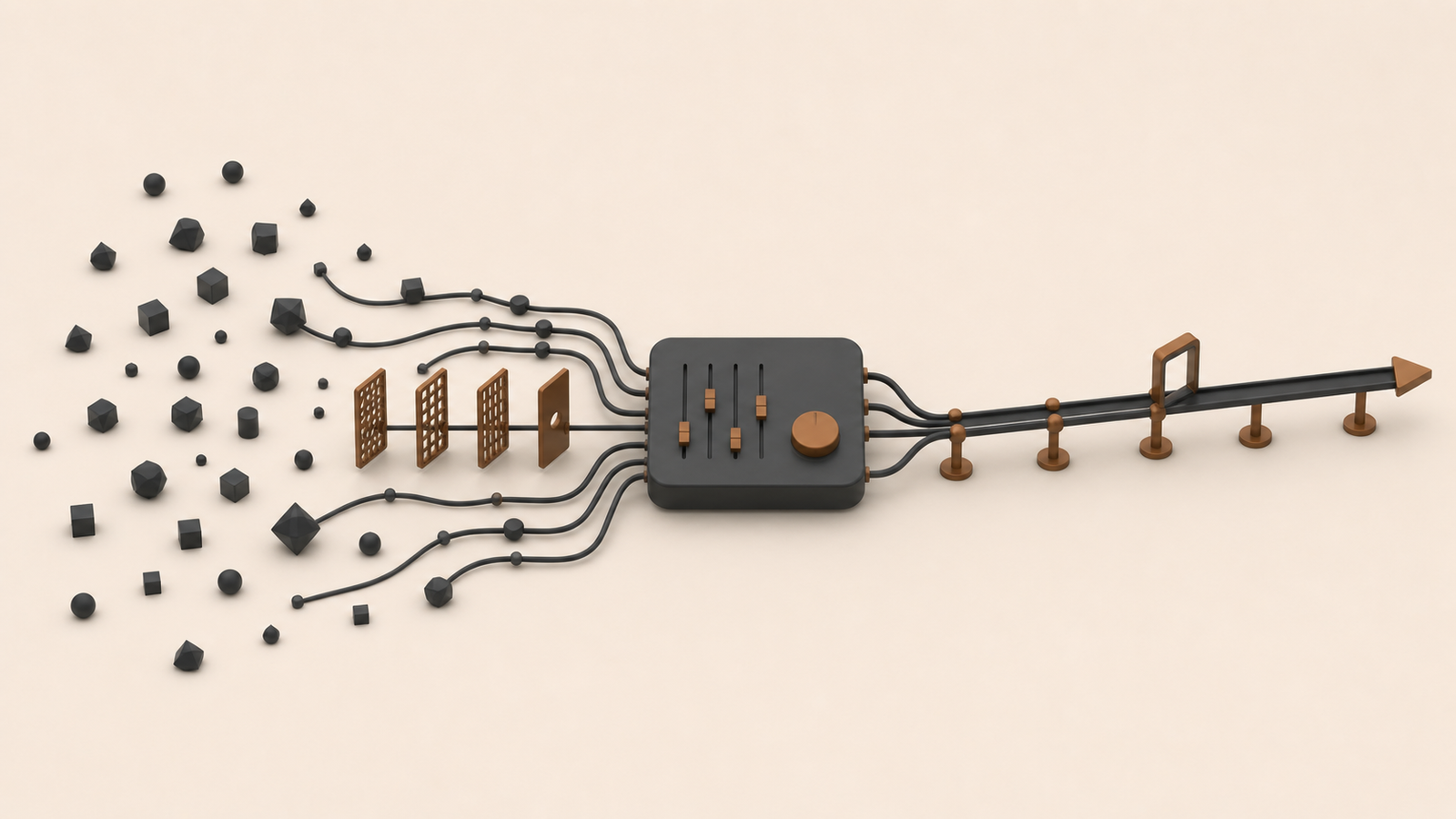
Self-control is a system, not a trait. That distinction matters because most people treat self-control like a fixed personal quality. They assume some people have it and others do not.
That assumption is weak. Self-control is not simply something a person possesses. It is something a person builds, protects, and reinforces through structure.
When the system is strong, control becomes easier. When the system is weak, control depends too much on effort, mood, and pressure.
What Self-Control Actually Is
Self-control is the ability to guide behavior toward a standard despite competing impulses, distractions, and pressures.
However, that ability does not appear by accident. It depends on the condition of the system surrounding the behavior.
If the environment is chaotic, attention is scattered, emotion is elevated, and identity is unclear, self-control becomes expensive.
In that condition, every controlled action requires a fight.
A stronger system reduces the number of fights required. It places structure around behavior before pressure arrives.
The Trait Myth
The trait myth says self-control is mostly about willpower or personality.
That idea sounds simple, but it does not hold. People often show strong self-control in one area and weak control in another. Someone may be disciplined with money but inconsistent with food. Another person may be reliable at work but reactive in relationships.
If self-control were only a fixed trait, those differences would make little sense.
The better explanation is system design. Different areas of life have different structures, cues, risks, routines, and consequences.
Where structure is stronger, control is easier. Where structure is weaker, control breaks faster.
How Self-Control Works as a System
A self-control system reduces the distance between intention and action.
It does this by shaping the conditions around behavior. It limits unnecessary choices, reduces friction, defines standards, and creates stopping points before impulse takes over.
Good systems do not wait until temptation is strongest. They prepare before the moment arrives.
This is the mistake most people make. They try to exercise control only when pressure is already high.
By then, the system is already late.
Structure reduces friction.
Timing protects decisions.
Identity stabilizes behavior.
Connection to Internal Systems
Internal Systems explain why self-control cannot be treated as a personality trait.
Attention determines what gets access. Emotion determines response timing. Thought loops create false urgency. Default state determines decision quality.
Meanwhile, identity determines whether the controlled behavior feels aligned or forced.
Self-control sits across all of these systems. If one layer is unstable, control becomes harder. If multiple layers are unstable, control becomes inconsistent.
The Five Control Points
A self-control system needs control points. These are places where behavior can be shaped before it becomes automatic.
1. Input control
Control what enters the system. Reduce unnecessary triggers, distractions, and temptations before they become active.
2. Environment control
Shape the space around the behavior. Make the desired action easier and the undesired action harder.
3. Timing control
Introduce delays before impulsive action. A pause gives the system time to evaluate.
4. Identity control
Connect the behavior to a clear internal standard. If the action does not match the identity, it becomes easier to reject.
5. Recovery control
Build a reset plan. One failure should not collapse the system. Recovery protects continuity.
These control points matter because self-control fails when there is no place to interrupt the pattern.
A Real-World Example
Consider someone trying to stop checking their phone first thing in the morning.
If they rely only on willpower, the system is weak. The phone is nearby. Notifications are waiting. The habit is familiar. The decision has to be made while attention is still unguarded.
That is a bad design.
A self-control system changes the setup. The phone charges outside the bedroom. Notifications stay off. A different first action is prepared, such as water, stretching, reading, or writing. The decision is made the night before, not during the vulnerable moment.
Now control does not depend on winning a fight at 6:00 a.m. The system has already reduced the fight.
That is the point. Self-control works best when fewer decisions have to be made under pressure.
What Changes When Self-Control Becomes a System
When self-control becomes a system, behavior becomes more reliable.
The person stops asking whether they are strong enough and starts asking whether the system is designed well enough.
That shift is practical. It moves the issue away from shame and toward architecture.
Instead of treating failure as proof of weakness, the system treats failure as information. Where did the control point break? Which trigger entered too easily? Which delay was missing? Which standard was unclear?
Those questions produce better corrections.
Self-control improves when the system carries more of the burden than willpower does.
FAQ
Is self-control a trait?
Self-control can look like a trait, but it functions more reliably as a system. Structure, environment, timing, and identity all affect control.
Why does self-control fail?
Self-control fails when the system has too many triggers, too much friction, weak identity, poor timing, or no recovery plan.
How do you build self-control?
Build control points. Control inputs, shape the environment, introduce delays, align behavior with identity, and create a reset plan.
What is the fastest way to improve self-control?
Reduce the number of decisions made under pressure. Decide earlier, prepare the environment, and remove obvious triggers.
The Groundwork
Self-control is a system, not a trait.
That means failure is not the end of the story. It is a system diagnostic.
Stop asking whether you have enough willpower. Ask where the system failed.
Control the inputs. Shape the environment. Delay the impulse. Align the identity. Protect the reset.
That is how self-control becomes repeatable.