Visible contribution is one of the quiet signals that keeps a shared system alive.
People do not only respond to rules.
They respond to evidence.
They look around and ask a silent question.
Does anyone else still care?
That question shapes behavior more than most communities want to admit.
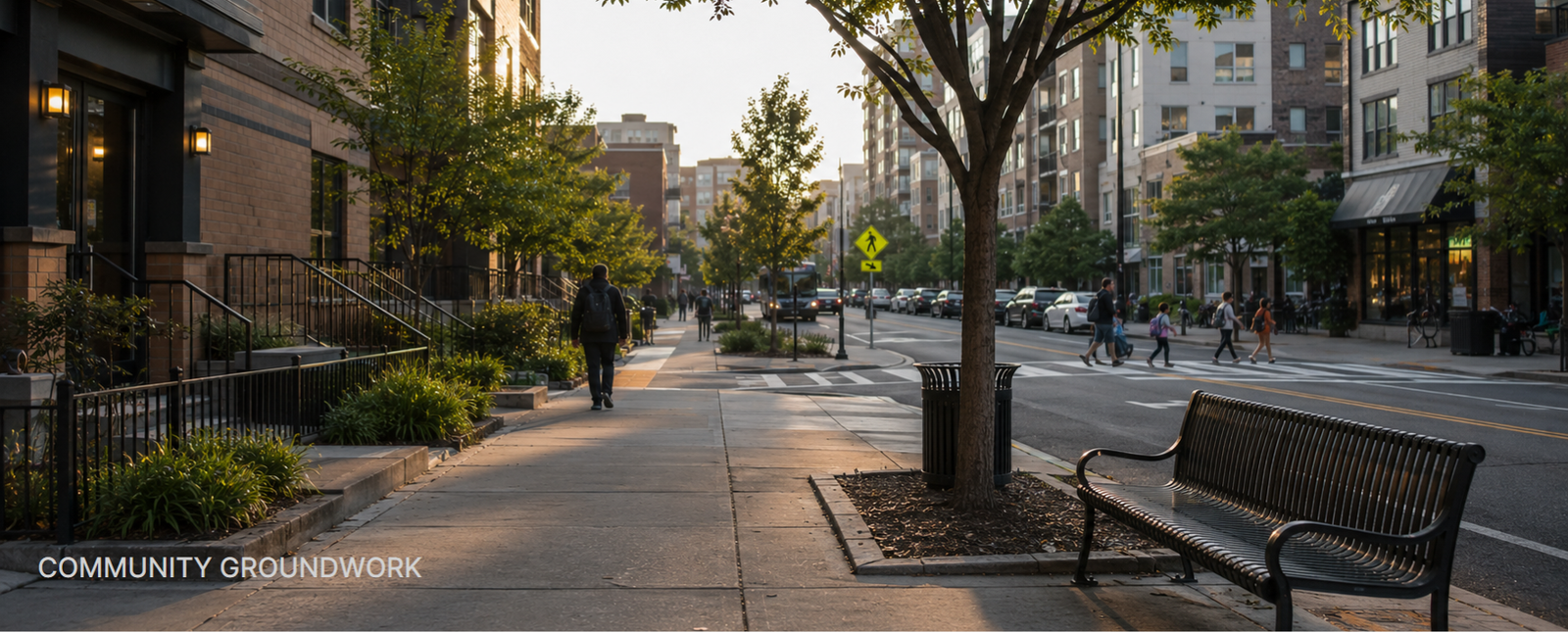
A swept sidewalk tells people something.
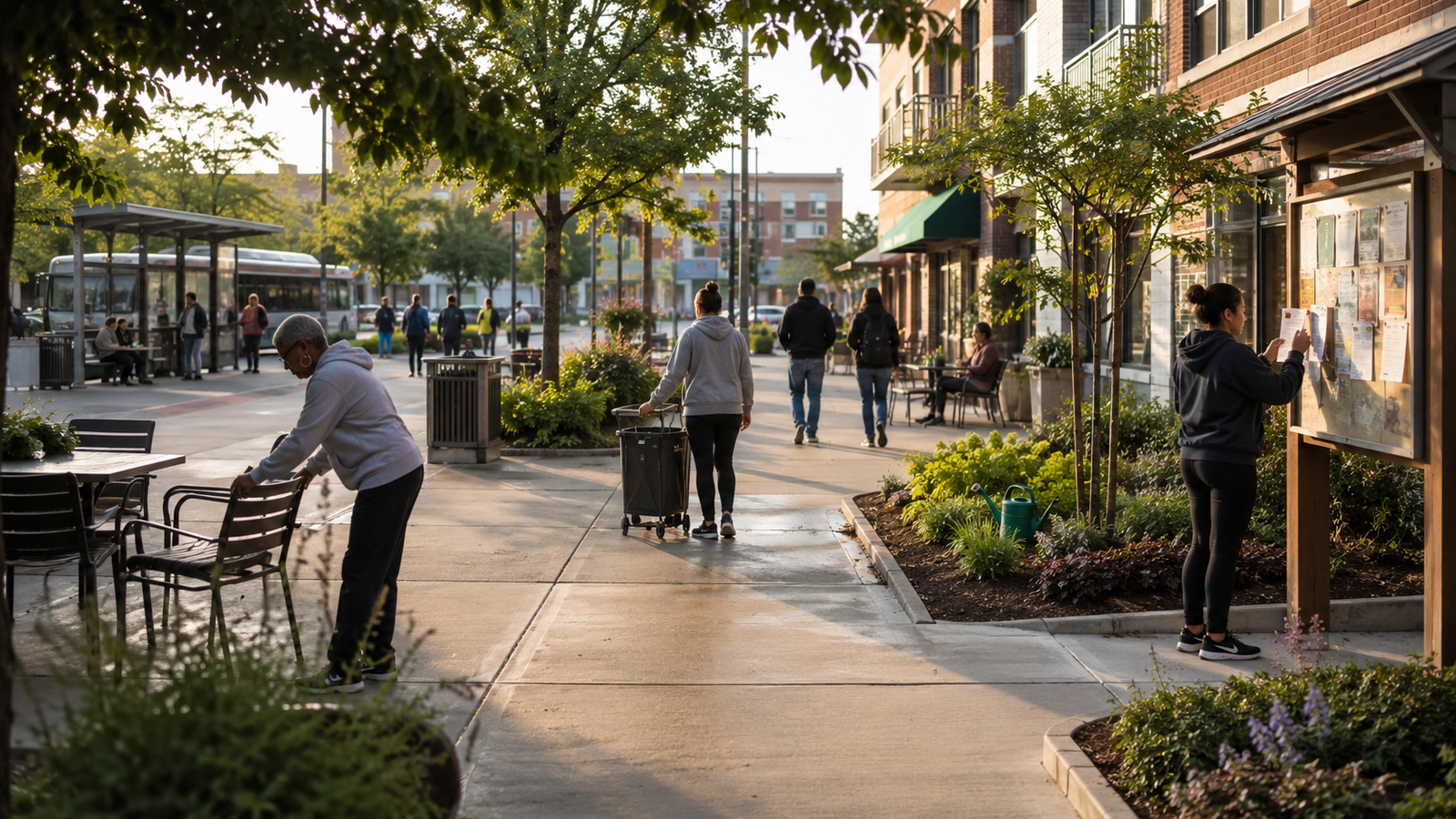
A reset chair tells people something.
A clean lobby tells people something.
A working notice board tells people something.
A repaired bench tells people something.
None of these actions announces itself as leadership. None of them feels dramatic. However, each one sends the same message.
Someone is still participating.
That signal matters.
When contribution becomes visible, people are more likely to keep contributing. When contribution disappears from view, people begin to wonder whether effort still matters.
That is where decline starts.
Visible Contribution Creates Social Reinforcement
Contribution does not need applause, but it does need recognition inside the system.
That recognition does not always have to be verbal.
Sometimes recognition is environmental.
People see the result of care and adjust their behavior around it.
A shared courtyard that looks maintained invites better use. A hallway that smells clean tells residents the building is being watched. A community room with chairs already reset suggests that someone expects the next group to treat the space well.
This is social reinforcement.
It is the quiet feedback loop between visible effort and repeated behavior.
People protect what they believe others are also protecting.
However, when effort becomes invisible, the loop weakens.
The work may still be happening, but people stop seeing it. Once they stop seeing it, they stop feeling connected to it. Over time, participation begins to feel optional.
Invisible Effort Cannot Carry a System Forever
Every shared environment depends on work most people do not notice.
Someone resets the room.
Someone reports the broken light.
Someone waters the plants.
Someone updates the schedule.
Someone cleans the counter after everyone leaves.
Someone checks the trash before it overflows.
Someone remembers the supply closet.
At first, this quiet work helps the system function.
But if the work stays invisible too long, it creates a problem.
People begin assuming the system maintains itself.
That assumption is dangerous.
Once people believe order appears naturally, they stop seeing the contribution behind it. Then they stop understanding what the system requires. Eventually, they treat maintenance as background noise instead of shared responsibility.
That is how contribution disappears.
Not because nobody cares.
Because the work became too hidden to reinforce behavior.
Why People Stop Contributing Even When They Care
People rarely stop contributing all at once.
They stop after the system teaches them that contribution no longer changes anything.
They clean once and nobody notices.
They report a problem and nothing happens.
They volunteer and the same three people show up again.
They prepare the room and everyone acts like the room prepared itself.
They carry extra responsibility and the system treats that extra effort as normal.
After enough repetition, the message becomes clear.
Your contribution is expected, but not reinforced.
That is a bad bargain.
Strong communities cannot afford that bargain for long. Once contributors feel unseen, they begin conserving energy. They may still care. They may still believe in the space. However, they stop carrying work the system refuses to acknowledge.
That is not always apathy.
Sometimes it is a rational response to poor design.
Community Participation Needs Evidence
Community participation grows when people can see that effort is shared.
This does not mean every person contributes equally.
That is not how real systems work.
Some people contribute time. Some contribute attention. Some contribute money. Some contribute labor. Some contribute information. Some contribute correction. Some contribute consistency.
The important point is not sameness.
The important point is visibility.
People need to see that responsibility is moving through the system, not concentrating in silence.
When contribution is visible, trust has something to stand on.
Residents believe the block is still being cared for. Volunteers believe the work is not falling only on them. Staff believe the process has support. Neighbors believe the space is worth protecting.
That belief becomes behavior.
Visible Contribution Prevents Free Riding From Spreading
Free riding spreads when people can benefit without seeing or feeling the cost of maintenance.
If the hallway is always clean, some people assume cleanliness is automatic.
If the event always starts on time, some people assume setup was easy.
If the shared space always works, some people assume no one had to protect it.
That assumption separates benefit from responsibility.
Once benefit separates from responsibility, free riding becomes easier to justify.
Visible contribution interrupts that pattern.
It reminds people that the system is being held together by action.
Not vibes.
Not slogans.
Action.
This is why communities should not hide all maintenance work behind the curtain. Some contribution needs to be seen, not for ego, but for education.
People respect systems differently when they can see what those systems require.
Recognition Is Not the Same as Performance
There is a weak version of visibility that turns contribution into performance.
That is not the goal.
Contribution does not need to become a public display. People do not need constant praise for doing ordinary responsibilities. A community built on applause will become fragile.
However, the opposite mistake is just as dangerous.
If contribution is never named, never seen, and never connected to outcomes, people lose the thread between effort and stability.
The goal is not performance.
The goal is reinforcement.
A sign-in sheet can reinforce contribution.
A shared calendar can reinforce contribution.
A monthly update can reinforce contribution.
A visible repair log can reinforce contribution.
A simple thank-you can reinforce contribution.
A clean handoff can reinforce contribution.
These are not decorations.
They are system signals.
What Strong Systems Make Visible
Strong systems do not make every detail public.
They make the right things visible.
They show people where contribution is needed.
They show people where contribution is already happening.
They show people what changed because someone acted.
They show people how to enter the work without confusion.
That last part matters.
Many people do not participate because they do not know where to begin. The system feels closed. The work feels already claimed. The pathway is unclear.
Visible contribution lowers the entry barrier.
It tells people:
This is being maintained.
This is where help fits.
This is what participation looks like here.
That clarity turns vague goodwill into actual behavior.
The Groundwork
Look at one shared system around you.
A workplace.
A household.
A building.
A block.
A school.
A volunteer group.
A community room.
Then ask:
- Who contributes regularly?
- Can others see that contribution?
- What work is being mistaken for automatic order?
- Where is responsibility becoming invisible?
- What would help people understand what the system requires?
- What contribution needs to be reinforced before it disappears?
Those questions expose whether participation is being maintained or quietly consumed.
If contribution is visible, the system has a chance to teach behavior.
If contribution is invisible, the system may be living on hidden labor.
Hidden labor does not hold forever.
The Structural Takeaway
Contribution must be visible or it disappears.
Not because people are shallow.
Because people need evidence that effort still matters.
When participation is visible, responsibility spreads. When responsibility spreads, systems become more durable. When systems become durable, trust has somewhere to live.
But when contribution is hidden, people start believing order is automatic.
That belief weakens the system.
The work was never automatic.
Someone was doing it.
Strong communities make enough of that work visible so others understand the standard, join the pattern, and keep the system alive.
Continue Building
This article belongs to the Community Participation lane inside Community Groundwork.
Strong systems do not hide the work that keeps them alive. They make contribution visible enough for others to recognize the standard and join the pattern.
Continue exploring how participation, responsibility, and repeated contribution determine whether shared systems remain durable over time.
→ Framework: Community Groundwork
→ Related: The Free Rider Problem Is Not Theory. It Is Practice
→ Related: Reliability Should Not Become a Job Title
Receipts
→ Stanford Encyclopedia of Philosophy — Collective Action Problems
→ Nobel Prize — Elinor Ostrom and Governing Shared Resources