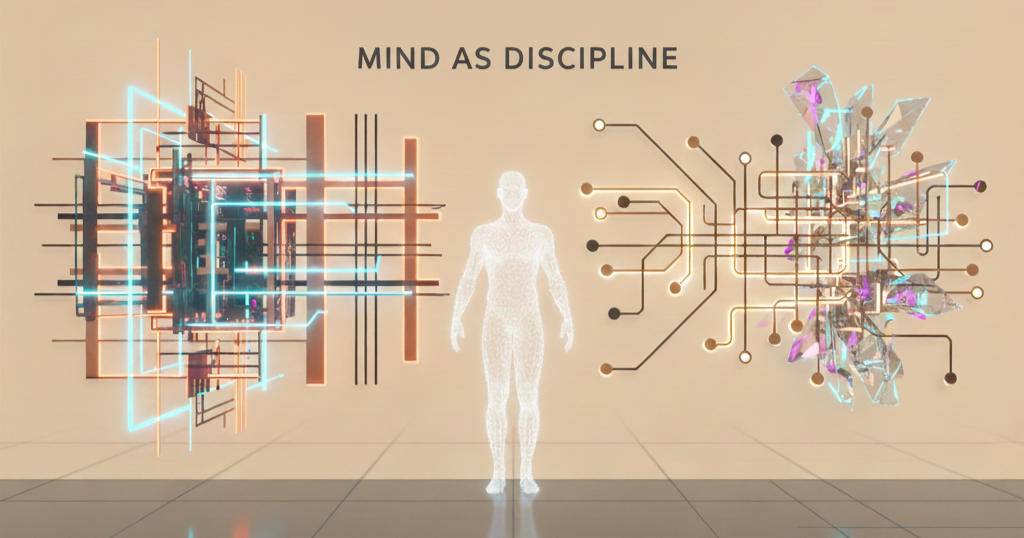
Biological memory is not personal memory. That distinction matters because epigenetics is often explained badly. People do not inherit the stories, images, or memories of their ancestors. They do not arrive in the world remembering famine, slavery, war, displacement, abuse, or fear.
However, the body can learn from conditions. It can adapt to stress, danger, instability, care, safety, and recovery. Over time, those conditions may influence how genes are expressed, how the nervous system responds, and how quickly the body moves between alertness and calm.
That is where epigenetics becomes useful. It does not prove that biology is destiny. It does not prove that trauma is permanent. Instead, it shows something more practical. Human biology listens to the environment.
That means the systems around people matter. Housing matters. Work matters. food matters. policing matters. family stability matters. education matters. community trust matters. When those systems create chronic stress, bodies absorb part of the cost.
The real question is not whether history lives inside people in some mystical way. The real question is sharper: what kinds of systems keep teaching the body to expect danger?
Biological Memory Begins With Gene Expression
Every cell in the body carries DNA. Yet every cell does not behave the same way. A nerve cell, a skin cell, an immune cell, and a liver cell use the same genetic library differently.
Epigenetics studies how that library is read.
The DNA sequence remains the blueprint. Epigenetic processes influence which parts of that blueprint become active, quiet, reinforced, or restrained. In other words, the code does not change. The use of the code changes.
One common mechanism is DNA methylation. Another involves histone modification. Small regulatory RNA molecules can also influence gene activity. Together, these mechanisms help the body adjust to repeated conditions.
A simple architectural image helps. DNA is the original plan. Epigenetics is the operating system that decides which rooms stay lit, which doors remain open, and which supports receive more stress.
The building is not becoming a different building. Still, the building is responding to how it is used.
What Epigenetics and Trauma Actually Show
Trauma affects the body because the body is built to survive. When danger appears, the stress response activates quickly. Heart rate rises. Attention narrows. Muscles prepare. Cortisol and other stress hormones help the body respond.
That response is useful when danger is short term.
However, the same response becomes costly when danger becomes routine. Chronic stress can affect the hypothalamic-pituitary-adrenal axis, often called the HPA axis. This system helps regulate cortisol and stress recovery.
When the stress system turns on again and again, the body may become faster to detect threat and slower to return to calm. That is not weakness. It is adaptation under pressure.
Still, adaptation has a price. A nervous system shaped for survival may struggle with rest. A body trained to expect threat may misread uncertainty as danger. A mind built around vigilance may find peace suspicious.
This is why trauma cannot be reduced to emotion. Trauma can become biological management. The body begins budgeting energy around expected risk.
Adaptation Is Not the Same as Damage
One weak idea in popular trauma conversations is that stress simply damages people. That is incomplete.
Often, the body adapts first.
Hypervigilance can protect someone in an unsafe environment. Emotional restraint can reduce exposure in a hostile setting. Fast threat detection can help a person survive a volatile home, violent neighborhood, abusive relationship, or unstable institution.
The problem begins when the adaptation outlives the danger or follows a person into a different setting.
A survival pattern that worked in one environment can become expensive in another. Constant alertness may protect the body during threat, but it can damage sleep, focus, digestion, blood pressure, and relationships when the threat is no longer immediate.
Therefore, the better question is not, “What is wrong with this person?”
The better question is, “What conditions trained this response?”
That question is more disciplined. It looks for the system behind the symptom.
Biological Memory Is Not Inherited Memory
This is where public conversations often lose precision.
People do not inherit memories from their ancestors. A child is not born with a private archive of old suffering. No one inherits a documentary of the past inside the bloodstream.
What may be passed down is more subtle.
Researchers are studying whether stress-related biological patterns can influence later generations. These patterns may affect stress sensitivity, hormone regulation, inflammation, threat response, or recovery time.
That is biological memory. It is not personal memory.
Memory tells a story. Biology prepares for conditions.
This distinction matters because sloppy language creates bad thinking. If we say people inherit memories, we drift into myth. If we say environments may shape biological response patterns across time, we stay closer to the science.
Can Trauma Be Passed Down?
The honest answer is careful.
Some effects are well established. Trauma can affect the person who experiences it. Prenatal stress can affect fetal development. Childhood adversity can shape brain development and stress response. Repeated exposure to unsafe conditions can influence long-term health.
Other effects remain under study. Some human and animal research suggests that severe stress may influence future generations through epigenetic pathways. However, human evidence remains difficult to interpret.
That difficulty matters.
Families pass down more than biology. They also pass down habits, warnings, coping styles, silence, discipline, fear, food patterns, sleep patterns, parenting methods, and expectations about safety.
As a result, the same pattern can travel through several channels at once.
A parent may carry stress in the body. That parent may also live in the same unstable environment. The child may inherit some biological sensitivity, but the child may also learn the same vigilance from daily life.
So the better question is not whether trauma is only biological or only social. The better question is how biology, environment, family, culture, and systems interact across time.
Why Intergenerational Stress Is Hard to Measure
Intergenerational stress is difficult to study because generations do not live in sealed containers.
A parent who survives chronic stress may pass on biological changes through pregnancy. That same parent may also raise a child under the same financial pressure, in the same neighborhood, with the same institutional risks.
Both pathways matter.
Scientists also have to account for biological reprogramming. During reproduction and early development, many epigenetic marks reset. This makes true transgenerational inheritance harder to prove in humans.
Some marks may escape that reset. Small regulatory RNA molecules may also play a role. Still, the field remains active, not settled.
That uncertainty is not a weakness. It is a sign that the science is being handled with discipline.
Groundwork Daily should not turn open research into certainty just because certainty sounds stronger. It does not. Overclaiming makes the argument weaker.
What the Science Does Not Say
Epigenetics does not say race determines biology.
It does not say trauma cannot heal.
It does not say every health disparity is caused by inherited stress.
It does not say people are trapped by the past.
It does not say personal responsibility disappears.
Those claims are too broad. They turn science into slogan.
The stronger claim is this: environments shape bodies over time. If the environment is stable, predictable, and supportive, the body receives one set of signals. If the environment is unsafe, unstable, and exhausting, the body receives another.
That is the Groundwork point.
Biology is not separate from conditions. It is one of the places where conditions become visible.
The Economics of Stress
Stress is not only emotional. Stress is expensive.
It costs the body energy. It costs the mind focus. It costs families patience. It costs workplaces performance. It costs communities trust. It costs healthcare systems money.
Chronic stress can increase the risk of cardiovascular disease, metabolic problems, depression, anxiety, sleep disruption, chronic pain, and immune dysfunction. It can also affect decision-making, attention, memory, and impulse control.
That means stress becomes an economic issue.
A person under chronic stress may spend more on healthcare. They may lose work time. They may make short-term decisions because long-term planning requires bandwidth they no longer have. They may struggle to save, study, build relationships, or recover.
This is why the phrase “stress is making you expensive” matters. It is not just a personal wellness line. It is a systems diagnosis.
When unstable systems create unstable bodies, the bill eventually comes due.
The Architecture of Safety
A nervous system does not only need comfort. It needs reliable structure.
Safety is not softness. Safety is predictability, consistency, trust, boundaries, repair, and recovery.
A strong bridge is safe because its design holds under pressure. A strong institution is safe because its standards hold when leadership changes. A strong family is safe because care does not vanish every time conflict appears.
The nervous system responds to the same logic.
It needs signals that tell the body, “You do not have to stay braced all the time.”
Those signals come from stable routines, honest communication, sleep, food, movement, financial margin, secure housing, trusted relationships, and fair treatment.
In that sense, safety is built. It is not wished into place.
Systems Become Biology Over Time
Policy is not just paperwork. Housing is not just shelter. Education is not just instruction. Public safety is not just enforcement. Healthcare is not just treatment.
Each system helps create the conditions in which bodies live.
When systems create chronic uncertainty, they increase biological load. When systems create stability, they reduce unnecessary stress. This is why prevention matters.
A society cannot keep producing stress and then act surprised when stress becomes illness.
Better systems do not eliminate pain. However, they can reduce avoidable harm. They can make recovery more likely. They can give the nervous system fewer reasons to stay on alert.
Systems become biology through repetition.
One unsafe day may pass. One unfair encounter may pass. One unstable month may pass. Yet repeated instability teaches the body to expect more instability. That expectation shapes attention, sleep, hormones, immunity, and behavior.
The body keeps receipts.
Biological Memory and Attention
Biological memory also shapes attention.
A body trained by stress scans differently. It searches for danger first. It notices threat faster than opportunity. It may struggle to remain present because attention keeps moving toward risk.
This matters because attention shapes decisions.
If the nervous system expects danger, the mind may choose speed over accuracy. It may choose control over trust. It may choose avoidance over repair. It may choose short-term relief over long-term stability.
That is not a character flaw. It is a pattern.
However, patterns still require responsibility. Understanding the pattern helps people interrupt it. It does not excuse every outcome that follows.
This is where Mind as Discipline earns its name. Mental control is not just positive thinking. It is the practice of noticing what the body has been trained to expect and then building better conditions around that expectation.
Epigenetics Is Not an Excuse
Biology explains. It does not excuse.
History explains. It does not imprison.
Systems explain. They do not remove responsibility.
This point matters because people can misuse epigenetics in two directions.
One side may use it to argue that people are permanently damaged by history. That is wrong.
Another side may reject the science because they fear it removes responsibility. That is also wrong.
The disciplined position is stronger. People remain responsible for their actions. At the same time, serious systems must account for the biological cost of repeated stress.
That is not weakness. That is mature analysis.
Prevention Beats Repair
Repair matters. Still, prevention is stronger.
It costs less to build stable conditions than to treat generations of instability after the damage compounds.
It costs less to support safe housing than to manage the health effects of chronic displacement.
It costs less to create predictable school environments than to discipline children whose nervous systems were trained by chaos.
It costs less to build fair workplaces than to absorb burnout, turnover, illness, and disengagement.
This is not sentimental. It is operational.
Good systems reduce biological waste. Bad systems create it.
That is why epigenetics should matter to policymakers, educators, employers, parents, organizers, and healthcare leaders. It shows that the environment is not background. The environment is active.
Systems That Produce Calm
Calm does not appear by accident. It has conditions.
Stable sleep creates calm. Predictable routines create calm. Honest leadership creates calm. Financial margin creates calm. Safe housing creates calm. Trusted institutions create calm. Healthy food access creates calm. Strong relationships create calm.
None of these are small things.
They are biological infrastructure.
A person cannot simply mindset their way out of every unstable condition. At the same time, people can still build local structure where they have control.
That is the practical lane.
Build routines. Reduce noise. Protect sleep. Move the body. Repair relationships. Create margin. Strengthen community. Challenge systems that keep producing unnecessary stress.
The goal is not perfection. The goal is fewer signals of threat and more signals of stability.
Biology Can Change Again
The same biology that adapts to stress can also respond to repair.
Sleep matters. Nutrition matters. Movement matters. Therapy can matter. Safe relationships matter. Stable housing matters. Fair institutions matter. Community matters.
None of these erase history. Still, they can change the conditions the body responds to now.
This is why fatalism is lazy thinking. The past may shape the starting point. It does not have to own the whole road.
The body learned. Therefore, the body can learn again.
That does not make healing simple. It makes healing possible.
What Epigenetics Means for Public Policy
If environments shape biology, then policy is also health architecture.
Housing policy shapes stress. Labor policy shapes stress. Food policy shapes stress. Transportation policy shapes stress. Criminal justice policy shapes stress. School policy shapes stress.
When public systems create long waits, unstable benefits, unsafe neighborhoods, poor healthcare access, and constant uncertainty, they create biological pressure.
When public systems create consistency, fair process, access, safety, and trust, they reduce pressure.
That is the systems loop.
Systems shape conditions.
Conditions shape stress.
Stress shapes biology.
Biology shapes behavior.
Behavior shapes families and communities.
Families and communities shape institutions.
Institutions create the next system.
This loop can repeat harm. It can also repeat repair.
That is why better systems matter. They do not just improve outcomes. They change what the next generation has to adapt to.
The Groundwork
Biological memory is not personal memory. It is not a mystical inheritance of stories. It is the body learning from conditions and preparing for what it expects next.
That should change how we think about responsibility.
If stress can become biological, then stability is not a luxury. It is infrastructure.
If environments shape health, then better environments are a public health strategy.
If systems leave marks on bodies, then building better systems is not abstract work. It is prevention. It is repair. It is care with structure behind it.
The goal is not to make people feel trapped by what came before.
The goal is to build conditions strong enough that the next generation does not have to keep adapting to harm.
→ Health as Discipline: The Cost of Chronic Stress
→ Mind as Discipline: Control Precedes Clarity
→ Browse the Mind as Discipline Series
Frequently Asked Questions
What is biological memory?
Biological memory refers to the way the body may carry patterns of response shaped by past environments. It does not mean people inherit memories or stories.
Does trauma change DNA?
Trauma does not change the DNA sequence. However, chronic stress may influence gene expression through epigenetic mechanisms.
Can trauma be inherited?
Some trauma-related effects can influence later generations through pregnancy, parenting, environment, and possibly epigenetic pathways. True transgenerational inheritance in humans remains under study.
Is epigenetics permanent?
Not always. Epigenetic patterns can change. Health, stress reduction, care, and environment may influence gene expression over time.
Does this mean biology is destiny?
No. Biology adapts. That means harmful conditions can shape the body, but better conditions can also support repair and regulation.
Why does biological memory matter?
Biological memory matters because it shows that repeated conditions can shape stress response, health, attention, and behavior. It also shows why prevention matters.
What helps the body recover from chronic stress?
Sleep, movement, nutrition, therapy, safe relationships, financial stability, reliable routines, and trusted communities can support recovery and regulation.
Explore additional scientific resources:
→ PubMed Central: Biomedical Research
→ CDC: Adverse Childhood Experiences
→ Harvard Center on the Developing Child: Toxic Stress