

Is gaming a red flag in relationships? Sometimes. But the controller usually is not the thing worth diagnosing.
The better question is what happens around the gaming. Does the person still show up? Do conversations happen? Does the house keep moving? Are responsibilities shared? Is there still room for intimacy, attention, rest, and ordinary time together?
That distinction matters. As we explored in the broader question of whether video games are bad for adult men , adulthood does not require giving up play. It does require learning how to carry responsibility without making everybody else compete with your leisure.
It is, “What keeps getting pushed aside so the gaming can remain untouched?”
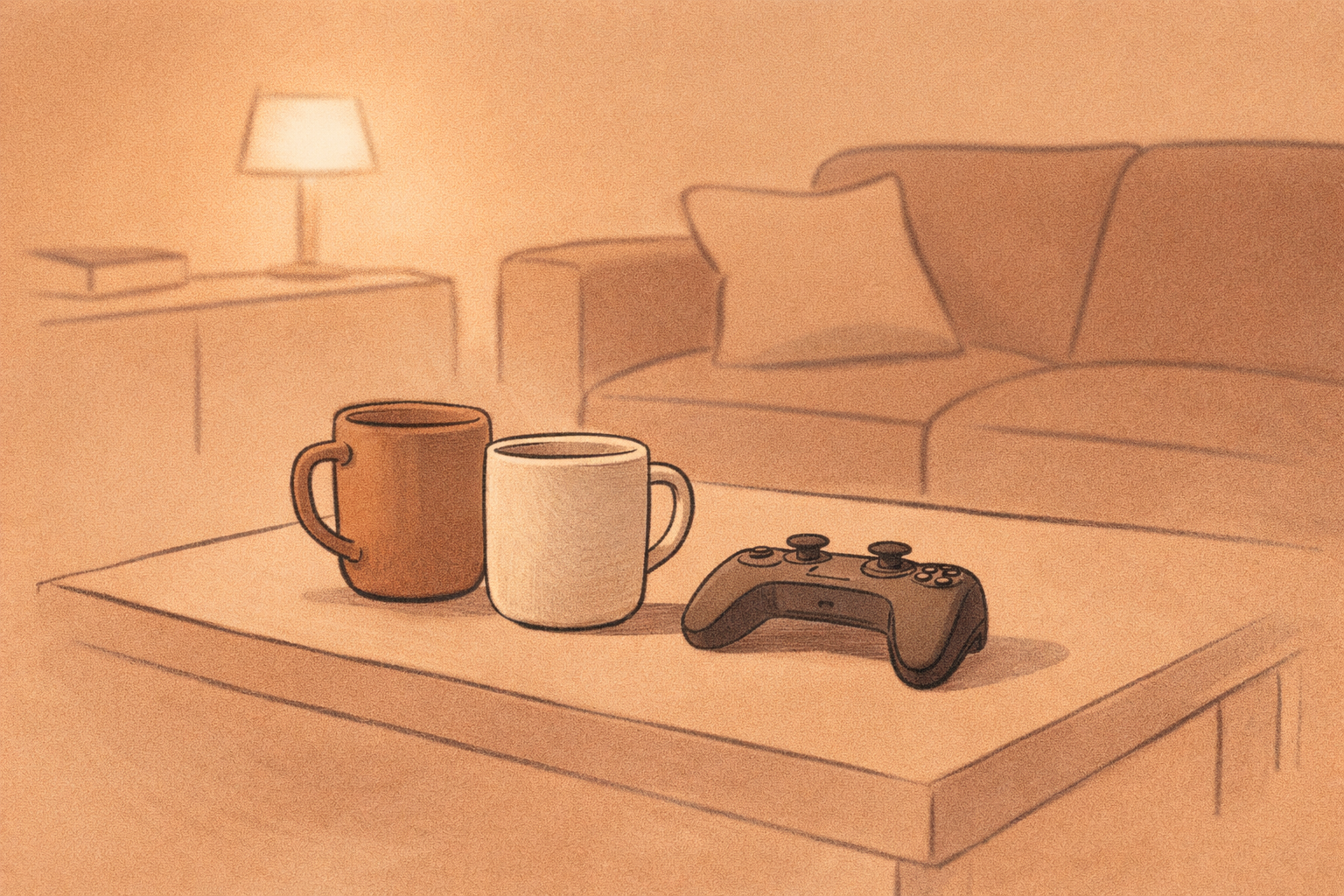
Gaming Is Not the Signal. The Pattern Is.
Gaming by itself is not a relationship red flag. A person can play regularly and still be attentive, dependable, affectionate, financially responsible, and fully engaged at home.
The warning sign appears when gaming is consistently protected while the relationship receives whatever time, energy, and patience happen to be left over.
How the Pattern Builds
At first, the pattern can look harmless. There is one more match, another half hour, or a conversation postponed until tomorrow. Laundry stays in the dryer. Bedtime gets handled by the same person again. Eventually, one partner may stop asking for help because asking has become another task to manage.
None of those moments proves that gaming is the problem. What changes the analysis is repetition. A household gets built through repeated behavior, and small decisions begin to show whose time is protected, who notices unfinished work, who carries what without being asked, and whose rest depends on somebody else remaining available.
Over time, those choices stop looking like isolated moments. They become part of the household’s operating system. That is why the real signal is not the controller. It is the pattern surrounding it.
What Partners Are Usually Reacting To
Most relationship conflicts about gaming are not really arguments about games. They are arguments about availability.
One partner may be thinking, “I just want some time to relax.” The other may be thinking, “I have been waiting all evening for you to come back into the room.” Both experiences can be legitimate, which is why counting hours alone does not tell us much.
Two hours of gaming after the evening’s responsibilities are handled may create no meaningful conflict at all. Those same two hours can feel completely different when they fall inside the only window a couple has to talk, reconnect, manage bedtime, clean up, plan tomorrow, or simply sit together.
The clock records the same amount of time. The relationship experiences that time according to what else needed to happen.
The Real Question Is What Gaming Replaces
Every adult needs leisure. Healthy relationships should leave room for interests that do not involve both partners, and nobody should have to surrender every private hobby simply because a relationship becomes serious.
Still, leisure always occupies space somewhere. The useful question is where that space comes from.
Where the Time Comes From
If gaming replaces scrolling, television, or another recreational activity, there may be very little to worry about. If it repeatedly replaces sleep, parenting, household work, intimacy, difficult conversations, financial responsibilities, or time that partners agreed to spend together, the issue has changed.
The strongest diagnostic is not how many hours somebody plays. It is what keeps getting displaced so those hours can remain protected.
The same test applies beyond gaming. Work can displace a relationship. So can the gym, social media, television, friendships, sports, side projects, or endless time on a phone.
An activity does not have to be bad for the allocation of time around it to become unhealthy. A respectable habit can still create strain when it repeatedly consumes the space another responsibility needs.
When Gaming Fits a Healthy Relationship
Gaming can fit comfortably inside a healthy adult relationship when expectations are clear. A partner does not need permission to have a hobby, but a shared life does create shared obligations.
People need some understanding of what has to happen before personal time begins, which responsibilities belong to whom, and when the relationship itself needs attention. That does not require a household to run like a shift schedule. It requires enough clarity that one person’s relaxation does not routinely depend on another person’s invisible labor.
Responsibilities remain visible. Gaming can be paused. Both partners have room for rest, and connection is not constantly postponed.
Gaming becomes untouchable while chores, conversations, sleep, parenting, intimacy, or planning repeatedly move around it.
Structure does not make leisure less enjoyable. In many cases, it does the opposite. When bills are handled, responsibilities are shared, communication stays open, and both people have genuine room for rest, recreation does not have to defend its existence.
Gaming can simply be gaming.
When Gaming Becomes Avoidance
The harder conversation begins when gaming becomes the preferred exit from anything uncomfortable.
A difficult conversation starts, and the game comes on. Stress rises, and several hours disappear online. Responsibilities pile up, but gaming time somehow remains untouchable. A partner asks for more connection and repeatedly gets told that the concern is controlling, dramatic, or unreasonable.
The Hobby May Not Be the Problem
At that point, arguing about whether gaming is a legitimate hobby will not solve much. The hobby may be completely legitimate while the behavior surrounding it is not.
This is where accountability matters. Adults have to be able to examine the consequences of their routines without treating every request for adjustment as an attack on their freedom.
Freedom inside a relationship cannot mean that one person protects personal comfort while another person absorbs the consequences. That arrangement may feel independent to the person benefiting from it, but the household experiences it as an uneven distribution of responsibility.

Presence Is More Than Being in the Room
There is another distinction worth making. Physical proximity is not the same thing as presence.
Two people can spend an entire evening in the same home and barely encounter each other. One person is gaming. The other is watching television, working, scrolling, handling chores, preparing for tomorrow, or eventually going to bed.
Nothing dramatic has to happen for that arrangement to matter. Nobody needs to behave terribly. Enough evenings like that can still change what the relationship feels like because connection often erodes through accumulation rather than spectacle.
What Repetition Teaches
A household teaches its priorities through repetition. Adults learn what they can expect from one another. Children, when they are present, notice who carries unfinished work, who gets to disappear into leisure, who gets interrupted, who handles the inconvenient parts of the evening, and whose time seems to be protected.
Nobody has to formally announce those rules. Repeated behavior teaches them anyway.
This is where the issue becomes larger than whether gaming is acceptable. A family does not transmit only what adults say. It also transmits what adults repeatedly demonstrate about responsibility, partnership, rest, attention, and whose needs take priority when several needs compete at once.
That is a Legacy In Motion question because today’s household rhythm quietly becomes tomorrow’s definition of normal.
The next layer of this conversation is explored in The Controller Is Not the Problem: Presence, Priority, and Emotional Labor . The deeper issue is not simply how adults spend free time. It is whether both people can still feel the partnership operating around them.
A Better Test Than “Do You Game?”
If somebody is trying to decide whether a partner’s gaming habits should concern them, start with the operation of the relationship rather than the existence of the hobby.
Look at the pattern
- Are important responsibilities consistently handled without repeated reminders?
- Can gaming be interrupted when something genuinely needs attention?
- Does each partner have reasonable access to personal leisure and recovery time?
- Are conversations, sleep, intimacy, parenting, or agreed time together routinely postponed for gaming?
- Can concerns about time and attention be discussed without immediate defensiveness?
- Does one person’s gaming depend on the other person quietly carrying more of the household?
- Does gaming restore the person, or has it become the place the person goes to disappear?
No single answer settles the question. Taken together, however, the answers reveal much more than a label ever could. They show whether leisure has been folded into adult responsibility or protected from it.
The Standard Is Shared Life, Not Shared Hobbies
Couples do not need identical interests to build a stable relationship. One person can game while the other reads. One can watch basketball while the other gardens. One can spend Saturday morning at the gym while the other sleeps late.
Difference is not the problem. Trouble begins when individual routines are no longer negotiated against the needs of the shared life.
Healthy partnership requires both individuality and return. People leave the shared space to work, rest, think, play, see friends, pursue interests, and recover. Then they come back.
They come back to the conversation, the children, the dishes, the planning, the intimacy, and the ordinary responsibilities that make a household function. More importantly, they come back to the person they chose to build with.
A hobby becomes structurally dangerous when that return keeps getting delayed and everybody else is expected to adapt around the delay.
The Groundwork
A healthy relationship does not require two adults to spend every available hour together. It needs something more durable: enough structure for both people to maintain individual lives without abandoning the shared one.
Gaming can live comfortably inside that structure. So can sports, television, reading, the gym, social media, friendships, hobbies, and demanding work. Any of them can also become a hiding place once boundaries disappear and accountability weakens.
That is why the red flag is not simply that somebody enjoys playing video games. The concern begins when protecting the escape becomes more important than protecting the relationship.
What a household repeatedly protects becomes part of its structure. What it repeatedly postpones becomes part of that structure too.
The larger question is not whether there is room for play. There should be. The question is whether leisure lives inside responsibility or whether responsibility is constantly being reorganized around leisure.
Continue Building
The Controller Is Not the Problem: Presence, Priority, and Emotional Labor Go deeper into emotional availability, attention, and what it means to remain present inside a shared life.
Are Video Games Bad for Adult Men? Separate the hobby itself from the adult responsibilities, routines, and tradeoffs surrounding it.
Accountability Explore why adult freedom becomes more durable when choices can withstand honest examination and shared standards.
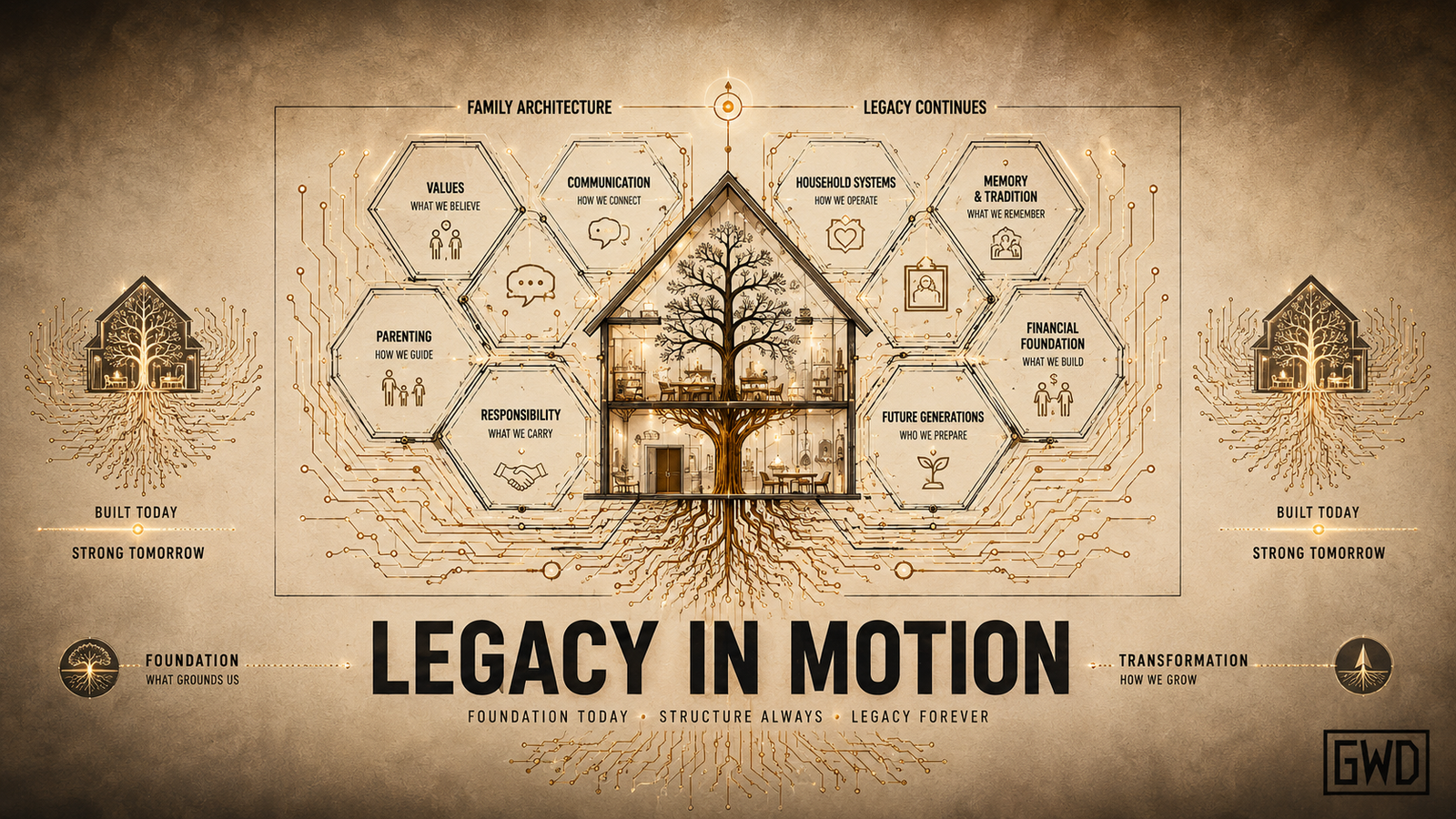
Groundwork Architecture: This article is part of Legacy In Motion and sits within Groundwork Daily’s Family, Gender & Relationships territory. Together, these bodies of work examine the structures that help relationships, households, and families carry responsibility, maintain stability, and pass stronger patterns forward.
Meet the Builder
Marcus Vaughn
Marcus Vaughn writes about ownership, financial discipline, family structure, and generational continuity. Through Money Monday and Legacy In Motion, he examines the systems that turn income into stability, responsibility into structure, and today’s decisions into tomorrow’s inheritance.