
When the feed decides first, the truth never gets a fair turn.
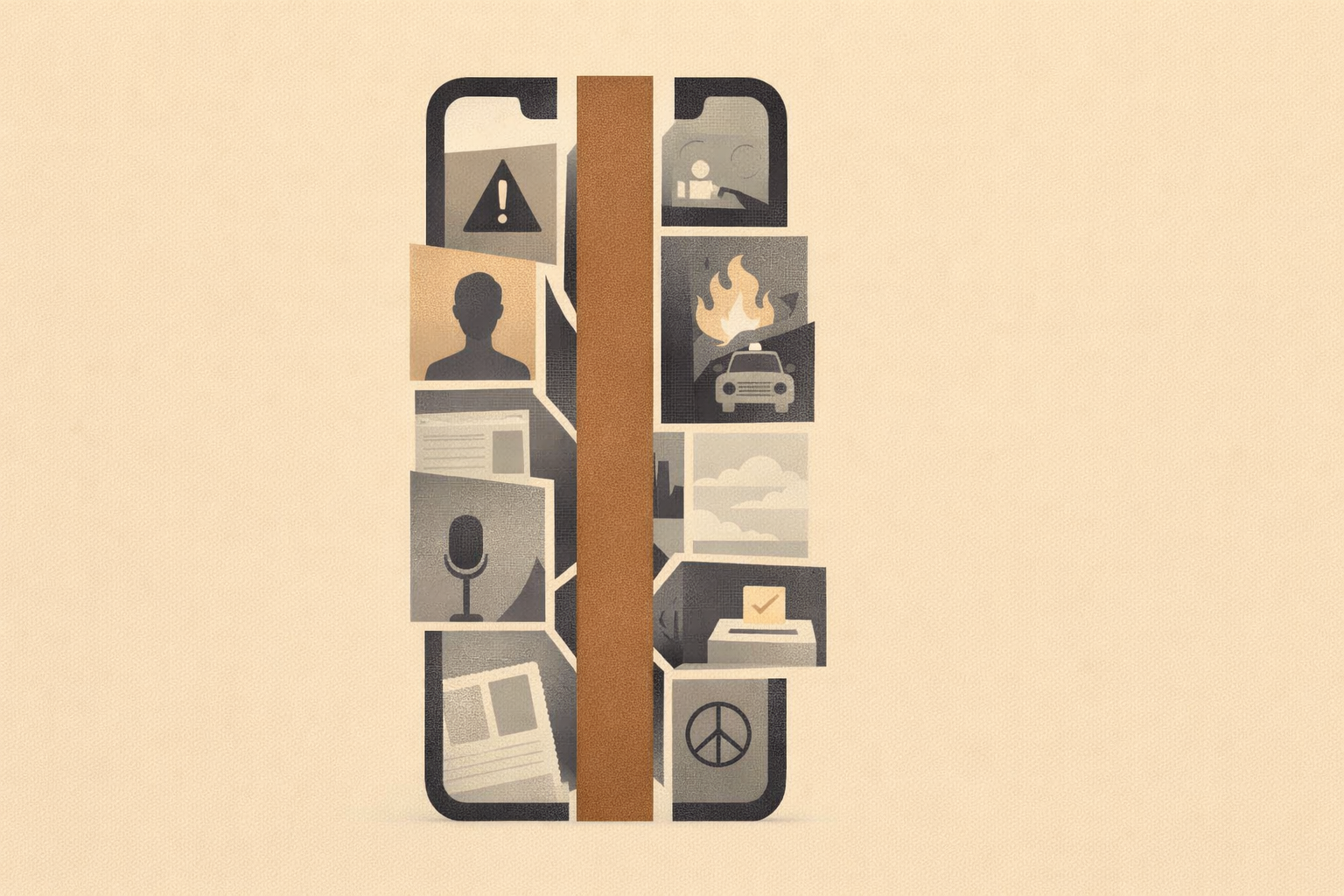
Algorithmic news fragmentation is what happens when the feed stops reflecting reality and starts building it. The scroll feels neutral because it moves quietly and refreshes on command. However, platforms do not optimize for truth. Baby, they optimize for attention.
Because attention rewards emotion, the system elevates what hits hardest instead of what explains best. As a result, speed replaces understanding. Meanwhile, context lags behind. Before long, people feel overwhelmed and under-informed at the same time.
How algorithmic news fragmentation shapes what you see
Let us be clear. Algorithms shape the menu before you ever choose a meal. They rank, filter, and repeat content based on engagement, not grounding. Consequently, context moves slower than outrage, which means it loses most days.
Once the feed learns what spikes your reaction, it serves you more of it. Like a waiter who only brings what makes you overeat. Over time, the platform trains your expectations and then calls the result “personalization.” That is not neutrality. That is conditioning.
When algorithmic news fragmentation turns the feed into the world
When algorithmic news fragmentation becomes the primary lens, shared reality fractures. Two people can watch the same event and walk away with two different stories because the feed delivers different slices of the truth.
More importantly, the feed rarely corrects itself. Instead, it doubles down. It repeats what performs. It rewards what spreads. Even when something is wrong, the system still calls it successful because success is measured in attention, not accuracy.
Why algorithmic news fragmentation hits Black communities harder
Here is the part they rarely say out loud. Black communities feel algorithmic news fragmentation more sharply because the system does not just distribute information. It distributes identity.
Cultural life becomes content. Reaction becomes revenue. Trauma travels fast while context crawls. By the time explanation arrives, it is late and exhausted. This is how communities become overrepresented as storylines and underrepresented in the rooms where those storylines are shaped.
This pattern mirrors earlier incentive failures explored in Virality Is an Incentive Problem, where speed and scale override responsibility.
The question the feed never asks
The feed never asks who benefits from what you believe after scrolling. It only asks what will keep you here longer. When attention becomes the business model, outrage turns into currency. Naturally, business stays booming.
At the same time, truth becomes optional. Not because people hate truth, but because the platform does not pay truth on time. Truth takes a minute. The feed gets paid by the second.
Research from Pew Research Center shows how platform-driven news consumption reshapes perception faster than traditional media ever could.
The Bottom Line
Algorithmic news fragmentation is not just a media issue. It is a reality issue. The feed is not the world. However, when it becomes the primary window, it starts deciding what people believe the world is.
Information without context is not empowerment. It is exposure. And exposure without protection is how people get hurt.
