

Real Talk Blueprint · Digital Behavior & Media Literacy
Algorithmic news fragmentation changes what reaches people before they ever decide what to believe.
The feed does not have to invent reality to distort your sense of it. Selection, ranking, repetition, and omission can determine which pieces of the world feel most important.
Algorithmic news fragmentation begins before you decide what you believe. It begins with what reaches you at all.
The scroll feels neutral because nobody announces the selection meeting. You open the app, information appears, and your thumb gets to work. There’s no editor standing beside the screen saying, “We ranked this higher because people like you usually react to it.”
Instead, the feed simply feeds.
That quietness creates an illusion. What appears first starts feeling important. What repeats starts feeling common. Meanwhile, what disappears can start feeling irrelevant.
Eventually, a personalized slice of reality can begin impersonating reality itself.
That doesn’t mean every platform is secretly manufacturing lies, and it doesn’t mean every recommendation system has one political agenda. The mechanism is more ordinary than that and, frankly, more interesting.
A ranking system chooses what to place in front of limited human attention. People respond. The system learns from those responses. Similar material then gets another opportunity.
Meanwhile, context is still outside putting on its shoes.
When the feed decides first, the truth never gets a fair turn.
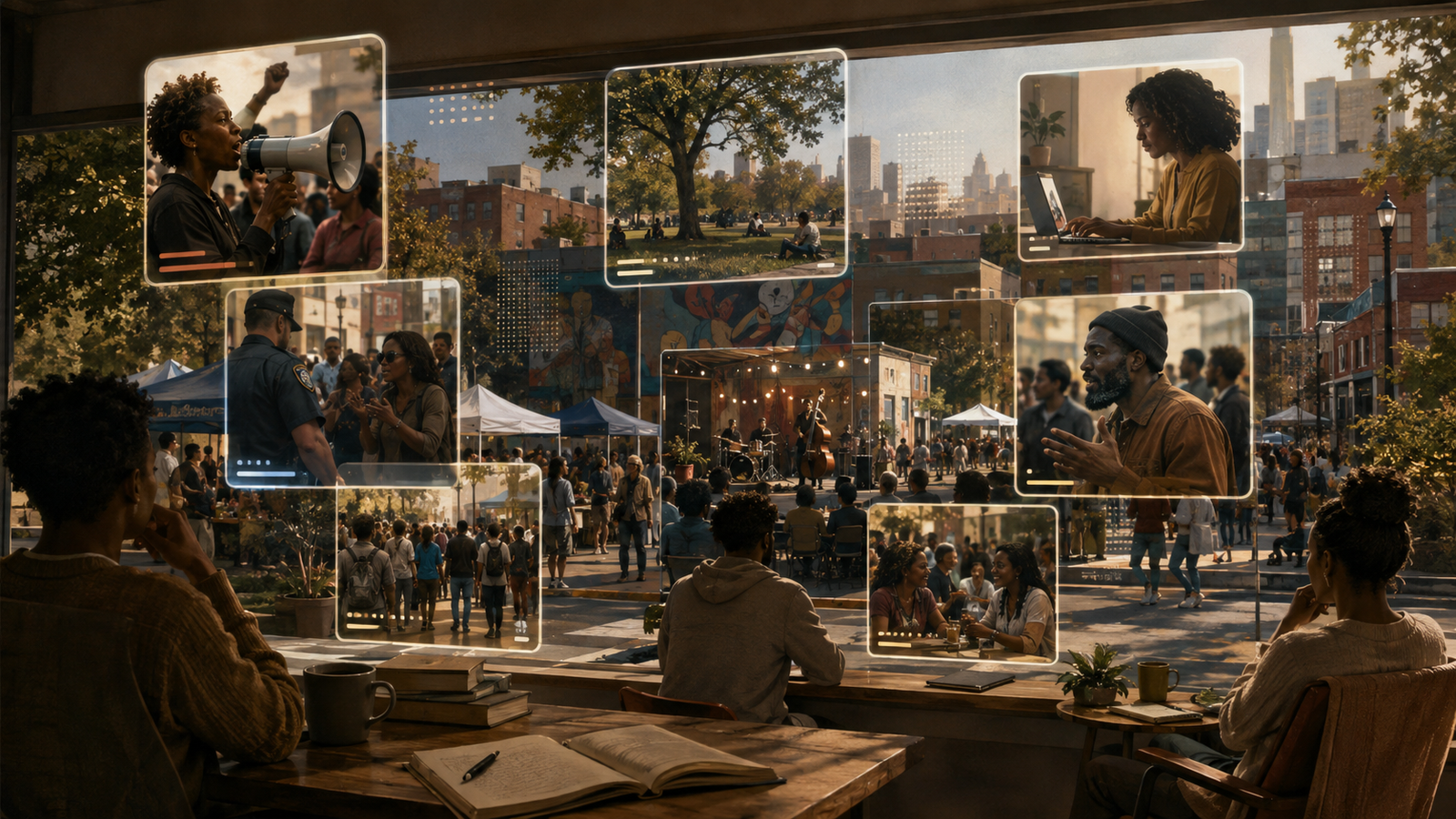
Algorithmic News Fragmentation Starts With Selection
Before arguing about misinformation, bias, polarization, or manipulation, start with the simpler mechanism: selection.
No feed can show everything. There’s too much content, too little screen, and not enough human attention to process every available post, story, video, update, argument, correction, joke, press release, eyewitness account, or analysis.
Something has to decide what appears first.
Ranking Is Not Passive
On algorithmically ranked platforms, recommendation systems use signals to order and select content. Those signals can include previous activity, relationships, content characteristics, engagement patterns, and other indicators of predicted relevance or interest.
Because of that, ranking changes exposure.
Research examining Twitter’s algorithmic timeline found that algorithmic personalization changed the amplification of political content compared with a reverse-chronological feed.
The finding doesn’t establish that every algorithm favors the same group or produces the same result. However, it does establish the more useful structural point: ranking systems can materially alter what people encounter.
Your feed is therefore not simply a container holding reality in chronological order. It’s an arranged environment.
Attention Changes What the System Learns to Serve
Here’s where human behavior enters the machine.
People don’t react equally to everything. Some material makes us angry. Some scares us. Other content confirms what we already suspected, while another post makes us laugh.
Sometimes a piece of content gives us a villain before breakfast. Sometimes curiosity keeps us watching even while we insist we hate what we’re seeing.
Those reactions generate signals.
Emotion Can Have a Distribution Advantage
Research on online moral outrage has found that social feedback can reinforce future outrage expression. In addition, audits of engagement-based ranking have found amplification of more partisan, negative, and out-group-hostile political content relative to chronological baselines.
That doesn’t mean outrage is the only thing algorithms reward, and it doesn’t mean every emotionally intense post is wrong.
Still, emotional intensity can gain a distribution advantage in environments built around engagement, and people then adapt to the environment they inhabit.
The feed selects.
People react.
Reaction becomes data.
Data influences what gets recommended next.
Over time, personalization can begin reinforcing the information environment it learned from your behavior.
When Algorithmic News Fragmentation Turns the Feed Into the World
Algorithmic news fragmentation becomes more consequential when people stop experiencing the feed as one information source and begin experiencing it as the surrounding world.
Two people can follow the same election, conflict, cultural controversy, policy debate, or public event and encounter very different emphases.
One person sees the confrontation, while another sees the aftermath. Someone gets the correction. Somebody else gets the original allegation six times before lunch.
One feed presents an event as evidence of a massive social pattern. Another barely mentions it.
Neither person necessarily chose every difference consciously.
Visibility Can Start Looking Like Prevalence
Repeated exposure matters because visibility can begin to look like prevalence.
A viral behavior starts looking representative. The loudest faction can appear to be the majority. One strange interaction becomes “what people are doing now.”
Meanwhile, a fringe argument can receive enough repetition to earn a promotion into cultural crisis.
The feed doesn’t have to say, “This is normal.” It only has to keep showing it.
Algorithmic News Fragmentation Can Distort Social Knowledge
The problem is bigger than factual accuracy.
You can encounter individually real pieces of information and still construct a distorted picture from them.
Imagine watching only ten minutes of security-camera footage from a grocery store every day, but the ten minutes are always the moments when somebody argues.
Nothing shown has to be fake. After six months, however, you may develop some interesting theories about grocery shopping.
Representation Is a Different Question From Accuracy
Online research points to a similar perception problem. Studies have found that users can overperceive moral outrage in social networks and then overestimate hostility, polarization, and extreme social norms.
That creates a media-literacy question that simple fact-checking can’t answer.
Knowing whether an individual post is authentic doesn’t tell you whether the post is representative.
So another question deserves a permanent chair at the table: how representative is what I keep seeing?
Black News Experiences Need More Precision Than the Feed Usually Gives Them
This is where the argument needs discipline.
We can’t responsibly claim that algorithms universally fragment news more severely for Black Americans based on the evidence available here.
What we can say is substantial enough.
Pew Research Center has found that social media plays a significant role in how Black Americans encounter news and information. At the same time, Black adults report relatively low trust in the accuracy of information from social-media sites.
Pew has also documented deep concerns among Black Americans about how Black people are represented in news coverage.
A Representation Problem Already Exists
Large shares of Black Americans report encountering inaccurate information about Black people. Many also describe coverage as disproportionately negative or focused on only certain segments of Black communities.
Now place those concerns inside an environment where emotionally charged content can circulate efficiently.
The responsible conclusion isn’t “algorithms hurt Black people more.”
A stronger conclusion is that fragmented, engagement-driven information environments can compound an existing representation problem by repeatedly circulating narrow and emotionally salient slices of Black life.
Trauma is part of Black life. So are weddings, schools, businesses, bad jokes, boring Tuesdays, churches, breakups, promotions, grocery lists, neighborhood meetings, music, scholarship, parenting, friendship, disagreement, invention, mediocrity, excellence, and people trying to figure out what to cook.
A feed that repeatedly rewards only the most combustible slice can make a community look like a storyline instead of a population.
Social Media News Is Not Automatically Bad
Counterweight matters here because the internet loves a clean villain almost as much as it loves a clean hero.
Social media can expose people to useful reporting, eyewitness information, specialized expertise, community knowledge, and stories traditional institutions overlooked.
Recent experimental research has even found circumstances in which following news through social platforms increased knowledge and belief accuracy among participants.
So the intellectually lazy argument is that social media automatically makes everyone less informed. The evidence is more complicated.
Access and Distortion Can Exist at the Same Time
Social platforms can expand access while also changing the conditions under which news is encountered.
They can make information easier to discover while making source evaluation harder. They can distribute valuable reporting and inflammatory nonsense through the same interface before breakfast.
The technology doesn’t produce one outcome.
The more useful question is what behavior the environment encourages and what habits readers need in response.
Groundwork Principle
Structure Builds Freedom
Media literacy needs structure because attention isn’t an unlimited resource.
If every headline gets equal emotional access to you, somebody else’s ranking system effectively controls the order in which your nervous system receives the world.
Structure can be simple. Know which outlets you trust and why. Separate reporting from commentary. Follow a developing story long enough for corrections and context to arrive.
Also, search deliberately instead of relying exclusively on recommendation. When a claim changes your view of an entire population, institution, or event, find the original evidence.
None of this guarantees perfect knowledge. What it does create is friction between exposure and belief.
What it means here: A feed can recommend what you encounter. It should not receive automatic authority over what you conclude.
How to Keep the Feed From Becoming Your Entire Reality
The answer isn’t abandoning every platform and moving to a cabin with one newspaper and suspiciously good tomatoes.
Instead, build habits that account for how feeds work.
Separate Visibility From Prevalence
Something appearing constantly in your feed doesn’t prove it’s common in the wider population.
Ask whether you’re seeing representative evidence or merely highly distributable examples.
Find the Original Source
A screenshot of a headline isn’t the article. A clip of an interview isn’t necessarily the entire answer. Somebody’s commentary about a study isn’t the study.
Move upstream when the claim matters.
Give Developing Stories Time
Breaking news contains a built-in contradiction. The moment when demand for certainty is highest is often the moment when reliable information is least complete.
First isn’t the same thing as final.
Add Sources You Did Not Discover Through Recommendation
Search for local reporting. Read primary documents when practical. Follow subject-matter reporting instead of only personalities reacting to it.
For consequential issues, compare coverage across credible sources.
This doesn’t mean creating some artificial fifty-fifty balance between every claim. False information doesn’t become useful because it represents “the other side.”
The goal is context, not performative neutrality.
Notice What Keeps Getting an Emotional Reaction From You
Your outrage may be justified. It’s still data.
If one category of content reliably makes you stop, watch, comment, share, or argue, expect the system to notice.
Media Literacy Now Includes Understanding Distribution
Traditional media literacy often focused on familiar questions. Who wrote the story? What evidence did they use? Is the outlet credible? What perspective may be missing?
Those questions still matter.
Algorithmic environments, however, add another layer.
Why did this reach me? Why now? Why have I seen five versions of this today? Which part of the event keeps getting selected?
More importantly, what am I not seeing because something else keeps winning the ranking competition?
That doesn’t require conspiracy thinking. It requires distribution literacy.
Algorithmic news fragmentation becomes easier to recognize once readers understand that repeated exposure is part of the information environment. It’s not neutral evidence that something is universally important, representative, or common.
The Real Talk
Your feed isn’t fake simply because it’s personalized. It’s also not the whole world simply because everything inside it is real.
That distinction is the work.
Recommendation systems rank. Engagement influences distribution. Emotional content can receive advantages. Meanwhile, human beings notice repetition and infer patterns from what surrounds them.
Put those mechanisms together and a partial view can start feeling complete without anybody needing to fabricate the entire thing.
So stop asking only, “Is this post true?” Ask the second question too: what picture of the world am I building because this is the part I keep being shown?
The feed is a window with somebody else controlling part of the frame. Look through it. Just remember there is still a world outside the crop.
Continue Building
Keep Going From Here
Virality Is an Incentive Problem
Continue into the behavioral incentives that make visibility, reaction, speed, and distribution powerful enough to reshape what people choose to publish and share.
Internet Consequences and Public Behavior
Examine what changes when ordinary public behavior becomes capturable, distributable, and permanently available to audiences nobody anticipated.
Keep examining the gap between what people believe they are choosing and what their behavior, environments, and incentives are quietly reinforcing.
Receipts
Evidence Behind the Framework
- PNAS: Algorithmic Amplification of Politics on Twitter . A large-scale randomized audit showing that algorithmic ranking can alter exposure and amplification of political content compared with a reverse-chronological feed.
- PNAS Nexus: Engagement, User Satisfaction, and the Amplification of Divisive Content on Social Media . A preregistered audit finding that engagement-based ranking amplified more partisan, out-group-hostile, and emotionally negative political content relative to a chronological baseline.
- Science Advances: How Social Learning Amplifies Moral Outrage Expression in Online Social Networks . Research examining how social feedback and network norms can reinforce outrage expression over time.
- Nature Human Behaviour: Overperception of Moral Outrage in Online Social Networks . Research finding that observers can overestimate outrage expressed online and consequently develop inflated perceptions of intergroup hostility and extreme social norms.
- Pew Research Center: Black Americans’ News Habits . Survey research documenting the role of social media in Black Americans’ news consumption alongside relatively low reported trust in social-media information.
- Pew Research Center: Black Americans’ Mistrust of the U.S. News Media . Survey findings on concerns about inaccurate, stereotypical, incomplete, and disproportionately negative coverage of Black people and communities.
Evidence Note: These sources support narrower propositions that algorithmic and engagement-based ranking can change information exposure and amplify particular forms of political or emotionally charged content; that online social environments can affect perceptions of outrage and group hostility; and that Black Americans report both substantial use of social media for information and significant concerns about inaccurate or stereotypical news coverage. They do not establish that all recommendation systems optimize solely for attention, prove that algorithms universally create ideological echo chambers, show that every user’s feed becomes less accurate, or establish that Black Americans experience algorithmic fragmentation more severely than every other population. “Algorithmic news fragmentation” is used here as a Real Talk Blueprint media-literacy framework rather than a clinical or universally standardized research term.
Real Talk Blueprint
See the pattern before it becomes the habit.
Groundwork Daily examines relationships, culture, accountability, communication, and the behavior underneath the performance.


About the Builder
Rochelle “Ro” Hayes
Rochelle “Ro” Hayes is the Groundwork Daily builder behind Real Talk Blueprint, a series focused on culture, relationships, accountability, communication, and the behavior people often explain away before they examine it.
Ro works primarily inside Culture, Media & Leadership, with strong overlap into relationship systems, public behavior, gender expectations, attention incentives, and modern social performance.
Real talk creates structure where avoidance creates confusion.
Ro builds frameworks that make ordinary behavior harder to ignore. The work is direct, observational, and culturally grounded, naming the pattern, identifying the incentive, and asking what people are really protecting instead of performing outrage.
Real Talk Blueprint examines the gap between what people say they value and what their behavior actually reinforces.
Meet Rochelle “Ro” Hayes · Explore Real Talk Blueprint · Explore Culture, Media & Leadership