
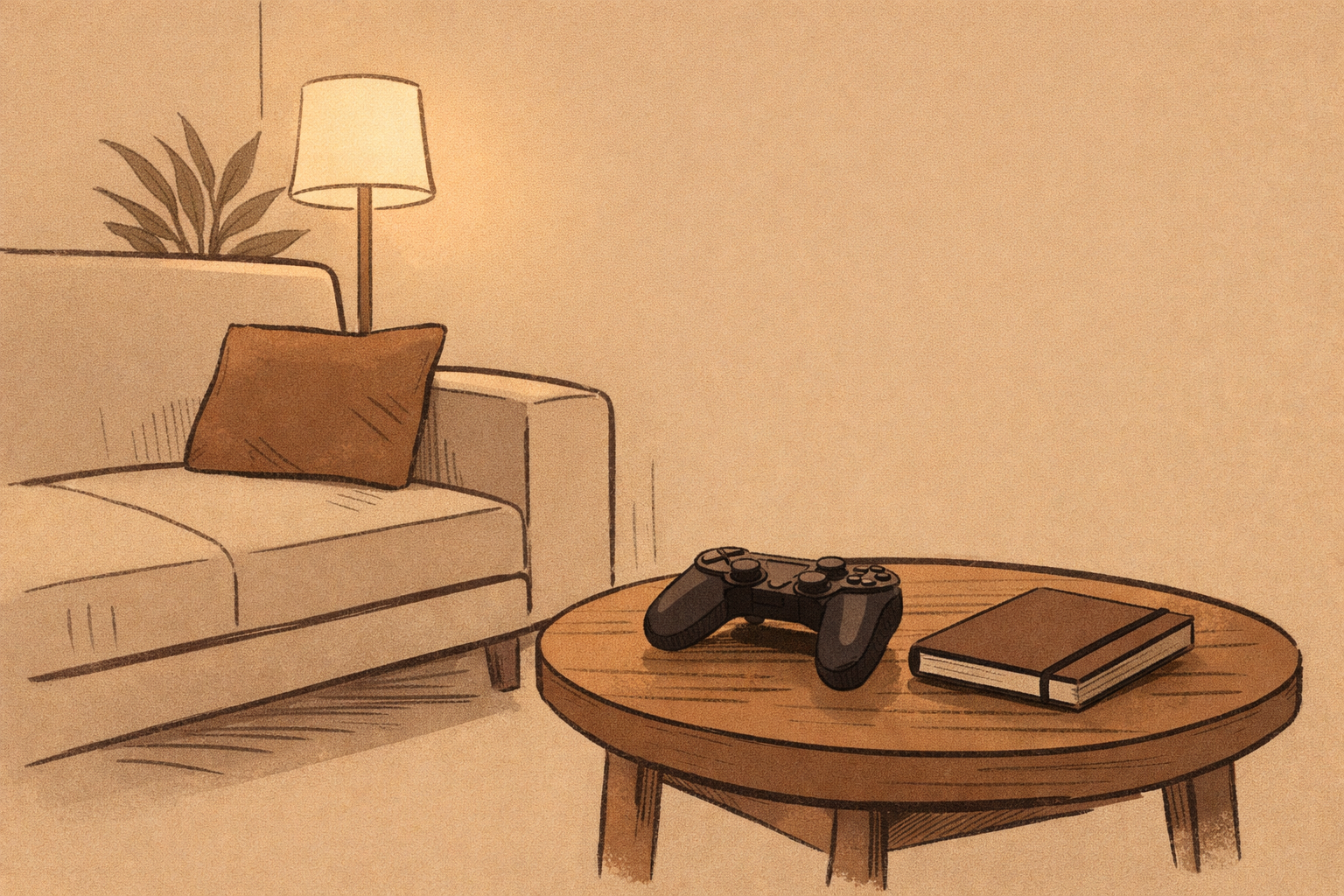
Are video games bad for adult men, or is that question masking something deeper?
When people ask whether adult men should play video games, they are usually asking something else entirely. Is this man avoiding responsibility, or is he decompressing? Is this leisure, or is it escape? Is this play, or is it withdrawal?
However, video games have become a cultural shorthand for immaturity in men, while other habits that consume just as much time receive little scrutiny. Sports obsession is celebrated. Endless scrolling is normalized. Overwork is praised. Meanwhile, gaming is framed as suspect.
This imbalance deserves examination.
Are Video Games Bad for Adult Men, or Just Misunderstood?
Why Video Games Aren’t Inherently Bad for Adult Men
At their best, video games serve the same function that structured play has always served in adult life. They provide challenge, feedback, and regulation.
Research consistently shows that moderate gaming can improve reaction time, attention, problem-solving ability, and emotional regulation. However, the most important benefit rarely gets named.
Video games give adult men a contained environment where effort produces visible results.
In a world where many men feel judged only by output and income, games offer clear objectives, earned progress, and consequences without catastrophe. As a result, that sense of agency matters.
APA reporting on stress and decision-making notes that prolonged stress can make everyday decisions feel more draining over time (APA Monitor on Psychology).
When Video Games Become a Problem for Adult Men
The concern is not gaming. Instead, avoidance without limits creates the problem.
Gaming becomes unhealthy when it replaces sleep, work, hygiene, or real relationships in a man’s life. It also becomes unhealthy when it becomes the only coping mechanism he uses.
These risks show up wherever structure disappears.
Gaming is not the variable. Discipline is.
The Single Man: Regulation, Not Regression
For many single men, gaming functions as emotional regulation rather than regression.
It offers decompression without intoxication. Unstructured evenings that might otherwise default to isolation or endless scrolling gain shape and direction. Meanwhile, gaming provides challenge without constant social performance.
A man who plays video games while maintaining health, work, curiosity, and relationships is not stalled. Instead, he manages energy and protects his bandwidth.
The danger is not play. The danger is stagnation.
The Man in a Relationship: Where Friction Appears
Conflict around gaming in relationships rarely centers on the game itself. Instead, it centers on presence.
From the man’s perspective, gaming may feel like harmless downtime. From his partner’s perspective, it can feel like absence. Neither interpretation is automatically wrong.
As a result, the issue emerges when time together is not protected, emotional presence erodes, or gaming becomes a default retreat during conflict.
The solution is not elimination. Rather, it is visibility, agreement, and structure.
The Female Perspective: What the Concern Really Signals
Most women are not reacting to a controller. Rather, they are reacting to what it represents.
Common concerns include feeling deprioritized, carrying emotional or logistical labor alone, or associating gaming with past immaturity. These concerns make sense.
At the same time, many men never learn how to rest in ways that remain relational. As a result, gaming becomes a quiet form of disappearance.
The underlying request is rarely “stop playing.” Instead, it is “stay present.”
This tension points to a deeper truth explored more fully in The Controller Is Not the Problem: Presence, Priority, and Emotional Labor . When gaming becomes the stand-in for unresolved expectations, the real work is not restriction, but repair.
A Better Framework: Structure Over Judgment
Instead of asking whether adult men should play video games, a better question emerges.
Does this man have structure?
Structure looks like purpose outside the screen, clear boundaries around time, emotional availability, and accountability for shared responsibilities.
A man with structure can game without harm. A man without structure will misuse anything.
This distinction aligns with Groundwork Daily’s broader principle that discipline creates freedom, even in how men rest.
Play Is Not the Enemy
Ultimately, the question is not what men do to rest, but whether emotional presence remains intact when rest ends.
Play is not childish. Instead, unexamined avoidance causes harm.
Video games are neither the problem nor the solution. They are a tool.
Use them with intention and they regulate stress, sharpen the mind, and preserve joy. Use them without structure and they amplify drift.
The work is not to shame men out of play. The work is to build lives where play has a place.
That is the difference between escape and rest. Between regression and regulation. Between distraction and renewal.
