
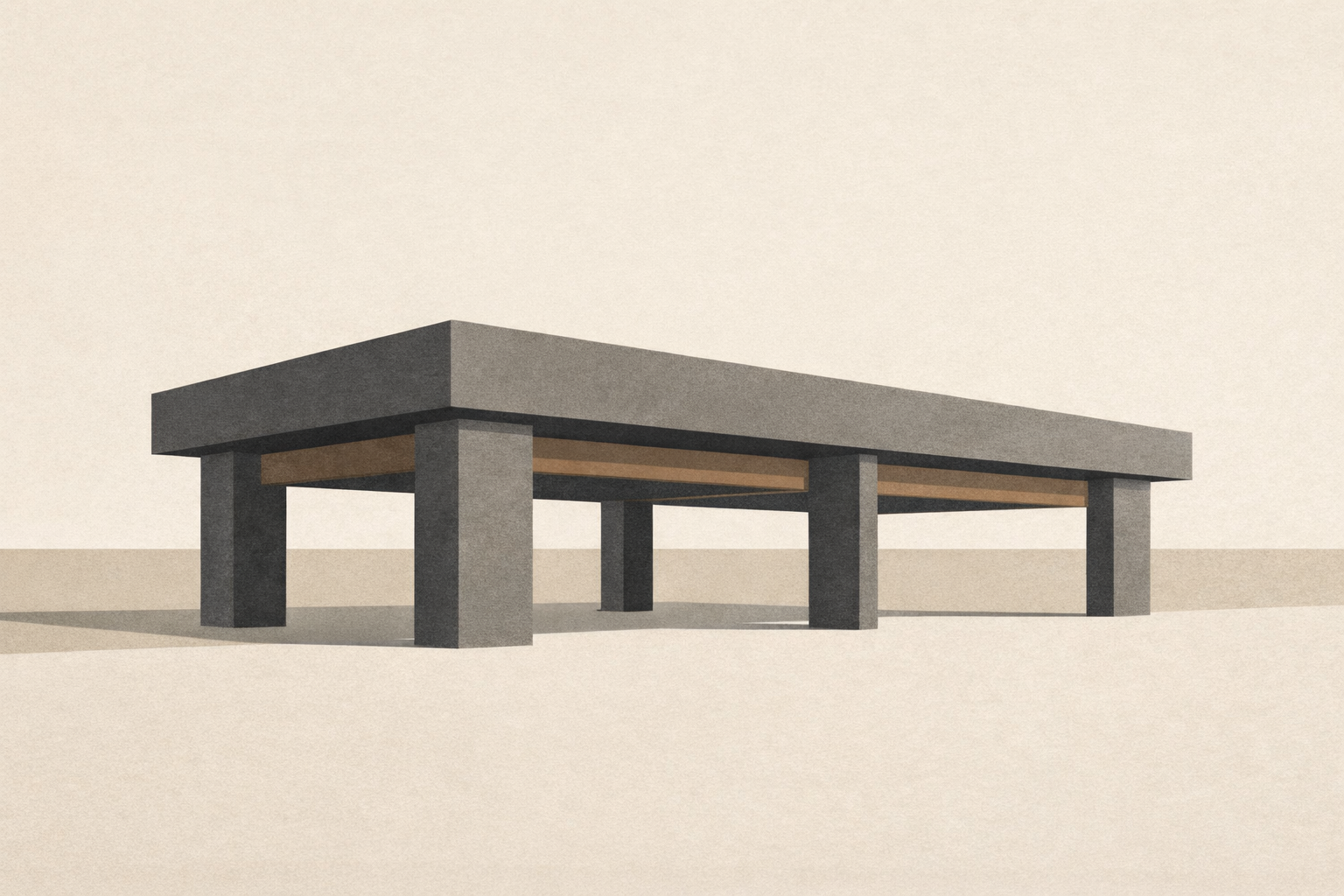
Carrying weight without announcement is one of the least visible forms of responsibility. It does not ask to be noticed. It does not posture for recognition. Instead, it shows up every day through structure, reliability, and the quiet decision to hold what must be held—whether or not anyone is watching.
In a culture trained to reward visibility, this kind of strength often goes unacknowledged. Yet systems do not fail because too few people talk about responsibility. They fail because too few people carry it consistently.
Carrying Weight Without Announcement Is Structural
Responsibility does not begin as a title or a declaration. It begins as a function. Someone ensures the work continues. Someone absorbs pressure so others can move freely. Someone keeps the system upright even when no credit circulates.
That work rarely announces itself because it cannot afford distraction. Load-bearing elements do not decorate themselves. They align, reinforce, and endure. As a result, their value becomes visible only when they are removed.
In practice, carrying weight without announcement means choosing durability over display. It means organizing time, energy, and attention around what must hold rather than what might impress.
Why Quiet Responsibility Often Goes Unnoticed
Visibility has become a proxy for value in modern systems. Loud signals travel faster than stable ones. Because of that bias, quiet responsibility can look like absence when it is actually presence in its most functional form.
However, the absence of noise does not indicate the absence of effort. It indicates discipline. It indicates a refusal to confuse signaling with contribution.
Research on organizational performance consistently shows that long-term stability depends less on charismatic displays and more on sustained operational behavior. Harvard Business Review has documented this dynamic in leadership environments where consistency outperforms spectacle over time (HBR).
Quiet responsibility does not compete for attention. Instead, it competes against entropy.
Carrying Weight Without Announcement Builds Trust Over Time
Trust does not form through declarations. It forms through repetition. When someone carries weight without announcement, they create a pattern others can rely on.
Over time, those patterns accumulate. People adjust their behavior around them. Systems stabilize. Eventually, respect follows—not because it was demanded, but because it became unavoidable.
This delayed recognition explains why responsibility often feels thankless in the moment. Yet the absence of immediate praise is not evidence of failure. It is evidence that the work is functioning.
The same principle appears throughout Groundwork’s Pillars framework, where structure precedes recognition and discipline precedes reward (Structure Builds Freedom).
The Cost of Announcing the Load
Announcing responsibility changes its nature. Once performance enters the equation, attention shifts from holding the system to managing perception.
That shift introduces fragility. Energy moves toward signaling rather than reinforcement. Over time, systems built on announcement weaken because they rely on validation instead of structure.
By contrast, carrying weight without announcement preserves capacity. It allows responsibility to remain focused on outcomes rather than optics.
This does not mean invisibility equals virtue. It means responsibility earns visibility only after it proves durability.
Choosing Function Over Recognition
Carrying weight without announcement is ultimately a choice. It reflects an internal standard that values function more than applause.
People who make that choice often understand something counterintuitive: recognition arrives more reliably when it is not pursued. Systems notice what continues to work. People notice what does not collapse.
That awareness produces a different posture—one rooted in steadiness rather than urgency. Over time, that steadiness becomes influence.
What Quiet Strength Leaves Behind
When responsibility is carried without announcement, it leaves behind something more durable than praise. It leaves behind trust, capacity, and institutional memory.
Those outcomes rarely trend. They rarely go viral. Yet they outlast noise because they form the invisible framework that allows others to function.
In the end, carrying weight without announcement is not about humility as performance. It is about alignment. The work matches the need. The structure matches the load. Nothing extra is required.
That is how responsibility proves itself—not by calling attention to the weight, but by ensuring the system still stands.
