Emotional guardrails come first. Tools serve better when time, topic, and tone are clear.
Children learn faster than systems can protect them. Rules reduce risk. Routines build judgment. The aim is not fear. The aim is steady habits that keep people in charge.
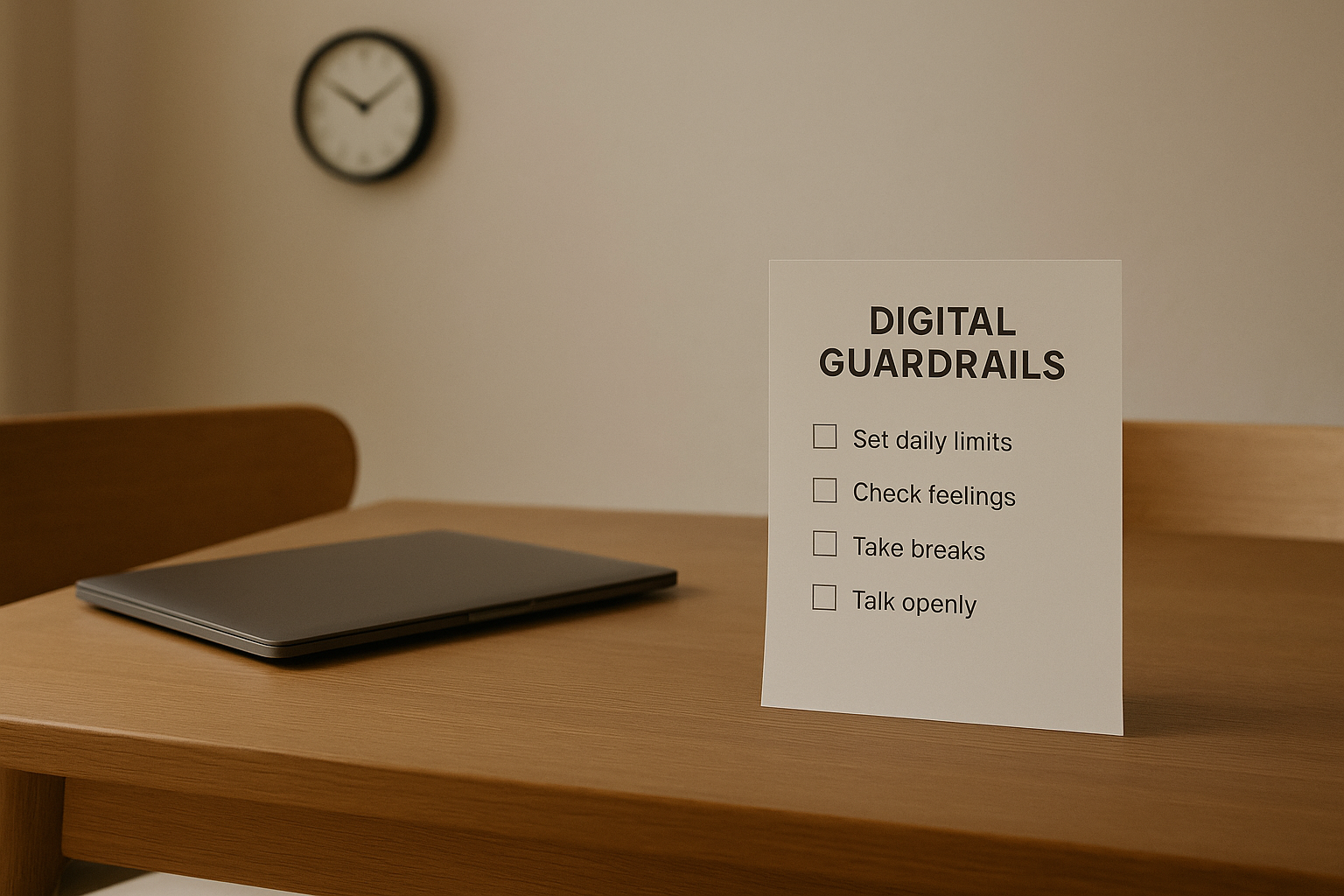
The three layers of guardrails
- Time: Set a daily window and a hard stop. Short, focused sessions in shared spaces.
- Topic: Learning and research are in bounds. Therapy talk, romance, and secrets are out.
- Tone: Calm, direct prompts. No venting. No role-play about harm. Ask for steps and sources.
The family framework
- Where: Shared rooms only. Screens visible. Headphones off for minors.
- With whom: A parent reviews prompts and results for sensitive topics.
- How long: 20–30 minutes max per session. Two sessions per day at most.
- End ritual: Save useful outputs to a shared folder. Log one sentence of what was learned.
Classroom routine
- Define goal: One learning objective per chat.
- Prompt frame: “Explain in steps. Cite one source we can verify. No personal advice.”
- Verification: Check against a textbook, teacher note, or reputable site.
- Reflection: Exit ticket: “What did I learn, and how do I know it is true?”
Printable daily checklist
- Did I state my purpose before I typed?
- Did I ask for steps and a source?
- Did I verify with a human or a trusted reference?
- Did I avoid private or emotional topics?
- Did I stop on time and review my outcomes?
When to stop immediately
- The chat invites secrets or promises confidentiality.
- It role-plays romance, therapy, or authority.
- It discourages talking to parents, teachers, or doctors.
- It gives instructions affecting health, money, or relationships.
- It feels urgent or emotional. Calm first. Then a person.
Teach the reset line
Use this: “I need to talk to a trusted adult about this.” Stop the chat. Save the transcript. Notify a parent or teacher.
See also
The New Curriculum: Teaching Kids to Talk to Machines Safely
Mental Health vs Machine Empathy: Teaching Kids the Difference
The Groundwork
Discipline is structure in motion. Clear guardrails make AI useful, predictable, and safe. Keep people at the center. Keep conversations public. Practice the reset line until it is natural.
Note: For research context on youth mental health and technology use, see the American Psychological Association’s Health Advisory on Artificial Intelligence and Adolescent Well-Being and the CDC’s Youth Risk Behavior Data Summary. Always use verified institutional sources for education and family safety, not social posts or influencer content.
Parental Guidance: Spend more time with your kids than their screens do. Talk with them about what they see, who they trust, and how they feel when using technology. Real conversation builds the guardrails that software cannot.
📄 Download the Digital Discipline Checklist
Use this printable guide to help your family or classroom build daily digital discipline. It includes five guardrails and a daily reflection framework for healthy AI use.