
Money Monday
Two incomes can create more than comfort. When the household protects margin and gives that margin a job, dual income becomes leverage.
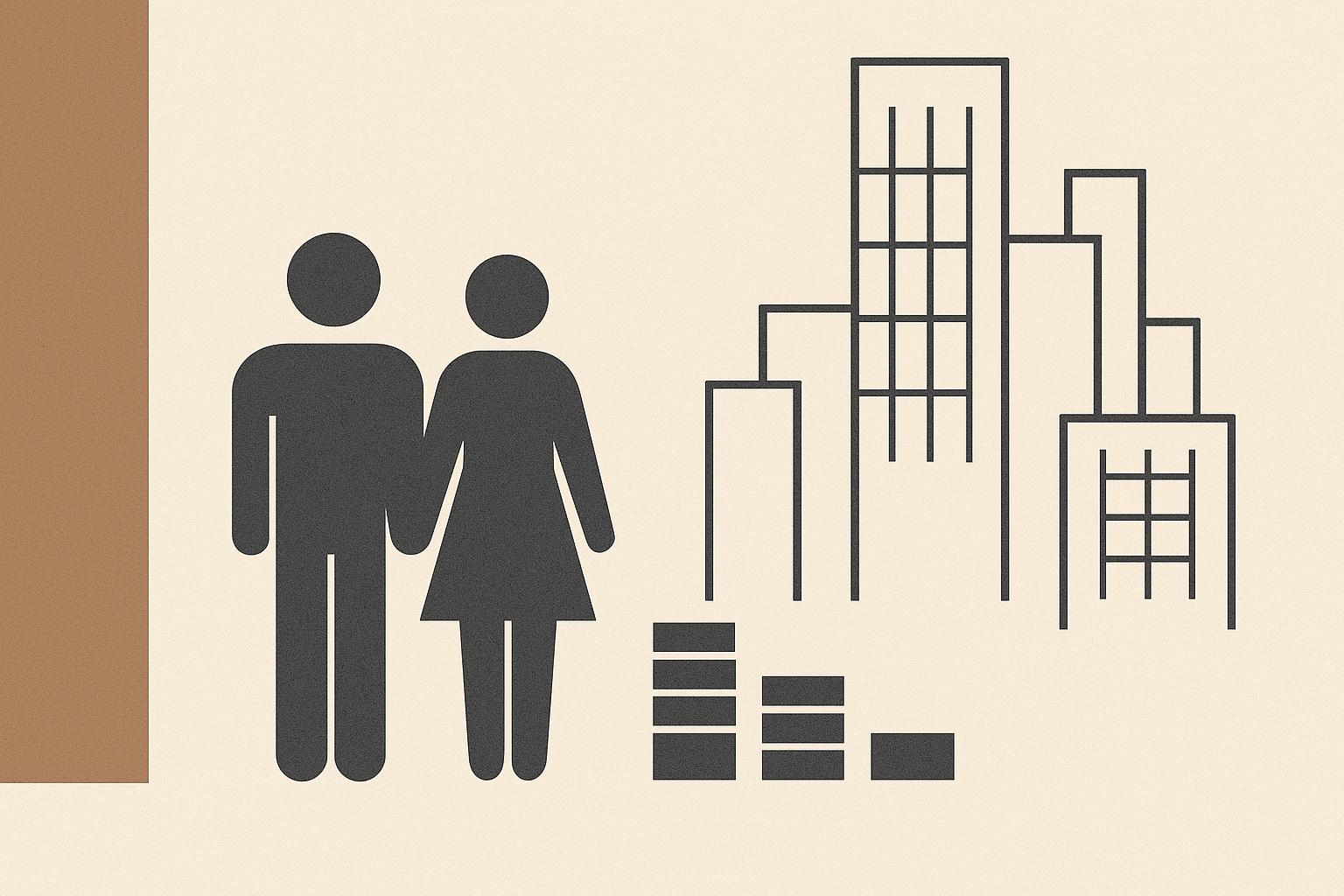
The DINK advantage begins with a simple structural condition: two incomes are supporting a household without child-related dependent costs. That does not guarantee wealth. It does, however, create an unusual amount of financial room when spending remains controlled.
That room matters more than the label.
DINK, meaning dual income with no kids, is often presented as a lifestyle identity built around travel, restaurants, convenience, and disposable income. Yet the stronger economic story is not consumption.
It is leverage.
When two earners share a cost base, income can grow faster than obligation. As a result, the household may have more capacity to save, invest, reduce debt, change careers, build a business, acquire property, or absorb disruption without immediate panic.
The real question, therefore, is not whether DINK households have an advantage. It is whether they convert that advantage into something that remains after the spending stops.
Definition
What the DINK Advantage Actually Represents
The DINK advantage is not merely two people bringing home paychecks. The advantage appears when two incomes support a cost structure that does not rise at the same pace as earnings.
Many expenses remain shared. Housing, utilities, internet, furniture, household supplies, and other basic costs do not automatically double because another adult is earning.
Shared Costs Can Create Financial Margin
When both adults earn and the household avoids excessive fixed costs, the gap between income and required spending can widen.
Groundwork Daily calls that gap margin .
Margin gives the household choices that are difficult to create when every dollar is already committed. It can fund reserves, reduce debt, support investing, or simply create breathing room when circumstances change.
That is why the advantage is structural rather than cosmetic.
Marketing vs Math
The DINK Advantage Is Bigger Than the Lifestyle Marketing
Popular culture tends to market DINK life through visible consumption. The images are familiar: travel, premium restaurants, nicer apartments, pets, convenience, and a little more freedom to spend.
There is nothing inherently wrong with enjoying those things.
However, the economic value of dual income is larger than what can be purchased this month.
Consumption Uses the Advantage. Ownership Extends It.
If spending rises every time income rises, the financial advantage narrows. A raise becomes a larger rent payment. A promotion becomes another vehicle payment. More money arrives, but very little new control is created.
By contrast, when some of that additional income remains unclaimed, the household can direct it toward things that continue producing value.
Comfort is useful. Yet comfort without structure can become drift, and drift quietly consumes the very leverage that made the comfort possible.
Optionality
The Strongest DINK Advantage Is Optionality
Income matters. However, the more powerful asset may be the range of choices that sufficient margin makes possible.
Choice 01
Time to Think
Financial margin can reduce urgency. As a result, career moves, purchases, and major decisions do not always have to be made under immediate pressure.
Choice 02
Room to Build
Surplus can support investments, skills, business equity, reserves, or other assets that increase future control.
Choice 03
Freedom to Correct
A household with liquidity can change direction earlier, before a bad decision becomes an expensive long-term commitment.
In other words, optionality allows the household to operate from intention rather than permanent reaction.
Direction
The DINK Advantage Needs Vision Before Budgeting
Many households begin financial planning with numbers. They calculate what is affordable, divide bills, and decide how much can be spent.
Those numbers matter. Still, the spreadsheet cannot decide what the household is trying to build.
A Budget Without Direction Can Still Fund Drift
Two people can manage money efficiently and still move toward different destinations.
One may want early financial independence. Another may prefer maximizing present comfort. One may want property. Another may prioritize mobility. Neither preference automatically wins because both people earn.
Therefore, alignment has to arrive before allocation.
Governing Question
What structure should exist five years from now because the household had two incomes today?
Once that answer is clear, the budget becomes an allocation system rather than a monthly permission slip.
Operating System
Four Moves That Turn the DINK Advantage Into Leverage
The advantage becomes durable when repeated financial choices keep surplus from disappearing into ordinary expansion.
Keep Fixed Costs Below Capacity
Housing, vehicles, subscriptions, and other recurring obligations should leave meaningful room below reliable household income. Otherwise, dual income quickly becomes dual dependency.
Remove Expensive Debt Early
High-interest debt consumes future income before the household gets to decide what that income should build. Reducing it returns control to the household.
Automate Saving and Ownership
Reserves, retirement contributions, investments, and other ownership goals should receive money before discretionary spending gets the chance to absorb it.
Assign Raises Before They Arrive
Decide in advance what portion of future raises or bonuses will increase lifestyle, reduce debt, strengthen reserves, or purchase assets. Otherwise, income expansion tends to become lifestyle expansion by default.
Continuity
What Happens After the DINK Advantage Changes
Some couples remain childfree. Others eventually have children, support aging parents, change careers, purchase homes, start businesses, or face new health and family obligations.
In every case, circumstances evolve.
Build an Advantage That Can Survive a Different Season
A household that used stronger earning years to reduce debt, build liquidity, acquire assets, and control fixed costs enters change from a different position.
By contrast, a household that converted most of its surplus into permanent overhead may discover that its comfort depended on circumstances staying exactly the same.
This is one of the hidden risks of DINK life .
The advantage is strongest when the household uses today’s capacity to make tomorrow less dependent on perfect conditions.
The Leverage Sequence
Turn Income Into Position
Two incomes → Shared costs → Margin → Direction → Allocation → Ownership → Optionality
Structural Takeaway
The DINK Advantage Is Capacity With a Deadline
The deadline is not necessarily children. It is change.
Careers change. Families change. Health changes. Housing changes. Priorities change. Eventually, the conditions that made today’s financial margin possible will not look exactly the same.
If the household has unusually strong capacity today, what is being built that will still matter when the conditions change?
That question is more useful than the label.
Income creates the opening. Structure converts the opening into leverage.

Groundwork Daily Core Principle
Discipline Before Dollars
Resources amplify the operating structure already present. More income becomes leverage only when discipline determines what happens to the surplus.
Explore the Principle →Continue Building
Follow the DINK Financial Architecture
Acceleration
DINK Wealth Velocity
How shared costs, aligned priorities, and disciplined allocation can turn dual income into financial acceleration.
Risk
Hidden Risks of DINK Life
How lifestyle creep, misalignment, and dependence on two salaries can quietly weaken the advantage.
Compounding
DINK Wealth Divergence
Why households with similar earning advantages can arrive at midlife in radically different financial positions.
Receipts
Sources Behind the Structure
Groundwork Architecture
Where This Article Lives
Groundwork Daily
Build the Structure Before You Need It
Groundwork Daily examines money, ownership, family, discipline, systems, and the decisions that determine what holds when pressure arrives.
Join the Groundwork List