
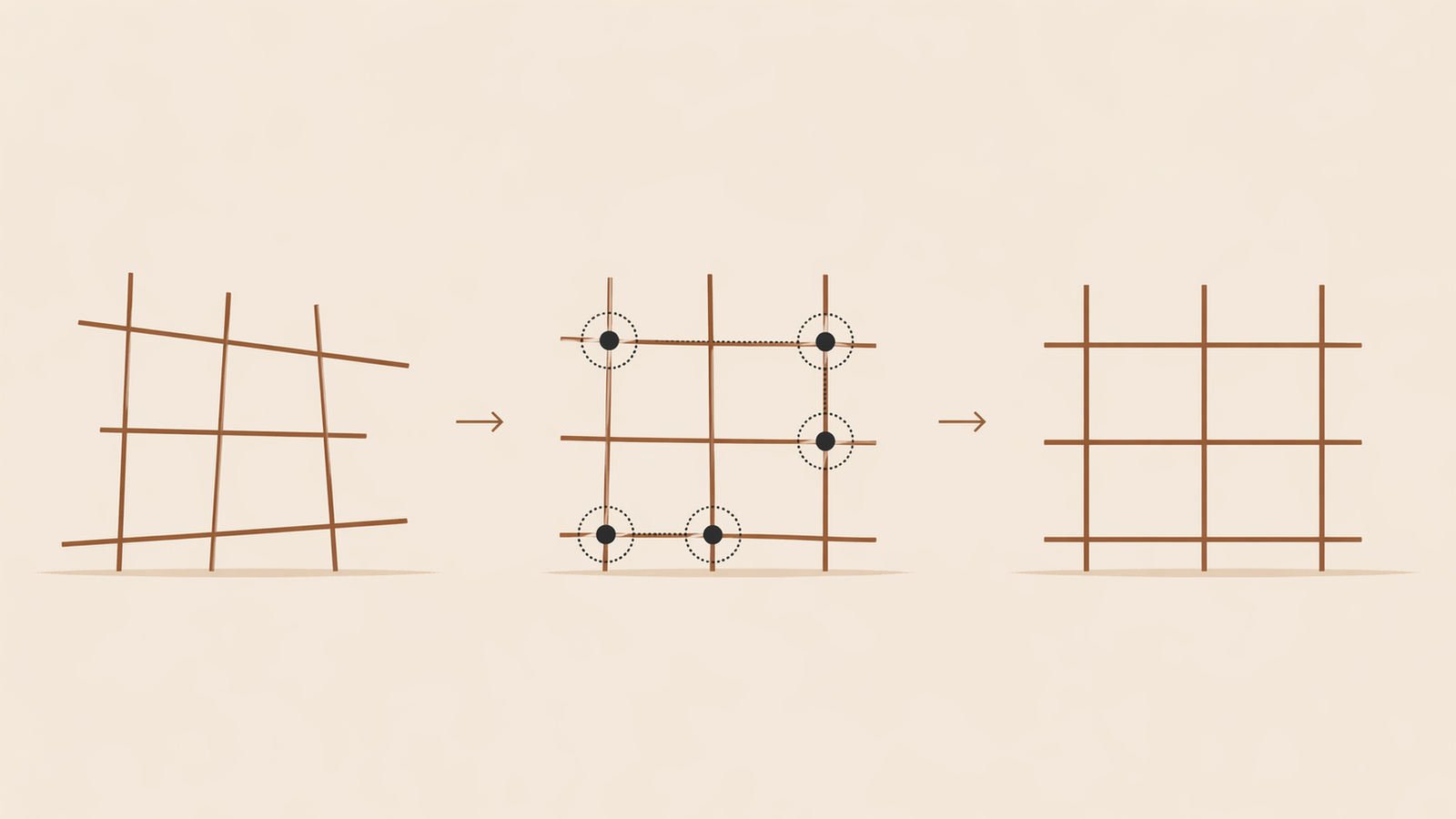
Fix a broken system by correcting the failure point, not by destroying everything around it.
Most people reach for a full reset too quickly. New plan. New rules. New language. New energy.
That may look decisive, but it can miss the real issue.
A system rarely fails everywhere at once. It usually breaks at a specific point. When that point stays hidden, the next version carries the same weakness under a cleaner name.
That is how broken systems repeat themselves.
To fix a broken system effectively, shift the focus from effort to structure. More effort may create temporary movement. Better structure creates repeatable stability.
Table of Contents
→ Fix a Broken System Without a Reset
→ Real-World System Repair Examples
→ How to Know the System Is Fixed
→ What Happens When You Fix the Wrong Thing
→ The Cost of Ignoring a Broken System
→ FAQ
Why Most Fixes Fail
Most repairs fail because they chase effort instead of structure.
People send more reminders. Teams schedule another meeting. Leaders create another checklist. At first, activity increases, so the situation feels better.
However, activity does not equal alignment.
If the same failure point remains, the system will break in the same place again. The meeting may feel useful. The reminder may create motion. The checklist may organize the moment. Still, the weakness survives.
Repair requires precision, not intensity.
This is why a system can look busy and still stay broken. Motion is not correction. A repair only works when it addresses the place where expectations, ownership, or follow-through stopped holding.
That distinction matters. When the failure point stays unclear, extra effort raises the cost of the same mistake. People work harder, but the work does not become more reliable. Pressure rises, yet trust does not improve.
A weak system can absorb enormous energy without producing stability. That is the trap. People mistake exhaustion for commitment and constant adjustment for progress.
A system is not repaired until the same issue stops returning in the same form.
What Breaks a System
Most systems break in predictable ways.
- Unclear expectations: People do not share the same definition of “done.”
- Weak ownership: Responsibility exists, but no one holds it clearly.
- Inconsistent follow-through: Standards exist, but no one reinforces them.
When these elements weaken, the system does not collapse immediately. First, it drifts. Then it distorts. After that, friction spreads. Eventually, the system breaks.
That sequence gives you a repair map.
When expectations lack clarity, define the standard. When ownership feels vague, assign a visible owner. When follow-through breaks, create a review rhythm that catches drift early.
Systems usually fail before people admit they are failing. The early signs look small. A missed handoff. A repeated question. A deadline that needs one more reminder. A decision that keeps circling without resolution.
Those signs are not random. They show that the structure has started losing its ability to carry weight.
For a deeper look at the breakdown pattern, read What Happens When Accountability Breaks Down.
How to Fix a Broken System
To fix a broken system, restore the three elements that make structure hold: clarity, ownership, and follow-through.
1. Use Clarity to Fix a Broken System
Define what success looks like. Remove vague language. State what must happen, when it must happen, and what finished means.
If five people can interpret the outcome five different ways, the system already has instability inside it.
Clarity reduces interpretation. Too much interpretation creates variation. Variation creates inconsistency. Once inconsistency becomes normal, accountability weakens.
Clear expectations do not need complexity. They need specificity. A system improves when people know what success requires before pressure arrives.
2. Use Ownership to Fix a Broken System
Every meaningful outcome needs a visible owner. Shared responsibility can sound mature, but without clear ownership it often becomes shared avoidance.
Ownership does not mean blame. It means one person holds the next move clearly enough for the system to advance.
Without ownership, work floats. Everyone knows something needs to happen, but no one carries structural responsibility for moving it forward. That gap creates delay.
Ownership gives the system a center of gravity.
3. Use Follow-Through to Fix a Broken System
Standards need reinforcement. Otherwise, they become suggestions.
Follow-through should have a rhythm. That rhythm may look like a weekly check, a simple status review, or a defined correction point. The goal is not control. The goal is early repair before small drift becomes structural damage.
Consistency turns standards into culture. Without reinforcement, even strong expectations fade.
Repair Rule:
If the same problem happens twice, it is no longer just a mistake. It is a system failure waiting for correction.
Fix a Broken System Without a Reset
Most systems contain working parts. Do not erase what still works. Isolate the failure point and repair the structure around it.
Start with three questions:
- Where does ownership become unclear?
- Where does the expectation become vague?
- Where does follow-through lose rhythm?
Fix those points first. As the corrections take hold, the rest of the system can stabilize around them.
This is how repair compounds without a full reset.
A reset often feels powerful because it creates a clean surface. Yet when the old failure pattern remains unnamed, the new system inherits the same weakness. That is not repair. That is repetition with better branding.
Repair without starting over requires discipline because it is less dramatic. It does not deliver the emotional satisfaction of tearing everything down. Instead, it asks a sharper question: what exactly stopped working?
That question may not feel glamorous, but it creates operational value.
For a broader framework on why structure protects freedom, read Structure Builds Freedom.
Diagnose Before You Repair
Most people misdiagnose broken systems because they focus on what they can see.
They see the missed deadline. They see the conflict. They notice the poor handoff. They track the unfinished task.
Visible problems often sit downstream from the real breakdown.
A missed deadline may not reveal a time problem. It may reveal an ownership problem. Repeated conflict may not reveal a personality problem. It may reveal an expectation problem. Constant escalation may not reveal weak leadership. It may reveal a missing decision pathway.
When the diagnosis is wrong, the repair will also be wrong.
This is how teams and individuals fall into the same loop. They add pressure where clarity is needed. They add motivation where ownership is missing. They add meetings where decision rules should exist.
To fix a broken system, move the diagnosis upstream.
Instead of asking only, “What went wrong?” ask a better question:
Where did the structure stop holding?
That question changes the conversation. It moves the response away from blame and toward correction.
Real-World System Repair Examples
System repair becomes clearer when it moves into real situations. The structure stays the same. The context changes.
Work Example: Fix a Broken System Around Deadlines
A team misses deadlines over and over. At first, the issue looks like poor time management. The real problem may be unclear ownership.
Fix: Assign one owner per deliverable. Define what “done” means. Set one weekly follow-through check.
Result: Deadlines stabilize because responsibility becomes visible before pressure arrives.
The meeting itself does not matter most. The system improves because it now has a visible owner, a clear outcome, and a rhythm for correction.
Personal Example: Fix a Broken System Around Habits
A habit breaks after a few days. The issue appears to be lack of discipline. In reality, the expectation may be undefined.
Fix: Define the habit precisely. Same time. Same trigger. Same action.
Result: Consistency improves because the system removes ambiguity.
Many personal systems fail because they depend on mood. A habit becomes stronger when the decision has already been made before the moment arrives.
Relationship Example: Fix a Broken System Around Conflict
The same argument keeps returning. It may look emotional, and sometimes it is. Still, the deeper issue may involve undefined standards.
Fix: Clarify expectations. Agree on boundaries. Name what follow-through looks like.
Result: Conflict decreases because the structure stabilizes behavior.
This does not remove every disagreement. It removes the confusion that makes disagreement repeat without resolution.
Leadership Example: Fix a Broken System Around Escalation
A leader keeps getting pulled into small problems that should have ended earlier. The issue may look like team weakness. The actual problem may involve an unclear decision pathway.
Fix: Define who decides, who informs, and when escalation becomes necessary.
Result: Fewer issues reach crisis level because the system handles routine pressure earlier.
Strong leadership does not mean absorbing every problem. It means designing a system where the right problems reach the right level at the right time.
How to Know the System Is Fixed
A system is not fixed because it works once.
It is fixed when it holds repeatedly under normal pressure.
This matters because many repairs create temporary calm. Everyone pays attention for a week. The reminders increase. The meetings feel sharper. The energy feels new.
Then the old pattern returns.
A real repair produces different signals:
- Consistency: The same outcome happens without excessive intervention.
- Clarity: People understand expectations without repeated explanation.
- Stability: The system holds even when conditions shift.
If those signals do not appear, the system still needs work. It may have temporary stability, not structural repair.
Temporary stabilization can buy time. Do not confuse it with a real fix.
A real fix reduces the need for constant correction.
What Happens When You Fix the Wrong Thing
Fixing the wrong part of a system can make the problem worse.
When effort hits the wrong point, pressure increases while structure stays weak.
This creates three predictable outcomes:
- People need more effort to produce the same result.
- Frustration spreads across the system.
- Trust in the system declines.
Over time, people stop relying on the system and begin compensating for it manually.
That is where breakdown accelerates.
The system still exists, but it no longer carries the load. People carry the load instead.
That cost is real. It drains attention, morale, and decision quality.
The Cost of Ignoring a Broken System
When a broken system does not receive repair, the cost spreads quietly.
- Time disappears into repeated work.
- Energy drains through friction.
- Trust declines through inconsistency.
- Good people compensate for bad structure.
- Small problems become normal operating conditions.
Eventually, the system depends on effort instead of structure.
That model cannot hold.
Systems that depend on constant effort wear people down. Systems that run on structure give people room to work clearly. That distinction matters in leadership, relationships, habits, and institutions.
The Harvard Business Review has written about accountability as a practice that clarifies expectations and improves performance instead of relying on pressure alone (HBR).
The Groundwork
Fixing a broken system is not about working harder. It is about restoring clarity, ownership, and consistency.
When those elements line up, systems stabilize naturally. When they do not, failure repeats.
The goal is not perfection. The goal is alignment that holds under pressure.
If the same problems keep returning, the system has not received correction. It has received tolerance.
That is the line. Once the pattern becomes visible, tolerance becomes a choice.
Continue Building
System repair does not stand alone. Move through the full accountability structure below.
→ Framework: Accountability: A Structural Guide
→ Structure: Structure Builds Freedom
→ Detection: 5 Signs Your System Is Failing
→ Breakdown: What Happens When Accountability Breaks Down
→ Comparison: Examples of Accountability vs Lack of Accountability
Frequently Asked Questions
Can you fix a broken system without starting over?
Yes. Most systems fail at specific points. Fixing those points usually works better than resetting everything.
What is the first step to fix a broken system?
The first step is clarifying expectations so outcomes no longer stay open to interpretation.
Why do broken systems repeat failure?
Broken systems repeat failure because no one corrected the original breakdown at the structural level.
What usually breaks a system?
Unclear expectations, weak ownership, and inconsistent follow-through usually break a system.
Why is a full reset not always the answer?
A full reset can hide the real failure point. If the original weakness remains, the new system may repeat the same problem.
By The Groundwork Perspective | Pillars
