

Haiti and Dominican Republic independence cannot be reduced to two dates on the same island. Haiti declared independence from France on January 1, 1804 after the Haitian Revolution. Forty years later, the Dominican Republic declared independence from Haitian rule on February 27, 1844 after a different sequence of colonial rule, political transition, unification, and separation.
These were not two versions of the same independence movement. Instead, they emerged from different political conflicts, institutional environments, and historical pressures. Treating them as one story makes both histories less accurate.
Even so, the two histories eventually produced one durable structural fact: two sovereign states occupy a single connected landmass. Political authority separated, while geography continued to connect consequences.
That distinction changes the question this history can answer. Independence determines who possesses sovereign political authority. However, it does not remove the economic, environmental, security, migration, trade, and administrative pressures that can move across a border.
Hispaniola therefore offers a useful institutional case study. Separate sovereignty and practical interdependence can exist at the same time. The challenge is not to erase the boundary between the two states, but to understand what that boundary can control, what it cannot control, and where disciplined coordination may reduce pressure without weakening national authority.
Haiti and Dominican Republic Independence Came From Different Histories
The first analytical mistake is to make the island tell one clean national story. Haiti and the Dominican Republic share Hispaniola, but geography is not the same thing as political history. Different colonial regimes, conflicts over sovereignty, international pressures, and domestic political movements shaped each state.
Haiti emerged from a revolution against one of the Atlantic world’s most profitable slave colonies. By contrast, the Dominican Republic emerged four decades later after a separate history that included Spanish colonial rule, a brief declaration of independence in 1821, incorporation into the Haitian state beginning in 1822, and Dominican separation in 1844.
Historical accuracy therefore requires two moves at once. The independence histories must remain distinct. At the same time, the political arrangement they eventually created must be examined within a shared geographic environment.
Four Dates Clarify the Political Structure
1804
Haitian Independence
Haiti declares independence from France after the Haitian Revolution.
1822
Island Under Haitian Rule
Jean-Pierre Boyer’s government extends Haitian authority across the eastern side of Hispaniola.
1844
Dominican Independence
Dominican separatists establish a new republic independent from Haiti.
1865
Restoration
Dominican sovereignty is restored after the 1861 annexation to Spain.
Haiti’s Independence in 1804 Changed the Atlantic Political Order
The Haitian Revolution began in 1791 in the French colony of Saint-Domingue. Enslaved people, free people of color, revolutionary leaders, colonial authorities, foreign armies, and competing imperial powers all became part of the conflict. Over time, the struggle changed direction repeatedly before French forces were defeated.
On January 1, 1804, Haiti declared independence. The new country became the second independent republic in the Western Hemisphere after the United States and the first independent Black republic. Its existence demonstrated that people who had lived under a racial slave regime could defeat imperial power and establish sovereign government.
Moreover, that achievement had consequences far beyond the island. Governments throughout the slaveholding Atlantic world had to respond to a state created through a successful revolt against slavery and colonial rule. Haiti had won sovereignty, but recognition, diplomacy, trade, security, and public finance remained separate institutional problems.
Independence Did Not Remove External Constraints
France did not formally recognize Haitian independence until 1825. Recognition came with a large indemnity imposed on Haiti in exchange for French acceptance of its sovereignty. Although the financial obligation was later renegotiated, the arrangement added a major external burden to a young state already rebuilding after years of war.
The United States also withheld diplomatic recognition for decades and did not formally recognize Haiti until 1862. Consequently, Haiti’s sovereignty operated inside an international environment that constrained access to recognition, capital, markets, and diplomatic relationships.
This history reveals a distinction that matters throughout the article. Winning political authority and building the capacity to sustain that authority are related, but they are not the same task.
Go Deeper Into the Haitian System
The broader Haitian Revolution cannot be compressed into a supporting section here. Its internal political conflicts, military campaigns, international consequences, and post-independence pressures deserve separate treatment.
For that deeper analysis, continue with The Haitian Revolution System: Freedom Under Pressure .
Dominican Independence in 1844 Followed a Different Political Sequence
The Dominican Republic’s founding cannot be treated as a later chapter of the Haitian Revolution. The eastern part of Hispaniola had its own colonial and political history, including Spanish rule and changing imperial control. In 1821, José Núñez de Cáceres declared a short-lived independence from Spain in the political entity often called Spanish Haiti.
That arrangement did not endure. In 1822, Haitian president Jean-Pierre Boyer extended his government’s authority across the eastern portion of the island. Haitian rule then lasted until 1844, when a Dominican independence movement led by figures associated with La Trinitaria established a separate republic.
As a result, a new sovereign boundary emerged on an island that had already experienced overlapping imperial claims, political division, military conflict, and competing ideas about authority. Dominican independence was therefore its own founding event, not an extension of Haiti’s earlier revolutionary process.
Historical Language Matters
Historical Language Note
The period from 1822 to 1844 is described differently across Haitian, Dominican, and international historical traditions. Terms such as unification, Haitian rule, and occupation carry different political and interpretive weight. For clarity, this article uses Haitian rule as a descriptive institutional term while recognizing that the period remains central to competing national memories.
Dominican Sovereignty Was Not Immediately Secure
Independence in 1844 did not end the Dominican Republic’s vulnerability. Conflict with Haiti continued, while Dominican leaders also confronted internal political instability, limited fiscal resources, and continuing concerns about external power.
In 1861, President Pedro Santana placed the Dominican Republic under Spanish sovereignty through annexation. Resistance followed. Eventually, the Restoration War ended Spanish rule, and Dominican independence was restored in 1865.
Once again, the distinction between declaration and durability becomes visible. Establishing political authority is one achievement. Maintaining that authority through internal and external pressure requires functioning institutions over time.
Go Deeper Into Dominican Independence
The Dominican story also deserves treatment on its own terms. Its independence movement, the politics of separation, subsequent annexation, and Restoration period cannot be understood fully through Haiti’s history alone.
Continue with Dominican Independence in 1844: Sovereignty After Separation .
Separate Sovereignty Changed Who Had Authority
Once Haiti and the Dominican Republic existed as separate sovereign states, the political structure of Hispaniola changed fundamentally. Each government possessed its own jurisdiction, citizenship rules, institutions, legal system, diplomatic relationships, and responsibility for governing its territory.
Sovereignty matters because responsibility requires boundaries. A government must know what it controls, what duties belong to it, which laws apply, and where another government’s authority begins. Otherwise, accountability becomes difficult because responsibility is unclear.
Yet sovereignty does not mean total insulation. A political border can separate legal authority more effectively than it can separate rivers, storms, disease, trade, labor demand, migration, or ecological pressure.
Jurisdiction and Interdependence Can Exist Together
Analysis can slip into a false choice here. One interpretation treats the countries as completely separate systems. Another uses their shared island to imply that political differences should become secondary.
Neither approach is sufficient. A more accurate framework is layered: Haiti and the Dominican Republic are separate political systems, yet some pressures cross the line between them. Certain functions should remain firmly inside national jurisdiction, while others may require communication or limited coordination.
Therefore, sovereignty is not weakened merely because governments cooperate at specific points. The stronger test is whether that cooperation preserves clear authority, responsibility, and limits.
Sovereignty Still Depends on State Capacity
Independence gives a state the authority to govern. Capacity determines how reliably that authority becomes public function. Governments still need revenue, administrative competence, infrastructure, records, public institutions, border systems, security capacity, and the ability to implement decisions.
Legal sovereignty can therefore coexist with severe operational constraints. A government may formally control a policy area while lacking the resources, institutional reach, personnel, legitimacy, or administrative systems needed to produce the intended result.
The Groundwork Condition of Capacity provides the relevant test: what can a system reliably carry without unacceptable degradation?
Capacity Differences Can Become Cross-Border Pressure
The two countries do not possess identical economic resources, institutional capabilities, or exposure to crisis. Because of those differences, large capacity gaps can influence migration, labor markets, commerce, humanitarian demand, security policy, environmental management, and political pressure.
Such pressure does not make one state responsible for governing the other. Instead, it shows that the operating environment contains feedback. Severe disruption inside one national system can produce consequences that another sovereign system must then manage.
For that reason, the better institutional question is not whether the countries should become more integrated. It is where pressure travels, which government has authority at each point, and whether the relevant institutions have enough capacity to carry the resulting load.
Shared Geography Creates Consequences No Border Can Fully Contain
Hispaniola is more than the location where two governments happen to exist. The island itself contains shared physical systems. Watersheds cross or form parts of the international boundary, major storms affect both countries, and environmental degradation can move through connected ecosystems.
Border communities also depend on economic and social relationships that do not stop neatly at a customs post. Consequently, physical geography and human activity both create points where separate national systems meet.
Environmental Systems Cross the Border
The United Nations Environment Programme has documented links among transboundary natural resources, economic conditions, governance, and recurring tension in the border region. That evidence gives the systems argument a concrete foundation.
Some problems are cross-border because the underlying mechanism is physically cross-border. Watersheds, land degradation, disaster exposure, and environmental pressure do not become national simply because a legal boundary exists.
Migration and Commerce Create Another Interface
Human movement creates a second layer of connection. International Organization for Migration monitoring has documented recurring movement across the border, including commercial activity involving Haitian and Dominican border communities.
Trade and migration therefore create institutional interfaces alongside environmental ones. Customs systems, labor rules, documentation, border enforcement, and market demand all shape how those movements are managed.
Shared Consequence Does Not Require Shared Government
Recognizing interdependence does not require political integration. Governments can remain sovereign while establishing procedures for specific problems that cross jurisdictional lines.
Emergency communication, watershed management, lawful commerce, customs coordination, migration administration, and public-health information are examples of areas where clear interfaces can matter. In each case, coordination can support rather than erase jurisdiction.
This distinction is explored more fully in The Governance Problem of Hispaniola .
The Stronger Model Is Selective Coordination
Coordination becomes useful when a shared mechanism cannot be managed effectively through unilateral action alone. Still, coordination should not expand without limit. The objective is to design the point of contact between separate systems rather than leave that contact to improvisation.
A useful distinction exists between integration and alignment. Integration tends to combine systems or functions. Alignment allows separate systems to remain separate while making their actions compatible where a shared outcome depends on both.
On Hispaniola, that distinction matters. The objective is not political convergence. Instead, the practical goal is enough institutional alignment to manage specific cross-border pressures while preserving separate sovereignty.
Where Coordination Can Serve Separate Sovereign Interests
- border administration and customs procedures
- formal trade and infrastructure interfaces
- lawful migration and labor administration
- watershed and environmental management
- disaster preparedness and emergency communication
- public-health information sharing where cross-border risks emerge
These are points of contact, not a theory of shared government. In each case, stronger design keeps responsibility visible. Institutions should know who decides, who implements, what information must move, which limits remain in place, and how failure will be corrected.
Alignment Without Boundaries Becomes Ambiguity
The Groundwork Condition of Alignment asks whether purpose, priorities, authority, incentives, resources, and action point in compatible directions. That makes it useful for cross-border coordination because compatibility does not require sameness.
At the same time, alignment depends on Boundaries . Without clear limits around authority and responsibility, cooperation can create confusion instead of capacity.
The two Conditions therefore work together. Boundaries protect sovereign responsibility, while Alignment governs the interfaces where separate responsibilities meet.
What These Independence Histories Do Not Prove
The historical record does not support a universal sequence in which every new country moves neatly from independence to exposure, system design, and stability. History is not that orderly. Forcing the two countries into one developmental sequence obscures more than it explains.
States inherit different institutions, economies, social structures, military threats, international relationships, geography, leadership, and access to capital. Wars intervene, political coalitions change, and foreign powers alter incentives. Meanwhile, institutional development can advance in one area while deteriorating in another.
Hispaniola should therefore not be used to manufacture a universal sovereignty maturity ladder. The history supports a narrower and more defensible claim.
The Defensible Pattern Is Institutional, Not Sequential
Independence establishes political authority. Capacity affects what that authority can reliably carry. Boundaries define where responsibility begins and ends.
Continuity also matters because essential functions must survive leadership changes, crises, and institutional turnover. Alignment becomes important wherever separate systems need to interact. These structural requirements may appear together, but they do not unfold in one mandatory order.
This is a more useful way to read the histories of Haiti and the Dominican Republic. The lesson is not that both nations followed the same developmental path. Rather, sovereignty creates responsibilities that institutions must continue carrying long after the founding moment has passed.
Historical Precision Strengthens the Systems Argument
There is no analytical advantage in making the two histories more alike than they were. Haiti’s revolution against French colonial slavery and Dominican independence from Haitian rule answered different political problems. Their historical memories also remain distinct and politically significant.
Once those differences are respected, the systems connection becomes easier to see. Two national projects emerged with separate authority and institutional obligations. Nevertheless, selected pressures continued moving across the same island.
That is the enduring governance problem. Difference does not eliminate contact, while contact does not eliminate sovereignty.
The Groundwork
Two Independence Histories Created Two States on One Island
Haiti and the Dominican Republic did not emerge from one independence movement. Haiti declared independence in 1804 after revolution against French colonial slavery. The Dominican Republic established separate sovereignty in 1844 after a different political history on the eastern side of Hispaniola.
Keeping those histories distinct is essential because historical precision protects the analysis from a false comparison. Once that distinction is secure, the structural relationship becomes clearer.
Separate sovereignty determines who governs. Capacity determines what each government can reliably carry. Boundaries protect authority and responsibility, while Alignment matters where environmental, economic, administrative, or human movement crosses the line between the two systems.
Ultimately, the lesson is not that the countries need to become more alike. Political independence and geographic interdependence can exist at the same time. Two histories created separate states, yet one island ensures that some consequences will still meet at the border.
Groundwork Architecture
The Structure Under This Article
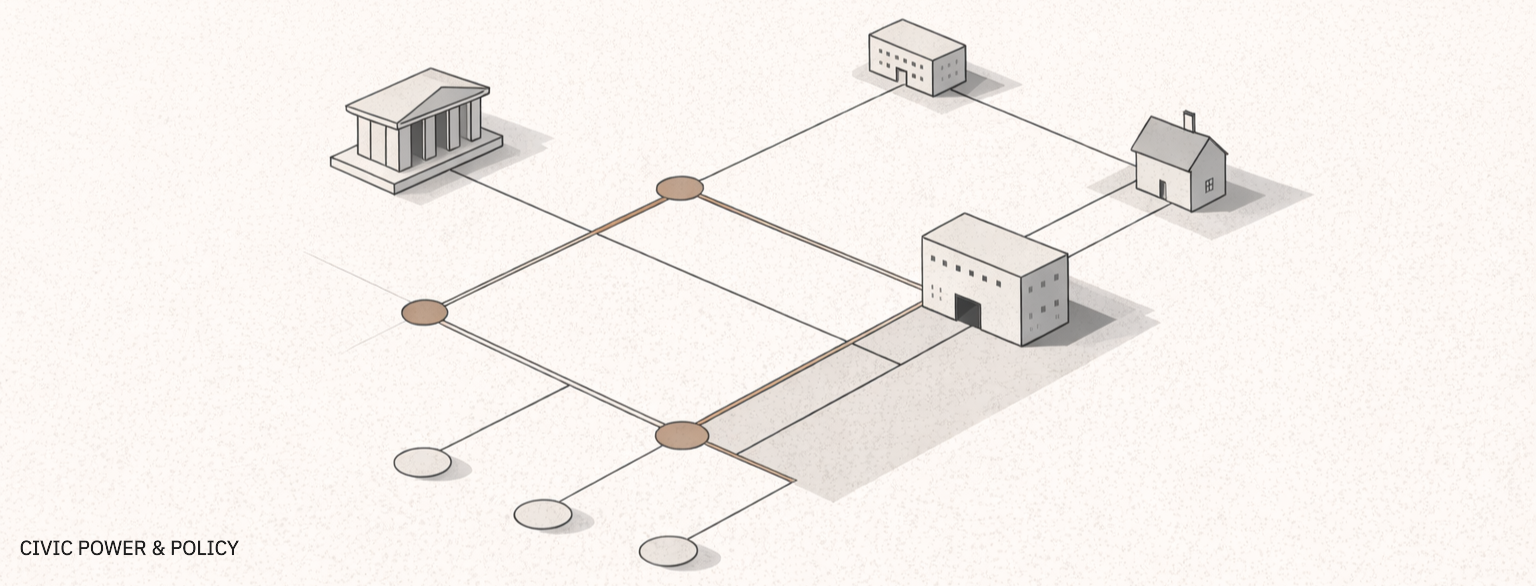
This article examines a durable institutional problem: separate sovereign systems can remain politically independent while still facing consequences created by shared geography. Strong governance must therefore protect authority while managing the points where those systems meet.
Core Principle
Sovereignty must become durable institutional capacity rather than remain only a founding declaration.
Primary Condition
Separate systems need compatible action at specific points where shared consequences require coordination.
Supporting Conditions
Capacity determines what each state can carry, while Boundaries preserve jurisdiction, responsibility, and political authority.
Continue Building
Continue through the histories and systems that make Hispaniola’s modern governance relationship easier to understand.
→ Haitian History: The Haitian Revolution System: Freedom Under Pressure Follow Haiti’s revolutionary break with French colonial rule and the institutional pressures that followed independence.
→ Dominican History: Dominican Independence in 1844: Sovereignty After Separation Examine the distinct political sequence that produced the Dominican Republic.
→ Island Framework: The Governance Problem of Hispaniola Move from independence history into the modern institutional problem created by separate sovereignty and shared geography.
→ Related System: The Migration Systems Framework Understand how migration pressure moves through labor markets, institutions, borders, incentives, and state capacity.
Meet the Builder

Langston Reed
Builder · Civic Power & Policy
Langston Reed examines institutions, governance, public policy, authority, and the systems that translate political decisions into everyday conditions.
His work moves beneath visible events to identify the actors, rules, resources, constraints, and institutional pressures producing the outcome. As a result, the reader receives a durable civic framework rather than a reaction to a single moment.
“Headlines describe movement. Systems explain movement.”
Reader Promise: Move past the visible event and understand the system underneath it.
Receipts
→ U.S. Department of State, Office of the Historian | The United States and the Haitian Revolution, 1791–1804 Establishes the Haitian Revolution timeline, Haiti’s emergence as an independent republic, and the wider diplomatic context surrounding the revolution.
→ U.S. Department of State, Office of the Historian | Haiti Provides the diplomatic recognition chronology for Haiti, including formal United States recognition in 1862.
→ U.S. Department of State, Office of the Historian | Dominican Republic Documents Dominican independence in 1844, annexation to Spain in 1861, and restored independence in 1865.
→ United Nations Environment Programme | Haiti and the Dominican Republic: Environmental Challenges in the Border Zones Documents transboundary environmental pressures and the relationship among natural resources, economic conditions, governance, and border-zone tension.
→ International Organization for Migration | Cross-Border Flow Monitoring Provides evidence of recurring migration, commercial movement, and cross-border activity involving Haiti and the Dominican Republic.
External source availability and URLs can change. Groundwork Daily verifies sources at publication and maintains Receipts as the research trail behind the article.