

System Updates examines the gap between the stories institutions tell about themselves and the structures that actually determine outcomes.
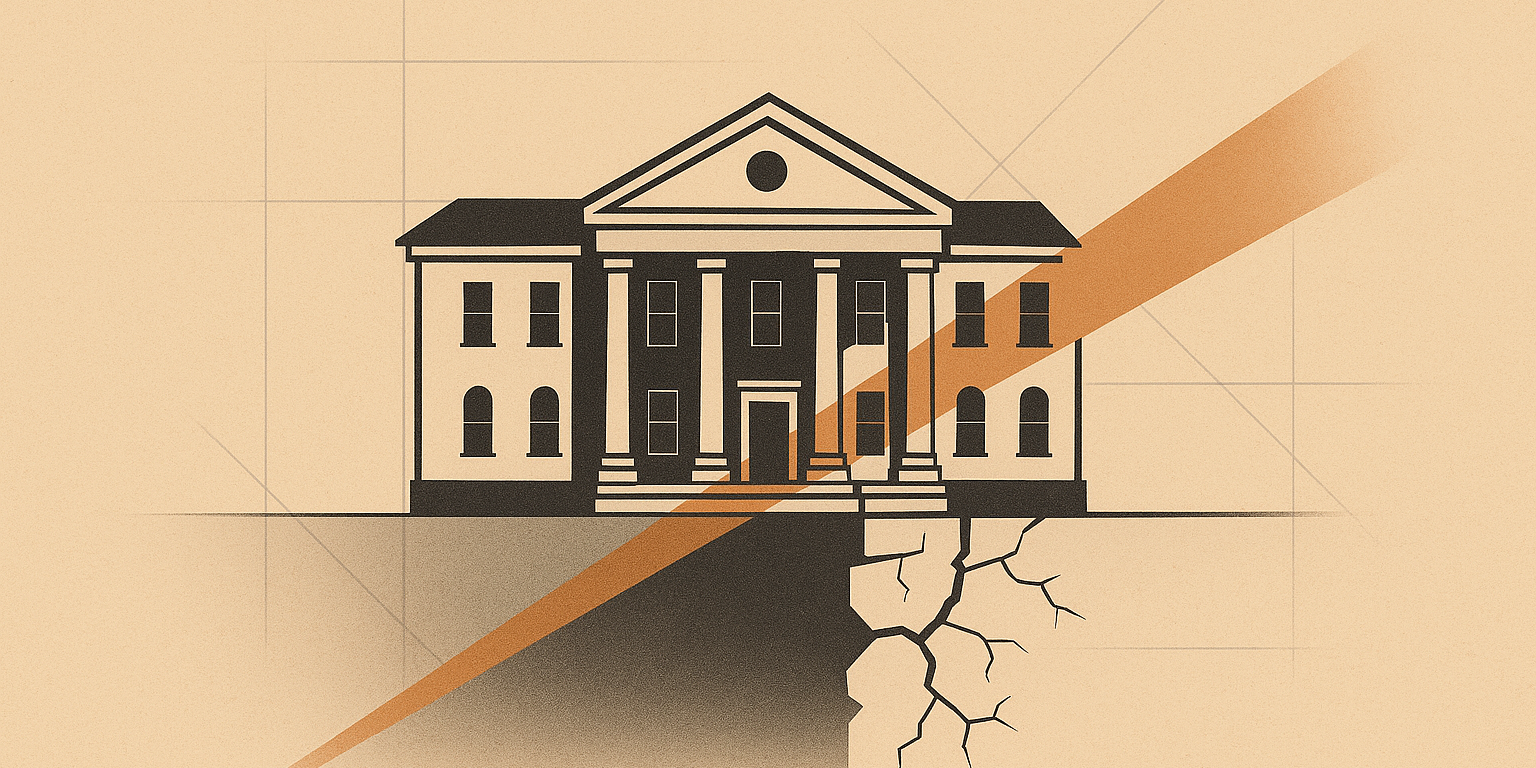
The history of free college in America is more complicated than either side of the modern tuition debate usually admits. Parts of American public higher education were tuition-free, or close to it, for long periods. However, the United States never operated a universal system in which every student could attend every public college without cost.
What changed was not simply that government once paid for college and then stopped. The financing architecture changed. Public appropriations, tuition, grants, loans, fees, institutional resources, and household payments were combined in different ways over time.
That distinction matters because every financing system places the bill somewhere. When one part of the system absorbs less pressure, another part must absorb more.
This history is therefore not only about whether college used to be free. It is about who financed public higher education, how that responsibility moved, and which institutions carried the risk when the system came under pressure.
Was College Ever Free in America?
Yes, in important places and for important groups of students, but never universally. New York City’s municipal colleges maintained a long tuition-free tradition. California built a public higher-education model that kept instruction at the University of California tuition-free for state residents while still charging other fees. Other states and institutions also used substantial public subsidy to keep student prices low.
The larger change came when more of the cost began moving through tuition, grants, student loans, required fees, and household payments rather than being absorbed primarily through direct public support to institutions.
What Does the History of Free College in America Actually Show?
The historical record shows several different systems operating at once. Some public colleges charged no tuition. Others charged modest tuition or mandatory fees. Some governments funded institutions directly, while others increasingly directed assistance toward students through grants and loans.
That means the phrase free college can obscure more than it explains. A college can charge no tuition while students still face housing, transportation, books, food, fees, and lost work hours. Likewise, a college can charge tuition while public grants reduce the actual price paid by some students.
The durable policy question is therefore not whether higher education is literally free. It is how the cost is distributed and who carries the financial risk when the system comes under pressure.
When Did Free College in America Begin to Change?
There was no single year when America moved from free college to paid college. The transition happened through a series of institutional changes across cities, states, universities, and the federal government.
1847: New York State chartered the Free Academy of the City of New York, the institution that later became City College. The academy opened in 1849 with a mission centered on providing qualified students access regardless of wealth.
1944: The Servicemen’s Readjustment Act, commonly known as the GI Bill, dramatically expanded federal support for eligible veterans pursuing education and training after World War II.
1958: The National Defense Education Act expanded the federal role in education, including student lending, in response to concerns about national scientific and technical capacity.
1960: California’s Master Plan for Higher Education formalized a coordinated system among the University of California, California State Colleges, and community colleges. The framework preserved a principle of tuition-free instruction for California residents at public institutions while permitting student fees.
1965: The Higher Education Act expanded federal financial assistance and helped build the modern architecture through which federal resources could follow students into colleges and universities.
1970: CUNY implemented open admissions, substantially widening access to New York City’s public colleges. In California, UC also introduced an Educational Fee, marking an important shift in the financing model even though the distinction between tuition and fees remained politically significant.
1976: During New York City’s severe fiscal crisis, CUNY began charging tuition, ending its long-standing tuition-free policy.
The timeline matters because it shows that the system changed through several channels. Institutional funding changed. Eligibility changed. Federal aid expanded. Tuition and fees grew. Political responsibility also moved among cities, states, institutions, families, and the federal government.
Why Did Tuition-Free Public College Decline?
Tuition-free public higher education became harder to sustain as systems expanded, operating costs grew, public budgets faced competing demands, and political coalitions changed. More students were entering college. Campuses required more infrastructure. State and local governments had to decide how much of the cost taxpayers would continue to absorb directly.
The result was not the disappearance of public spending. Governments continued funding higher education. Instead, the financing mix changed. Institutions relied more heavily on tuition and fees, while federal and state governments increasingly used grants, loans, tax benefits, and other student-directed support.
That shift can preserve access in important ways. It can also move more responsibility onto students and households.
The institutional question is not whether government remains involved. It is where government intervenes in the payment chain.
How Is Public College Actually Paid For?
A simplified public higher-education system can place financial responsibility in several places:
Institutional subsidy: Government appropriates more money directly to colleges, reducing the amount institutions need to collect from students.
Student grants: Government allows tuition to exist but lowers the student’s net price through aid that does not need to be repaid.
Student lending: Students gain access to money now but accept an obligation against future income.
Household payment: Students and families absorb more of the price through earnings, savings, family transfers, or private borrowing.
Real systems use all four. Policy determines the proportions.
When Did CUNY Stop Being Free?
CUNY is one of the clearest examples of why the history of free college in America cannot be reduced to a slogan. New York City’s tuition-free municipal college tradition traces back to the Free Academy, chartered in 1847 and opened in 1849. The institution was designed around the idea that academic ability, rather than family wealth alone, should determine access to higher learning.
More than a century later, CUNY became central to another major access fight. Open admissions began in 1970 after sustained pressure over the exclusion of Black and Puerto Rican students from the city’s senior colleges. The policy dramatically widened access and changed who could enter the university system.
Then New York City’s fiscal crisis placed the financing structure under extraordinary pressure. In 1976, CUNY began charging tuition. New York State assumed greater responsibility for financing the senior colleges, and state tuition-assistance mechanisms became more important to the system.
This history should not be flattened into the claim that expanded access itself caused tuition. Race, class, public finance, political conflict, enrollment, and the city’s fiscal emergency all shaped the period.
The institutional lesson is more useful: expanding access without a durable financing structure can leave that access vulnerable when revenues collapse or political priorities change.
Was the University of California Really Tuition-Free?
California offers another important example, but the terminology requires precision. The University of California historically maintained a distinction between tuition and fees. California residents could attend without formal tuition charges for instruction, while students still paid various required fees.
The 1960 Master Plan for Higher Education preserved that principle while organizing the state’s public system into distinct institutional roles. The University of California, state colleges, and community colleges were expected to serve different segments of the population while remaining part of a coordinated public structure.
Over time, however, required charges grew. UC’s addition of an Educational Fee in 1970 became an especially visible sign that the old financing settlement was changing.
Calling that history simply “free college” misses the mechanism. California had built a model in which taxpayers absorbed a large share of instructional costs while students carried other costs. As the state changed the amount and form of support, more of the financial burden could move toward students without the public system itself disappearing.
Did Ronald Reagan End Free College in California?
No single governor ended California’s tuition-free model by himself, but Ronald Reagan was an important force in changing it.
After taking office in 1967, Reagan explicitly advocated tuition and proposed substantial reductions in University of California spending. His administration challenged the existing financing settlement at the same time that California was experiencing intense political conflict over UC Berkeley, student protest, public spending, and university governance.
The formal authority to impose UC student charges did not belong to Reagan alone. The University of California had its own constitutional governance structure, and the Board of Regents ultimately imposed the Educational Fee.
That distinction is essential. Formal authority and political causation are not identical. A governor can change budgets, shape public expectations, create pressure, participate in governance, and alter the political cost of maintaining an existing system without personally signing the final institutional decision.
How Did Federal Student Aid Change Who Pays for College?
The federal government’s growing role in higher education changed the financing system again. Rather than operating most colleges directly, Washington increasingly helped individuals finance attendance at institutions run by states, local governments, nonprofit organizations, and private entities.
The GI Bill demonstrated the scale of demand that could be unlocked when federal resources followed eligible students. Later federal programs expanded grants and lending. The Higher Education Act of 1965 became a major foundation of that architecture.
Student-directed aid has important advantages. It can make resources portable. It can help students attend institutions beyond the boundaries of their local tax base. Grants can lower net prices for students with limited financial resources.
Loans operate differently. A loan solves a liquidity problem today by creating an obligation against tomorrow’s income. That can expand immediate access, but it also means part of the risk that once sat with taxpayers or institutions can sit on household balance sheets instead.
The existence of student aid therefore does not prove that government withdrew from higher education. In many cases, government remained deeply involved. The intervention simply moved farther downstream.
Did States Stop Funding Public Colleges?
No. States continue to provide substantial funding to public colleges and universities, and recent funding trends are more complicated than a simple story of uninterrupted decline.
State support has recovered in many places since the severe reductions associated with earlier recessions, and recent years have seen net tuition reliance fall in numerous states. However, the long-run financing balance still looks very different from the one that existed several decades ago.
Data compiled by the State Higher Education Executive Officers Association show that net tuition revenue per full-time-equivalent student remains substantially above 1980 levels in nearly every state. Recent improvements in state support therefore do not erase the much longer movement toward greater student contribution.
This is why snapshots can mislead. A state can increase appropriations this year while still operating a system in which students carry a much larger share of costs than earlier generations did.
How Did College Costs Shift Toward Students?
The most useful way to understand the modern system is through risk allocation. Every institution has costs that continue even when revenue conditions worsen. Faculty must be paid. Buildings must be maintained. Technology must be replaced. Students still require advising, libraries, laboratories, financial-aid administration, security, and academic support.
If taxpayers promise to absorb most of that volatility, the political system carries more of the risk. If institutions must balance their budgets through tuition, students carry more of it. If students borrow, lenders and government programs can absorb some immediate financing risk while the borrower carries repayment risk over time.
This is where the student-loan system becomes structurally important. According to the Federal Reserve Bank of New York, outstanding student loan balances stood at approximately $1.65 trillion at the end of the second quarter of 2026.
That figure does not mean every dollar represents public-sector tuition, nor does it prove that lending caused tuition increases. It does show how large the household-side financing architecture has become.
The Better Question
Do not ask only, “Is college free?” Ask: Who pays when the system works, who pays when the system is stressed, and who carries the obligation afterward?
Could America Make Public College Tuition-Free Again?
Modern free-college proposals are often presented as a choice between tuition and no tuition. That is politically understandable, but institutionally incomplete. Eliminating tuition changes the collection point. It does not eliminate the underlying cost of instructors, facilities, administration, technology, student services, and capital investment.
A durable proposal therefore needs a financing rule, not only a price promise. Policymakers must decide which institutions qualify, which students qualify, what happens when enrollment grows, how inflation is handled, whether living expenses are included, how states are prevented from reducing their own support, and who absorbs budget shortfalls during recessions.
Without those answers, “free” describes the student’s bill at one point in the system. It does not describe the system itself.
This is also why two policies with the same advertised tuition price can produce very different outcomes. One may use stable public appropriations and predictable eligibility rules. Another may depend on annual political negotiations, temporary subsidies, or loans that move costs into the future.
The price visible to the student is important. The structure beneath the price determines whether that promise survives.
What Does the Current College-Finance System Optimize For?
Student-side financing solves a genuine problem. It makes resources available to people who do not have enough cash to pay the full price of education when the bill arrives. That has helped millions of students enter higher education who otherwise might not have been able to attend.
However, the system also separates the moment of consumption from the full moment of payment. Grants shift the bill toward taxpayers. Loans shift part of the bill toward a student’s future income. Parents may absorb another portion through savings or borrowing.
That creates a different institutional environment from one in which a legislature appropriates most of the cost directly to a public college and requires the institution to operate within that public funding envelope.
Neither structure is automatically good or bad. Each produces incentives. Each places constraints in different locations. Each protects some actors from risk while exposing others to it.
What Should Readers Watch in the Free-College Debate?
Arguments over free college will continue, but the headline tuition number is only one indicator. Anyone evaluating the health of the system should also watch appropriations per student, net tuition revenue, net price after grants, borrowing, completion rates, state financial aid, enrollment, and the share of institutional costs carried by students.
Those measures reveal whether a policy actually lowers household exposure or merely changes the channel through which the same pressure eventually returns.
Watch the structure, not only the sticker price.
A lower tuition bill can represent genuine cost relief. It can also represent a cost transferred to taxpayers, deferred through debt, offset through fees, or supported by a temporary funding stream. The financial architecture tells you which one occurred.
Frequently Asked Questions About Free College in America
Was public college ever free in America?
Yes, some public institutions and systems charged no tuition for eligible students or residents. However, students could still face fees and living expenses, and the United States never maintained a universal national free-college system.
When did free college end in America?
There was no single national end date. Different systems changed at different times. CUNY began charging tuition in 1976, while California’s University of California system moved gradually toward greater student charges, including the introduction of the Educational Fee in 1970.
When did CUNY begin charging tuition?
CUNY began charging tuition in 1976 during New York City’s fiscal crisis, ending the city’s long-standing tuition-free municipal college tradition.
Was the University of California tuition-free?
For many years, California residents did not pay formal tuition for instruction at the University of California, although students paid required fees. Those charges grew over time, including the addition of the Educational Fee in 1970.
Did Ronald Reagan end free college in California?
Not by himself. Reagan explicitly pushed tuition and reductions in university spending, but the University of California Regents held formal governing authority and ultimately imposed the Educational Fee. The change occurred through several institutions rather than one executive act.
For the full institutional history, read Did Ronald Reagan End Free College in California?
Why did public college tuition increase?
There is no single cause. Enrollment growth, institutional costs, changes in state appropriations, recessions, political choices, expanding student-aid systems, and changing expectations about how much students should contribute all affected the financing balance.
Did federal financial aid replace state funding?
Not completely. States continue to fund public institutions directly. Federal grants and loans added another financing layer that sends resources through students rather than relying exclusively on appropriations to institutions.
When did student loans become common?
The federal role in student lending expanded during the twentieth century, particularly after the National Defense Education Act of 1958 and the Higher Education Act of 1965. Lending then became an increasingly important part of the college-finance system.
Why did student loans become so important?
Loans allow students to finance education without paying the full cost upfront. That increases immediate purchasing capacity, but repayment places part of the cost against the borrower’s future income.
Would free college eliminate the cost of higher education?
No. It could eliminate or reduce tuition charged to students, but instructors, facilities, technology, administration, and student services would still require funding. A free-college policy must identify who absorbs those costs and how the commitment survives changing economic conditions.
The Groundwork
America did not simply abandon a single national system of free higher education. It moved through several financing arrangements, each deciding differently how much of the cost should sit with taxpayers, institutions, students, and families.
That history changes the modern argument. A tuition-free policy is not complete because the tuition line reaches zero. It is complete only when the financing structure explains who replaces that revenue, what happens when costs rise, how access is protected, and which actor carries the risk during a downturn.
The strongest policy is not the one with the cleanest slogan. It is the one whose obligations remain clear when the system is under pressure.
The System: Updated.
Old model: Public college used to be free. Costs rose, and government stopped paying.
Updated model: Tuition-free systems existed, but they were never universal and public support did not disappear. The deeper change was architectural. More of the financing burden moved through tuition, aid, borrowing, and households. The real policy question is not whether education is free. It is where the bill, the risk, and the obligation sit.
Groundwork Architecture
Principle + Condition
Core Principle
Structure Is Mercy
Good systems decide where pressure will be absorbed before a crisis arrives. Higher-education policy is no different. Do not ask only whether a proposal lowers tuition. Ask who absorbs the cost, who carries the volatility, and whether households are protected from preventable downstream pressure.
Primary Condition
Structure
Higher education depends on financing rules that identify who pays, how revenue reaches institutions, who carries shortfalls, and what happens when enrollment or costs change. Without a durable structure, a public promise remains vulnerable to the next fiscal crisis.
Join the Groundwork List
Groundwork Daily examines institutions, incentives, governance, civic power, and the structures underneath public life.
Continue Building
California Deep Dive
Foundation
Related System
Application

The Builder
Langston Reed
Langston Reed builds frameworks for understanding civic power, public policy, institutional behavior, and the systems that shape everyday outcomes.
Explore Langston Reed’s work | Civic Power & Policy | System Updates
Receipts
The historical and financial claims in this analysis can be traced through public institutional records and primary-source data.
- CUNY, Origins and Formative Years: historical account of the Free Academy, chartered in 1847 and opened in 1849. CUNY History
- CUNY, Creation of the Modern University: institutional history covering open admissions in 1970 and the introduction of tuition in 1976. CUNY Modern University History
- New York City Comptroller: historical analysis of open admissions, racial access, the 1976 fiscal crisis, and changes in CUNY financing. NYC Comptroller
- UCLA Student Fee Advisory Committee: historical timeline explaining California’s distinction between tuition and student fees and the introduction of the Educational Fee. UCLA History of Student Fees
- Ronald Reagan Presidential Library: Reagan’s January 17, 1967 statement explaining his administration’s tuition proposal and its approach to loans and scholarships. Reagan Tuition Statement
- University of California Academic Senate: institutional history documenting Reagan’s proposed university funding reduction, tuition push, conflict with Clark Kerr, and the broader governance dispute. UC Governance History
- U.S. Department of Veterans Affairs: historical information on the GI Bill and its role in expanding education and training benefits for veterans. VA Education Benefits
- U.S. Department of Education: background on the federal student-aid system and federal student loans. Federal Student Aid
- State Higher Education Executive Officers Association: State Higher Education Finance data documenting long-run changes in public support and net tuition revenue. SHEF Data
- Federal Reserve Bank of New York: Household Debt and Credit reporting showing student loan balances at approximately $1.65 trillion at the end of the second quarter of 2026. Household Debt and Credit
Build Better. Every Day.
Receive practical essays, system observations, and quiet frameworks for building more stable homes, stronger habits, and more intentional environments.
Subscribe to Groundwork DailyOne email. No noise. Unsubscribe anytime.