
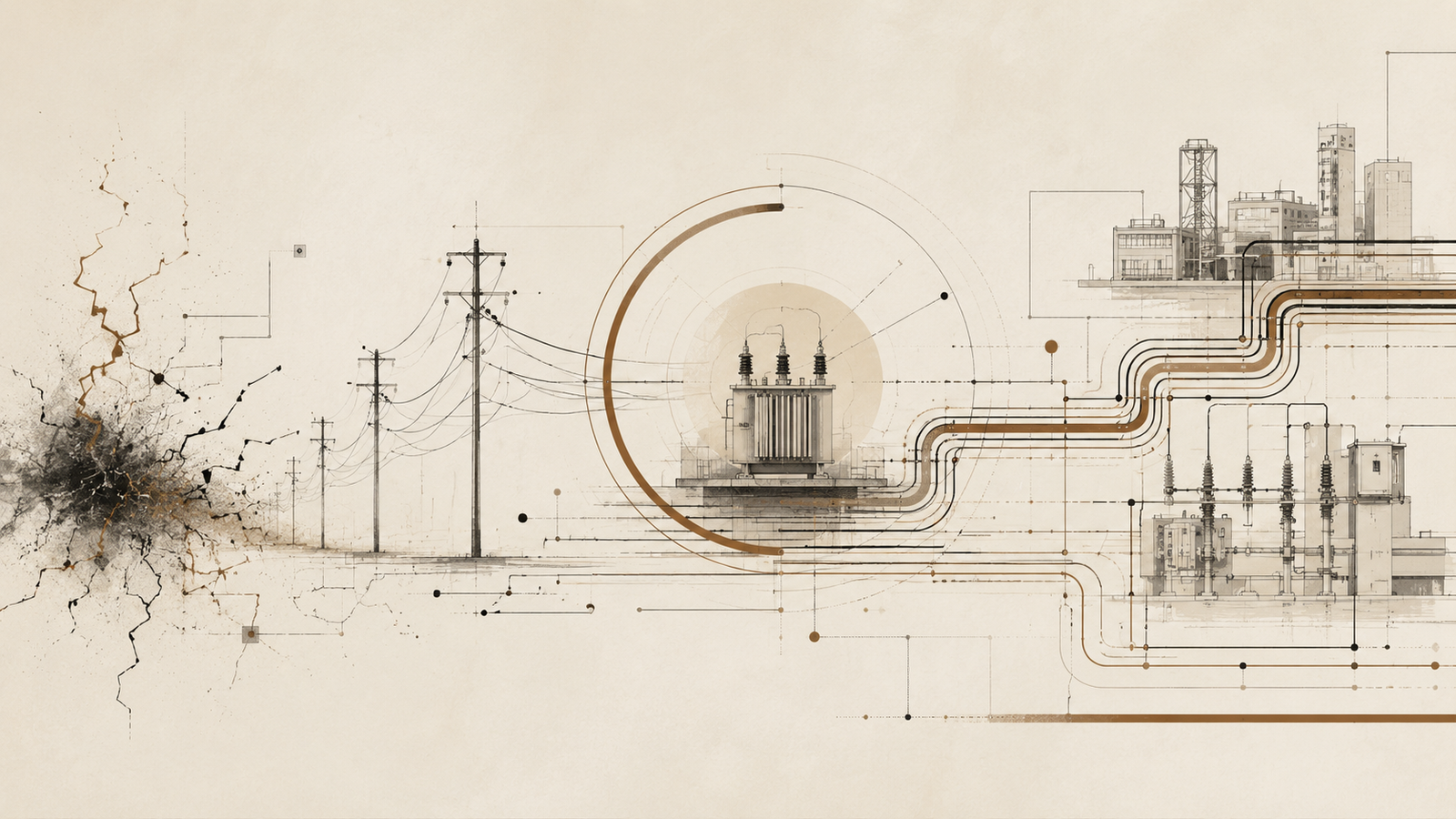
Lewis Latimer belongs in this archive because reliability determines whether innovation becomes infrastructure. His work helped transform electricity from demonstration into dependable public systems.
Lewis Latimer helped shape the reliability systems that allowed electricity to scale.Electricity changed the world. However, invention alone did not create that transformation. Infrastructure did.
Before electrical systems became common, they were expensive, inconsistent, difficult to maintain, and operationally fragile.Early electric lighting impressed audiences. Yet it struggled to survive everyday use.
People often remember invention as a breakthrough moment.Infrastructure tells a different story.Infrastructure rewards repetition.It rewards continuity.It rewards systems that continue working after excitement disappears.
This is where Lewis Latimer enters the story.Latimer did not invent electricity.He did not invent the light bulb.Instead, he helped make electrical systems durable enough to spread.That distinction matters.
The Architects of Modern Life archive studies Latimer through the lens of systems reliability rather than inventor mythology.His contribution appears inside operational continuity, manufacturing precision, electrical distribution, and infrastructure scale.
Systems Pressure and the Problem of Early Electricity
The first challenge of electricity was not invention.The first challenge was reliability.During the late nineteenth century, electrical systems expanded rapidly across industrial and urban environments.Factories wanted longer operating hours.Cities wanted safer lighting.Businesses wanted greater productivity.However, the systems supporting electrical adoption remained unstable.
Early electric lighting created excitement because it represented possibility.At the same time, many systems were expensive to produce, difficult to maintain, and inconsistent across operating conditions.Infrastructure growth could not depend on novelty alone.
That pressure created a larger systems problem.Electricity had to move from spectacle into routine.It had to become predictable.People needed confidence that systems would continue functioning after installation.
Reliability became the hidden requirement.Without reliability:
- distribution breaks
- adoption slows
- maintenance costs increase
- public trust weakens
- infrastructure stalls
This transition appears repeatedly throughout infrastructure history.Transportation systems must become safe.Water systems must become dependable.Communications systems must become continuous.Electrical systems had to become reliable.
The pressure surrounding electricity was therefore larger than technology.It was an operational problem.Electrical systems needed longer life.They needed repeatable manufacturing.They needed lower failure rates.They needed infrastructure discipline.
That environment created space for builders who specialized in continuity rather than novelty.Lewis Latimer became one of those builders.
The strongest infrastructure often receives the least attention.People notice outages.They rarely notice continuity.That is the paradox Lewis Latimer helped solve.
Lewis Latimer and the Builders Behind Scale
Lewis Howard Latimer was born in 1848 in Chelsea, Massachusetts.His parents had escaped slavery and rebuilt their lives in the North under difficult conditions.That history matters because infrastructure stories often begin long before technology appears.Systems shape opportunity.
Latimer eventually entered technical work through drafting.At first glance, drafting can seem secondary to invention.However, infrastructure tells a different story.Ideas scale when they can be communicated, reproduced, manufactured, and improved.That work depends on technical translation.
Latimer became exceptionally skilled at turning engineering concepts into usable operating documents.He learned how systems moved from concept to implementation.As a result, his influence reached further than a single invention.
He later worked with leading electrical innovators and became involved in the expanding electrical industry.That placed him inside one of the largest infrastructure transitions in modern history.Electricity was attempting to move from novelty into public adoption.
This was not only an engineering race.It was a reliability race.
Cross-Domain Engineering and Technical Translation
One of Latimer’s strengths was his ability to operate across boundaries.He understood drafting.He understood manufacturing.He understood operational requirements.Most importantly, he understood continuity.
That combination created leverage.Many inventions fail because the system surrounding the invention never matures.An object can work once and still fail commercially.Infrastructure requires consistency.
Latimer became known for improving production methods tied to electrical lighting systems.His work contributed to extending the usable life and manufacturability of carbon filaments.That mattered because early bulbs burned inconsistently and remained difficult to scale.
Longer operation changed economics.Longer operation improved trust.Longer operation increased adoption.
That is a recurring pattern across infrastructure.Reliability lowers friction.Lower friction expands participation.Expanded participation changes society.
This is why reliability work often receives less public attention than breakthrough moments.Reliable systems feel ordinary after enough repetition.However, reliability determines whether people return tomorrow.
Idea → Manufacturing → Distribution → Reliability → Adoption → Infrastructure
The Hidden Layer: Reliability Creates Demand
Infrastructure adoption is rarely linear.People do not embrace systems simply because they exist.They adopt systems because those systems continue working.
Electrical infrastructure faced this challenge directly.If lights failed too often, businesses hesitated.If replacement costs remained high, expansion slowed.If maintenance became unpredictable, investment weakened.
Therefore, reliability was not a technical preference.It was economic architecture.
Latimer’s work contributed to lowering one of the hidden taxes of infrastructure growth: uncertainty.The more dependable systems became, the more organizations could justify expanding them.
That dynamic still appears everywhere today.Reliable systems create confidence.Confidence creates investment.Investment creates scale.
The System That Changed
The common version of this story focuses on light.The stronger version focuses on continuity.
Electricity had already captured attention.The harder problem was sustaining operation.Latimer’s contribution helped move electrical systems toward repeatability and longer-duration use.
That shift changed the meaning of electricity.Instead of becoming an occasional demonstration, electrical systems became candidates for everyday infrastructure.
This distinction matters.Infrastructure changes behavior only after reliability becomes expected.People stop planning around failure.They begin assuming continuity.
That assumption is one of the most powerful transformations any system can achieve.
Electricity eventually became so dependable that entire industries reorganized around it.Work schedules changed.Cities expanded.Buildings changed.Communication accelerated.Industrial production transformed.
Those changes required more than invention.They required operational confidence.
Lewis Latimer belongs in Architects of Modern Life because he contributed to the reliability layer that allowed electrical infrastructure to become ordinary.Infrastructure reaches its highest form when society stops noticing it.
Reliability Logic and the Architecture of Trust
Reliability changes how people behave.That statement sounds simple.However, it explains why infrastructure matters.
People rarely organize their lives around invention.They organize their lives around expectation.Electricity became powerful once people stopped wondering whether it would work.
That transition changed everything.Businesses extended operating hours.Factories redesigned production schedules.Homes adopted new patterns of activity.Cities expanded after dark.
None of those outcomes depended on invention alone.They depended on continuity.
Reliability creates trust.Trust creates dependence.Dependence creates infrastructure.
Lewis Latimer’s contribution belongs inside that sequence.His work helped support a world where electrical systems could become stable enough to build around.That shift transformed electricity from event into environment.
That lesson extends far beyond electricity.Reliable systems reduce decision fatigue.They reduce operational friction.They allow attention to move somewhere else.
Most people never think about electrical continuity.That is exactly the point.
Successful infrastructure disappears.
Infrastructure Memory
One of the defining characteristics of infrastructure is memory.Not human memory.Systems memory.
Infrastructure remembers through repetition.A successful system embeds its rules into everyday behavior until people no longer consciously notice them.
Electricity demonstrates this clearly.Most people do not think about:
- distribution networks
- redundancy systems
- maintenance cycles
- manufacturing tolerances
- operational uptime
Instead, they expect continuity.
That expectation is evidence of infrastructure maturity.People flip a switch and assume the system will respond.
That assumption required generations of engineering, operations, distribution, maintenance, and reliability work.
Lewis Latimer belongs inside that story because reliability is often invisible.Inventors receive recognition.Infrastructure receives dependence.
The strongest systems disappear into ordinary life.
Innovation → Reliability → Trust → Adoption → Dependency → Infrastructure
This pattern appears repeatedly.Transportation.Communications.Healthcare.Water systems.Energy systems.The visible breakthrough attracts attention.Reliability determines survival.
The Modern Echo
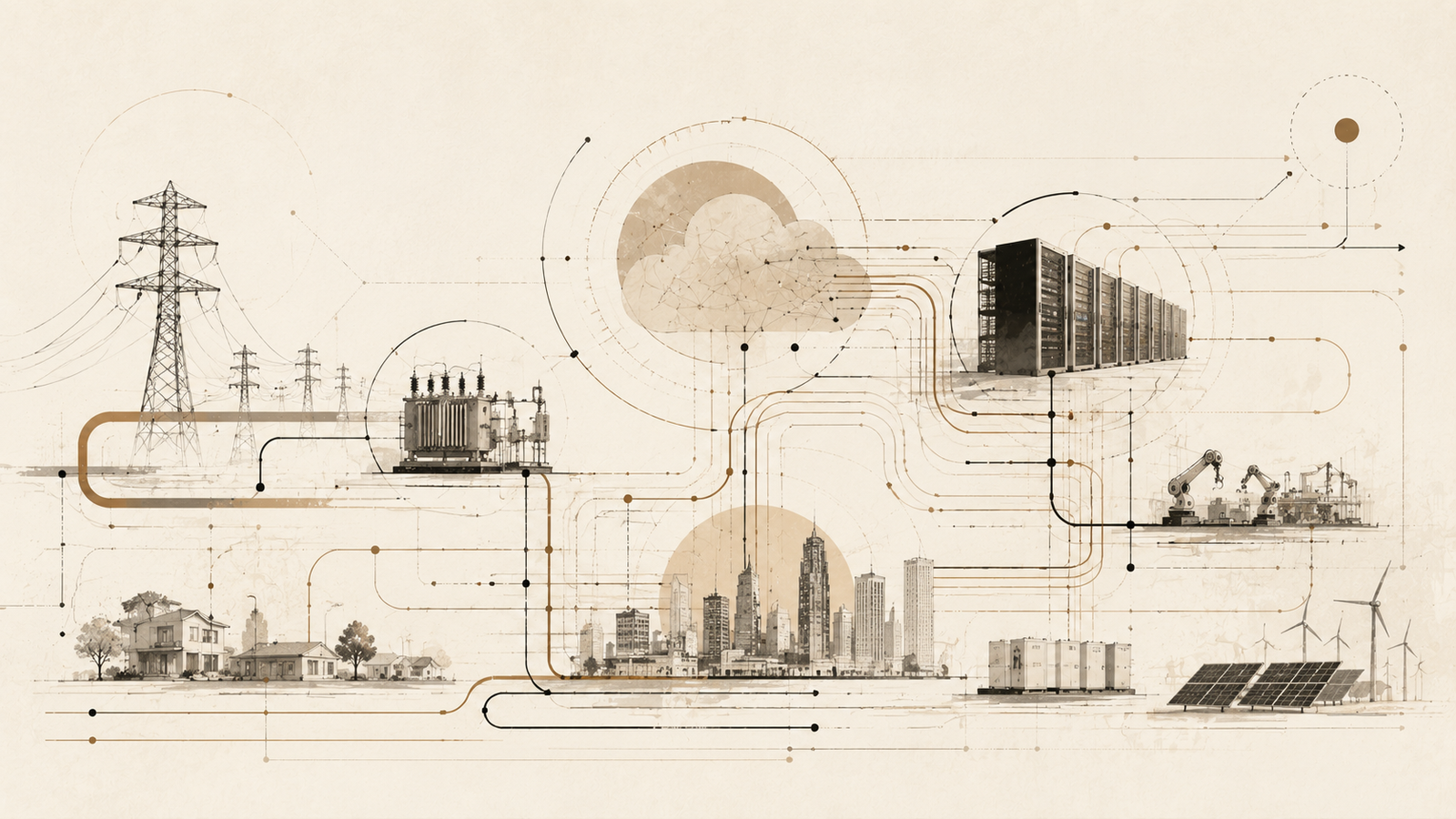
The modern world still operates through reliability principles that mirror the problems Latimer helped solve.
Electrical grids depend on redundancy.Cloud platforms depend on uptime.Transit systems depend on continuity.Hospitals depend on uninterrupted operation.
Most people interact with these systems without seeing their supporting architecture.That invisibility signals success.
Modern reliability engineering now includes:
- distributed networks
- failover systems
- resilience planning
- maintenance windows
- uptime targets
- redundancy layers
Different technologies.Same question.How do systems continue operating under pressure?
That question sits at the center of infrastructure history.
Latimer’s contribution remains relevant because reliability never becomes obsolete.Only the systems change.
Modern infrastructure depends on continuity because interruption creates cascading effects.When electrical systems fail:
- communications weaken
- transportation slows
- commerce pauses
- operations stop
That interconnected dependency explains why reliability became foundational infrastructure.
Systems Impact
Extended operation and infrastructure confidence.
Repeatable production and operational scale.
Reduced uncertainty and increased adoption.
Systems designed for sustained performance.
Reliability embedded into daily expectations.
Invisible systems supporting modern life.
Infrastructure does not become important when it appears.It becomes important when society forgets how to function without it.That is where Lewis Latimer’s work ultimately belongs.
Timeline Position
Lewis Latimer emerged during one of the most important infrastructure transitions in modern history.Electricity was moving from controlled demonstration environments into public adoption.That transition created enormous pressure.Systems had to become more dependable.Production had to become more repeatable.Operating expectations had to become realistic.
Infrastructure expansion rarely happens because of one invention.Instead, expansion happens when supporting systems mature together.Electrical infrastructure required:
- generation
- distribution
- manufacturing
- maintenance
- continuity
- public confidence
Latimer’s contribution sits inside that larger architecture.His work strengthened the reliability layer that allowed electrical systems to become practical at scale.
That position matters.Many historical narratives reward invention while overlooking continuity.However, infrastructure history rewards systems that remain operational.
Within the Architects of Modern Life archive, Lewis Latimer represents the movement from innovation into infrastructure.
1848 → Lewis Latimer born
1870s → Technical drafting and engineering work
1880s → Electrical infrastructure expansion
1881 → Carbon filament improvements
1890s → Electrical adoption accelerates
Modern Era → Reliability embedded into everyday infrastructure
Why This Still Matters
Modern life depends on systems that continue operating after attention disappears.
Most people do not think about uptime.They do not think about continuity planning.They do not think about redundancy.They expect those things to exist.
That expectation reflects infrastructure maturity.
The systems that shape modern life often become invisible.Power systems.Communication systems.Cloud platforms.Water systems.Transportation systems.People usually notice them only when they stop working.
Reliability therefore becomes one of the most overlooked forms of innovation.
Lewis Latimer’s contribution remains useful because it reminds us that infrastructure success is measured differently.The strongest systems rarely announce themselves.They simply continue.
This lesson extends beyond electricity.Organizations scale through reliability.Communities strengthen through reliability.Relationships stabilize through reliability.Infrastructure thinking applies everywhere.
Latimer belongs inside Architects of Modern Life because he helped reveal a difficult truth.Progress is often sustained by builders whose work becomes invisible.
Reliable systems disappear.Their impact remains.
Further Groundwork
→ Systems
→ Garrett Morgan and Public Safety Infrastructure
→ Granville Woods and Communication Infrastructure
Receipts
→ U.S. Patent Records
→ National Inventors Hall of Fame
→ Library of Congress
→ Smithsonian Institution
→ Edison Papers Project
→ Historical Electrical Engineering Archives
Frequently Asked Questions
Who was Lewis Latimer?
Lewis Latimer was an inventor, draftsman, and systems builder whose work contributed to improving the reliability and scalability of electrical infrastructure.
Did Lewis Latimer invent the light bulb?
No.However, he contributed to improvements that supported longer-lasting and more scalable electrical lighting systems.
Why is Lewis Latimer important?
His work helped move electricity from demonstration into dependable infrastructure.
What does reliability infrastructure mean?
Reliability infrastructure refers to systems designed to continue operating consistently under normal and changing conditions.
Why is Lewis Latimer included in Architects of Modern Life?
Because his work illustrates how continuity transforms invention into infrastructure.
What modern systems reflect Latimer’s legacy?
Electrical grids, cloud systems, uptime engineering, redundancy planning, and operational continuity all reflect similar reliability principles.
Lewis Latimer helped build the conditions that allowed electricity to become ordinary.That may sound smaller than invention.In reality, it may be the harder achievement.Infrastructure succeeds when society stops noticing it.