
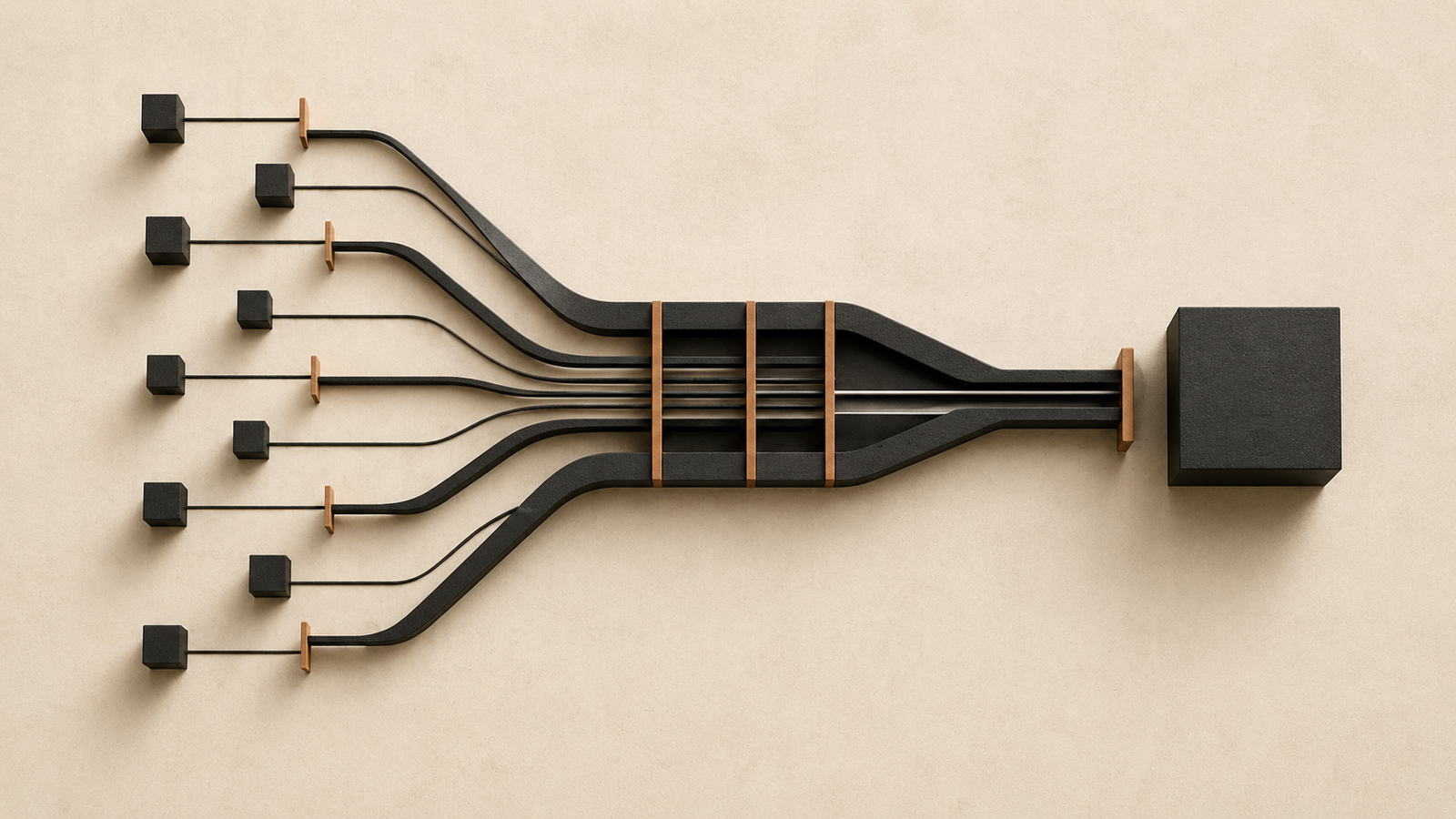
Life’s algorithm is not random.
Most people move through life reacting to outcomes without ever examining the system producing them. When something works, it is labeled luck. When something fails, it is blamed on timing or circumstance. The result is the same: the system remains invisible, and nothing fundamentally changes.
But outcomes are not guesses. They are processed.
Every action, every distraction, and every repeated thought is fed into a system that returns a matching result. This system does not pause, does not negotiate, and does not respond to what you hope will happen. It responds to what you consistently give it.
This is life’s algorithm.
It is always running, whether you are aware of it or not. It takes in your inputs, converts them into patterns, and produces outcomes that reflect those patterns with precision.
If results feel inconsistent, delayed, or frustrating, the issue is rarely external. It is almost always structural. Something in the input layer is misaligned, inconsistent, or working against the outcome you expect.
Life’s algorithm runs on a simple truth: inputs create patterns, and patterns create outcomes.
Change the inputs, and the system will eventually return something different.
Your outcomes are not isolated events. They are feedback from a system. If you want different results, you must change the inputs feeding that system.
The Core Equation
The structure behind everything is simple:
Input → Pattern → Output
Inputs shape behavior. Behavior becomes repetition. Repetition forms patterns. Patterns produce outcomes. This sequence is constant. It does not skip steps or fast-track based on intention.
Most people attempt to change the output directly. They want better results without changing the behaviors that created the current ones. That approach guarantees frustration because it ignores how the system actually works.
If the output is wrong, the cause is upstream.
The Three Types of Inputs
Inputs are not limited to actions. The system processes multiple layers simultaneously, and each one contributes to the final result.
Mental Inputs
What you consume shapes how you think. Information, media, conversations, and internal dialogue all influence perception. Over time, perception becomes behavior. If your mental inputs are scattered, reactive, or negative, your outputs will reflect that instability.
Environmental Inputs
Your environment reinforces behavior. A structured environment reduces friction and supports consistency. A chaotic environment increases reaction and distraction. Most people underestimate how much their surroundings shape their outcomes.
Behavioral Inputs
What you repeatedly do matters more than what you occasionally attempt. A single disciplined action does not create change. Repeated disciplined actions do. The system responds to consistency, not intensity.
When these three layers align, the system stabilizes. When they conflict, results become inconsistent.
Patterns Are the Real System
Single actions do not define your direction. Patterns do.
The system is not tracking isolated effort. It is tracking repetition over time. That repetition becomes identity, and identity drives outcomes.
- Repeated discipline builds structure
- Repeated avoidance builds delay
- Repeated distraction builds confusion
- Repeated correction builds growth
The system does not reward intention. It rewards what you consistently do.
What This Looks Like in Real Life
The concept is simple. The application is where most people fail.
Take work as an example.
Someone shows up motivated for a few days, produces strong output, and expects immediate recognition. When that recognition does not come, effort drops. The pattern becomes inconsistent.
The algorithm reads that inconsistency, not the initial effort.
Over time, the output reflects that pattern: unstable performance, uneven results, limited trust.
Now compare that to consistent input.
Steady work. Predictable effort. Fewer spikes, more stability.
The result compounds differently. Not immediately, but reliably.
The same structure applies everywhere:
- In health, daily habits matter more than occasional intensity
- In money, spending patterns matter more than income spikes
- In relationships, repeated communication defines connection
The system is always translating behavior into outcomes.
Compounding vs Decay
Inputs do not just produce results. They compound.
Small, consistent actions accumulate into significant outcomes over time. The same is true in reverse. Small neglect compounds into larger problems.
This is why results often feel disproportionate. The system is not reacting to a single moment. It is responding to accumulation.
Every repeated action either strengthens or weakens the system.
The Time Lag Problem
This is where most people lose discipline.
There is always a delay between input and output. Good inputs often feel unrewarded early. Bad inputs often feel harmless early.
This creates a dangerous illusion. People abandon good patterns because results are not immediate. At the same time, they continue harmful patterns because consequences have not arrived yet.
The system is still processing. The output is just delayed.
Eventually, the result shows up. When it does, it reflects everything that came before it.
False Inputs
Not all effort counts as real input.
Some actions create the illusion of progress without producing meaningful change.
- Consuming content is not doing the work
- Planning is not execution
- Thinking about change is not changing behavior
False inputs feel productive, but they do not generate the patterns required for real outcomes.
The system does not reward perceived effort. It responds to actual behavior.
System Failure Modes
When results break down, it is rarely random. It is structural.
- Inconsistent inputs: No stable pattern forms
- Conflicting inputs: Progress cancels itself out
- High-noise environments: Distraction overrides clarity
- Emotional overrides: Reaction disrupts discipline
Understanding failure modes gives you leverage. You stop guessing and start diagnosing.
Adjusting the System
If the output is not working, the solution is not frustration. It is adjustment.
Not dramatic change. Precise correction.
- Change what you consume
- Change what you repeat
- Change what you tolerate
- Change your environment
Small changes, applied consistently, reshape the system over time.
How to Recognize the Pattern
Most people understand patterns conceptually. Few know how to spot them in real time.
Start with repetition.
If the same result keeps showing up, the system is not guessing. It is reporting.
Look for:
- Recurring frustrations
- Repeated delays
- Consistent breakdown points
Then trace backward.
Ask:
- What behavior keeps repeating before this result?
- What input keeps feeding that behavior?
This is where most people stop too early. They analyze the outcome instead of tracing the pattern.
The leverage is always upstream.
Life’s Algorithm Does Not Guess
The system is always running.
It does not pause for intention. It does not adjust for emotion. It does not reward effort that is not repeated.
It reflects what it receives.
Feed chaos, and confusion returns.
Feed clarity, and structure builds.
Feed discipline, and stability compounds.
Most people are not confused about what they want. They are inconsistent in what they feed the system.
That inconsistency is what the algorithm reads.
Check the inputs. Watch the patterns. The output will always tell you the truth.
And if the truth is not what you want, the next move is simple.
Adjust what you feed it.
