
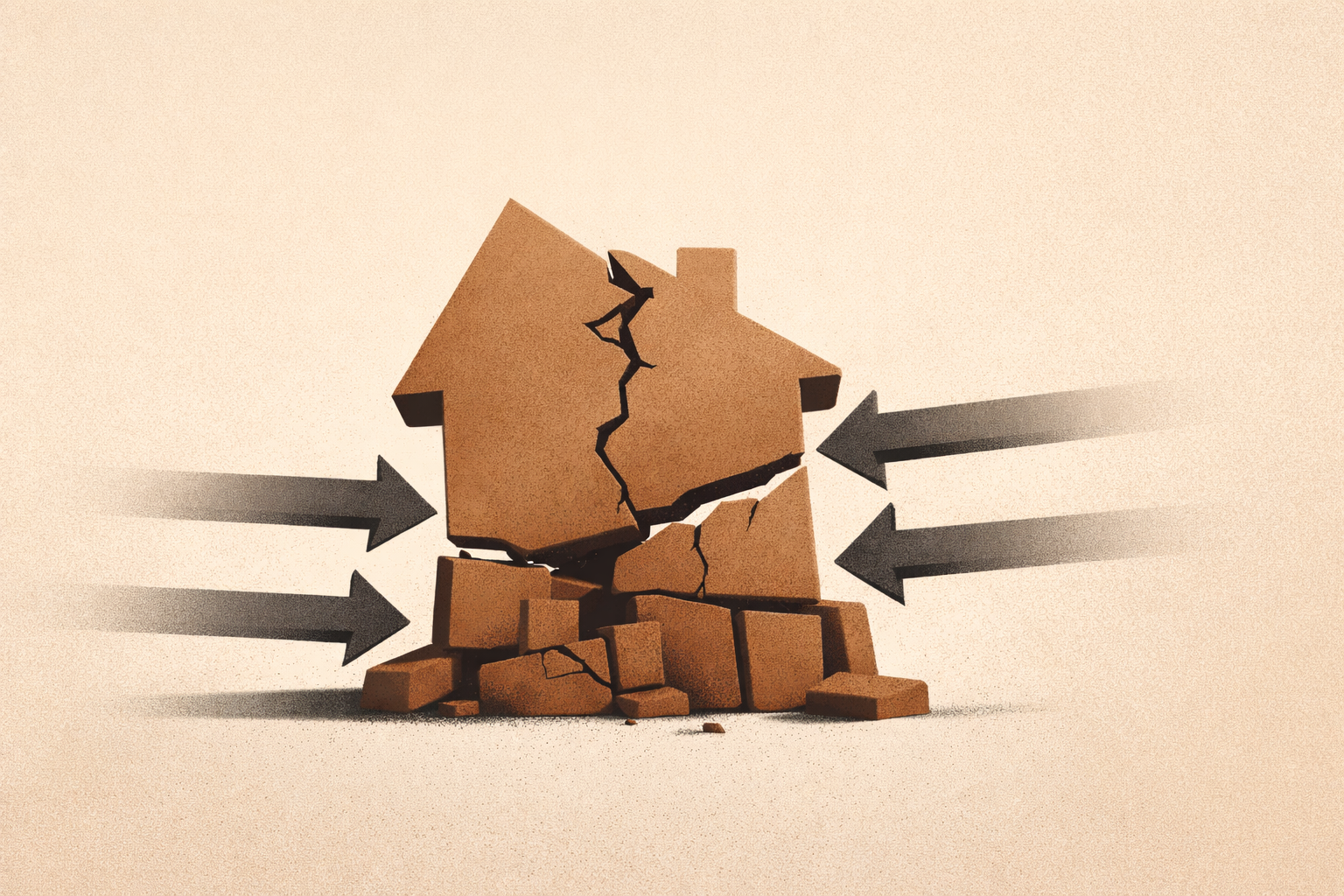
What happens if you don’t have an emergency fund is not theoretical. It is predictable.
Without a reserve, every disruption becomes a decision under pressure. And decisions made under pressure rarely improve your position.
They protect the moment. They damage the future.
This is why an emergency fund is not optional. It is structural.
This is the starting point of the Emergency Fund System, where protection is built before pressure shows up.
What happens if you don’t have an emergency fund
When there is no financial buffer, small problems escalate quickly.
- a car repair becomes a missed paycheck
- a medical bill becomes debt
- a job gap becomes a financial crisis
The issue is not the event. It is the lack of protection against it.
Without a reserve, your only tools are:
- credit
- delayed payments
- cutting essentials
None of those solve the problem. They extend it.
Why emergencies hit harder without savings
Emergencies do not change based on your preparation.
Your ability to respond does.
Without savings:
- options shrink
- timing tightens
- stress increases
Stress changes behavior.
It drives fast decisions, expensive solutions, and long-term consequences.
This is not a discipline problem. It is a structure problem.
The hidden cost of having no emergency fund
The real damage is not the event itself.
The damage is the chain reaction that follows.
- debt accumulates
- interest compounds
- financial flexibility disappears
One disruption becomes multiple constraints.
This is how short-term problems turn into long-term instability.
The pattern most people don’t see
Without an emergency fund, the same cycle repeats:
Disruption → Reaction → Debt → Recovery → Next disruption
The problem is not how often life hits.
The problem is what absorbs the impact.
How to break the cycle
You do not fix this by reacting better.
You fix it by building protection before the next disruption arrives.
That starts with structure.
Start here: How to Build an Emergency Fund Without Feeling Broke.
Then define your level of protection: How Much Emergency Fund Do You Need.
Both are part of the Emergency Fund System designed to stop this cycle before it starts.
FAQ: No emergency fund
Is it bad to not have an emergency fund?
Yes. Without one, even small disruptions can create financial instability.
What do people use instead of an emergency fund?
Most rely on credit cards, loans, or delayed payments. These increase long-term cost and risk.
How fast should you build an emergency fund?
Start immediately with small, consistent contributions. Structure matters more than speed.
The Bottom Line
If you do not have an emergency fund, you are not stable. You are exposed.
The question is not whether something will happen.
The question is whether you will be prepared when it does.
Start building protection now with a system that holds.
Without protection, the outcome is already decided.
