Power and price stay connected, even when the system looks calm.
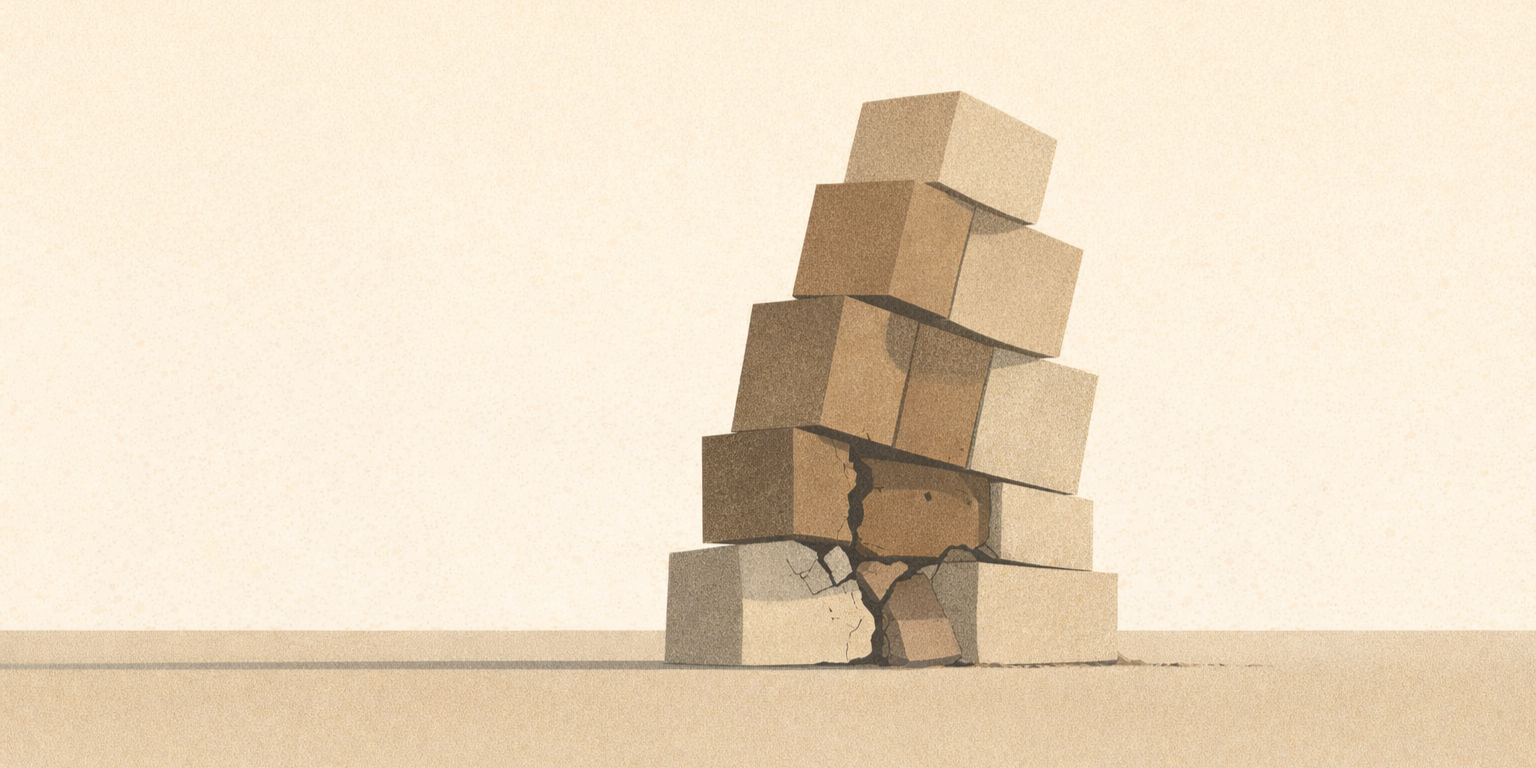
Cost transfer can keep a structure standing for a while. It can also hide weakness long enough for leaders to mistake survival for strength. Over time, the bill builds pressure at the base.
When the System Breaks
Systems break when they keep moving costs without increasing capacity. A transfer solves a short problem by creating a long one. Eventually, the base cannot carry what the top demands.
The warning signs show up early. Repairs get delayed. People burn out. Quality drops. Trust thins. Then the system adapts by normalizing the damage.
That normalization is the trap. Once failure feels ordinary, the system stops listening to the data it creates. Instead, it protects optics. It protects comfort. It protects the story.
Breaks rarely arrive as drama. They arrive as fatigue. They arrive as churn. They arrive as small rule bending that turns into standard practice. They arrive as a workforce that stops caring because care never changes the load.
In markets, the break looks like fragility. In institutions, it looks like slow decay. In families, it looks like a person carrying too much until they go quiet or leave.
Discipline prevents this because discipline forces limits into the open. It requires honest math. It assigns responsibility clearly. That principle sits at the center of Discipline Before Dollars.
External research supports the same principle. The Brookings Institution emphasizes that stable institutions rely on clear rules and credible enforcement. When accountability weakens, the system pays through instability.
Power always has options. It can pay the cost directly. Or it can transfer the cost until something fractures. The fracture is not the surprise. The denial is.
The Bottom Line on Power and Price
Systems break when they protect comfort by exporting cost. The base fails first because the base carries everything.
If you want stability, stop hiding who pays. Name the cost. Assign the burden. Reinforce the structure before it cracks.